


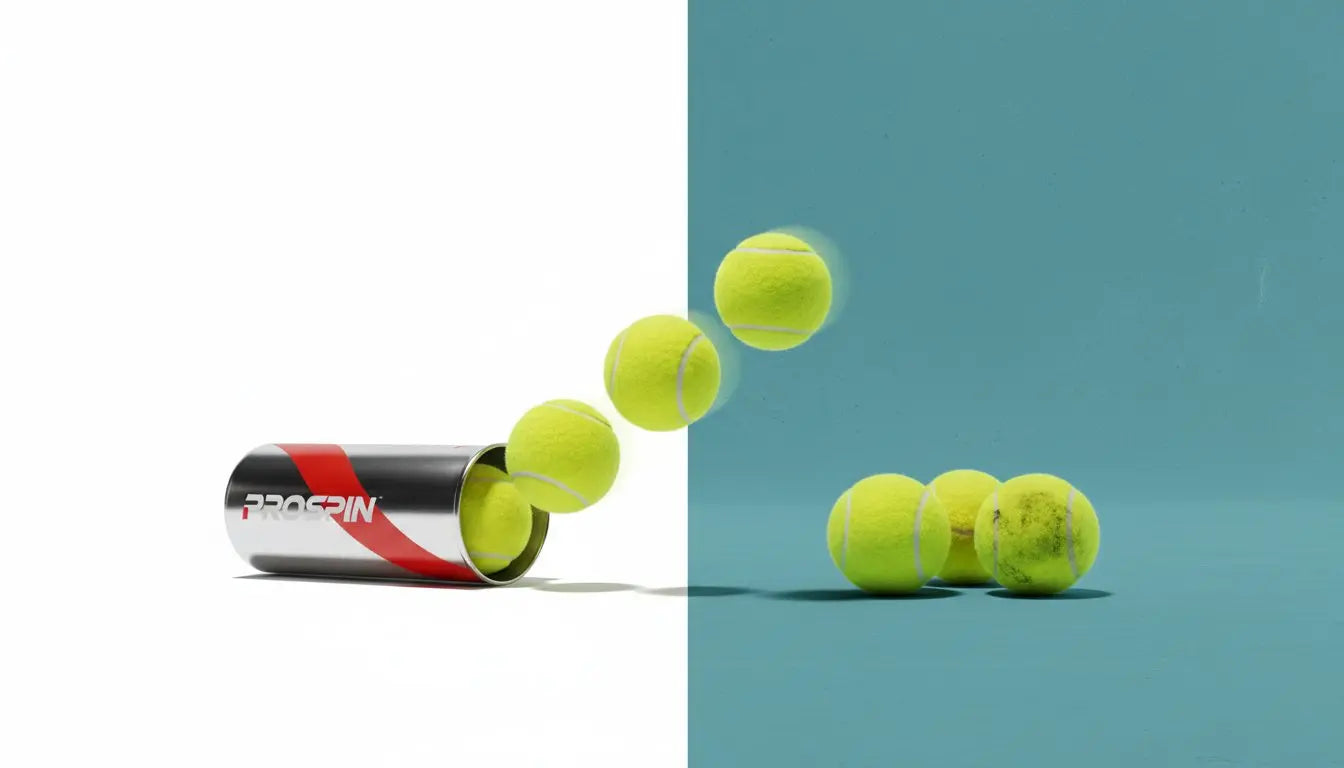
That fantastic psssst sound of opening a new can is one of the best parts of the game. But when you?re faced with a wall of seemingly identical cans, how do you know which tennis balls are right for you? It?s a common dilemma for players across Australia. You might grab a can, only to find the balls feel flat after just one match, or they bounce too high on your local hard court. This confusion can lead to unforced errors in your shopping cart before you even step onto the court.
Don't worry, we're here to help you make a smarter choice. This simple guide will clear up the confusion and give you the expert advice you need. We'll break down the key differences between pressurized and pressureless balls, explain why some are better for clay or grass, and help you match the right ball to your skill level. By the end, you?ll be able to confidently choose the perfect option to improve your game, get more value from every can, and even buy the right balls for your children's lessons. Let's get you sorted!
The Core Difference: Pressurized vs. Pressureless Tennis Balls
When you're gearing up for a match or a casual hit, the first and most fundamental choice you'll make is about the type of tennis balls to use. For many players, the best part of starting a new game is hearing that satisfying psssst sound when cracking open a fresh can. That sound is your first clue-it tells you you're holding pressurized balls, the standard for competitive play across Australia.
To see this difference in action, check out this fantastic explanation from the team at Tennis Warehouse:
What Are Pressurized Tennis Balls?
Pressurized balls are the most common type you'll find on the shelf. They feature a hollow rubber core filled with pressurized air or nitrogen, which is then sealed in a pressurized can to maintain that internal pressure. This construction gives them a lively, consistent bounce, fantastic speed, and excellent spin potential. They are the official choice for tournaments and club competitions for a reason-they simply offer top-notch performance. The only downside is that once the can is opened, they begin to lose pressure and their bounce will degrade over a few playing sessions.
What Are Pressureless Tennis Balls?
As the name suggests, pressureless balls have no internal pressure. Instead, they get their bounce from a solid, thicker rubber core. The bounce is engineered through the rubber's structure, a key part of the overall tennis ball characteristics that manufacturers perfect. Because they don't rely on internal air, they never go "flat." This makes them incredibly durable and long-lasting. However, they tend to feel heavier and firmer on the strings and offer less pop and spin compared to their pressurized counterparts.
Which Type Should You Choose? A Quick Comparison
Making the right choice is simple when you know your goal. Here?s our friendly advice to help you find the perfect ball for your game:
- For competitive matches and serious training: Always choose pressurized balls. Their superior feel, speed, and spin are essential for high-level performance.
- For casual hits, practice, or coaching: Pressureless balls are a fantastic, cost-effective option. They last for ages and give you a consistent hit every time.
- For ball machines: Pressureless balls are the undisputed champion. They withstand the constant firing and won't lose their bounce, saving you money in the long run.
- For beginners: Pressureless balls can be an excellent choice. Their durability and predictable bounce are perfect for developing solid technique and consistency.
Decoding Balls for Different Court Surfaces
Ever wondered why some tennis balls fluff up faster than others? The secret is in the felt, and it?s designed specifically for the court you?re playing on. While the pressurised rubber core generally stays the same, the felt covering is engineered to manage durability and how the ball interacts with the surface. Getting this right is a key part of choosing the right tennis ball for a better game.
The two main categories you'll find are 'Regular Duty' and 'Extra Duty', though you might also see specialist balls for unique conditions like high-altitude play. Let's break down which one is perfect for you.
Extra Duty: The Choice for Hard Courts
If you play on a typical hard court made of asphalt or concrete, Extra Duty balls are your go-to. These abrasive surfaces can shred a ball's felt quickly. Extra Duty balls solve this with a thicker, more durable felt that contains more wool, helping it stand up to friction. This tough design ensures the ball lasts longer and maintains a consistent bounce. It?s no surprise that this is the most common type of ball sold right here in Australia.
Regular Duty: Ideal for Clay and Indoor Courts
Playing on a softer surface like clay (en-tout-cas) or an indoor carpet court? You'll want Regular Duty balls. Their felt is thinner and less fluffy, which is a huge advantage as it prevents the ball from picking up clay and dirt. This keeps the ball's weight and flight consistent throughout your match. Just be warned: using these on a hard court will wear them out exceptionally fast!
What About Grass Courts?
For the classic grass court experience, players also use Regular Duty balls. The soft, forgiving nature of grass is much less demanding on the felt. To combat moisture and grass stains, these balls often feature a special stain-resistant treatment to keep them bright and visible during play. The most famous example is the iconic Slazenger ball used at Wimbledon, perfectly suited for the pristine lawns of the All England Club.
A Guide to Beginner and Kids' Tennis Balls
Getting kids into tennis should be fun, not frustrating. That's the fantastic idea behind the International Tennis Federation (ITF) 'Play and Stay' program. It uses modified courts and specially designed tennis balls to help beginners learn the game faster and build confidence. These stage balls are larger, softer, and have a significantly lower bounce than standard yellow balls. Using the right one is crucial for developing solid technique, as it allows players to swing correctly and rally at a manageable pace right from the start.
Stage 3: Red Balls
Perfect for the youngest champions (ages 5-8), red balls are the first step on the tennis journey. Played on a smaller 36-foot court, they are 75% slower and have a much lower bounce than a standard ball. Their oversized, soft design makes them incredibly easy to track and hit, helping kids experience success and fall in love with the game from their very first lesson.
Stage 2: Orange Balls
As players grow (ages 8-10), they graduate to orange balls on a 60-foot court. These balls have a 50% lower compression, making them bounce higher than red balls but still much lower than a standard one. This stage is fantastic for helping developing players learn to control their shots, move around the court, and sustain rallies. Understanding these progressive steps is key, as there are many different tennis ball types designed for every level of play.
Stage 1: Green Dot Balls
The final stepping stone for juniors (ages 9-11) is the green dot ball. With only 25% less bounce than a standard yellow ball, it's designed to prepare players for the real deal on a full-sized court. These tennis balls move faster and bounce higher than the orange stage, helping players fine-tune their timing and footwork before making the exciting leap to standard competitive play. Find the perfect starter balls for your future champion.
Practical Tips for Buying and Maintaining Your Balls
Choosing the right ball is the first step, but knowing how to manage them is just as important for a great game. To help you get the most value and performance out of every can, we've answered some of the most common questions we hear from players. This practical advice will help you save money and avoid unforced errors before you even step on court.
What Do the Numbers on Tennis Balls Mean?
Ever wondered about the small number printed on your ball? It's a simple and clever solution to a common problem on busy courts. The number has nothing to do with the ball's quality, bounce, or speed. It's purely for identification. If you're playing next to someone using the same brand, you can simply call out, "We're on the Wilson 3s!" to make sure you don't mix up your balls. It's that easy!
How Long Do Pressurized Balls Really Last?
The lifespan of pressurized tennis balls depends heavily on your playing style and frequency. Here?s a simple guide:
- For serious or competitive players: A new can for every match is essential. This guarantees consistent bounce and feel, which is critical for high-level play.
- For social players and practice: You can expect a can to last for a few hits, typically over 1-2 weeks. The bounce will noticeably decrease after the first couple of hours as the internal pressure escapes.
Once you have to really swing hard just to get the ball to bounce high, it's definitely time for a fresh can.
Tips for Storing Tennis Balls
Proper storage makes a real difference, especially for unopened cans. To keep them fresh, avoid the number one ball-killer: heat. Leaving balls in a hot car is the fastest way to ruin them, as the high temperature forces the air out, leaving them flat. Once a can is opened, there's little you can do to preserve the pressure. The best strategy is to keep unopened cans in a cool, dry place like a cupboard or your gear bag until you're ready to play.
For many players, the garage serves as the main hub for storing sports gear. Keeping this space secure and accessible is just as important as maintaining the equipment itself. For those looking into home improvements, Australian companies like Door Supply provide options for the DIY market, ensuring your gear is always ready for the next game.
This principle of proper maintenance extends beyond just your tennis gear. Many Australian homes feature timber decks that also require protection from the elements to prevent damage. Keeping them in top shape often involves professional care, and resources like deckrejuvenation.com.au specialize in ensuring outdoor living spaces are as ready for summer as you are.
Playing with fresh, lively balls is more fun and better for developing your technique. When it's time to restock, you can explore our fantastic range of tennis balls to find the perfect option for your next match.
Serve Up Success: Choosing Your Perfect Tennis Ball
As you can see, not all tennis balls are created equal. Understanding the fundamental differences-from the lively, competitive feel of pressurized balls to the long-lasting consistency of pressureless ones-is the first step to improving your game. When you also factor in the specific needs of different court surfaces and player levels, from a beginner?s first rally to a seasoned player's match point, you're empowered to make a smarter choice. Selecting the right tennis balls isn't just a small detail; it's a strategic decision that directly impacts your control, spin, and overall enjoyment on the court.
Now that you?re equipped with this expert knowledge, it?s time to find your perfect match. At Sturdy Racquets, we are passionate players dedicated to helping you succeed. Explore our huge range from trusted brands like Wilson, Head, and Babolat, and get friendly, knowledgeable advice from our team. With fast shipping Australia-wide, gearing up has never been easier. Ready to play? Find the perfect balls for your game at Sturdy Racquets. Get out there and make every shot count!
Frequently Asked Questions About Tennis Balls
Are more expensive tennis balls really better for a beginner?
Not at all! While premium balls offer fantastic performance for advanced players, beginners often benefit more from a different type of ball. We highly recommend starting with pressureless or Stage 1 (green dot) balls. They are more durable, bounce lower and slower, and give you more time to perfect your strokes without breaking the bank. It's all about building confidence with the right equipment, and these are a perfect choice for that.
What kind of tennis balls do professional players like Djokovic and Swiatek use?
That's a great question! Professional players use the official ball of whichever tournament they're competing in. For instance, you'll see them using Dunlop Australian Open balls in Melbourne, Wilson Roland-Garros balls on the clay in Paris, and Wilson US Open balls in New York. These are always premium, pressurised balls chosen for their consistent performance and feel on specific court surfaces. The exact model is determined by the tournament's official partnership.
Can I use the same type of ball for both practice and matches?
You certainly can, but many players find a smart strategy is to use different balls. For practice sessions, especially with a ball machine, durable and more affordable 'Championship' duty balls are a fantastic choice. This saves your best gear for when it matters most! For match day, cracking open a fresh can of premium, pressurised balls ensures you get the consistent bounce, speed, and feel you need to play your best tennis.
How can I tell when a tennis ball is 'dead' and needs to be replaced?
Here?s a simple test our team recommends! Drop a ball from shoulder height onto a hard court. A fresh ball should bounce back up to around your waist. If it only reaches your knee, it's 'dead' and has lost its internal pressure. Another key sign is the felt. If it looks fluffy or has worn down completely smooth, the ball won't fly or grip your strings properly. That?s your cue for a new can!
What is the difference between Wilson US Open and Australian Open balls?
While both are top-notch tournament balls, they're made by different brands for different conditions. The Wilson US Open ball features a premium woven felt designed for the abrasive hard courts in New York. In contrast, the official Australian Open ball is made by Dunlop. It uses their specific HD Core and HD Pro Cloth technology, engineered to perform perfectly on the courts at Melbourne Park. Each is optimised for its specific Grand Slam environment.
Can you recycle old tennis balls in Australia?
Absolutely! It's fantastic to see the tennis community getting behind this. In Australia, the Game On Recycling program is leading the charge. You can drop off your used tennis balls at participating clubs and centres across the country. From there, they are collected and given a new life, often being repurposed into materials for new tennis courts and other sporting surfaces. It's a great way to ensure your old gear doesn't end up in landfill.
Share:
Babolat Pure Drive: The Ultimate 2026 Review & Buyer's Guide
Tennis Australia: Your Complete Guide to the Heart of Aussie Tennis