



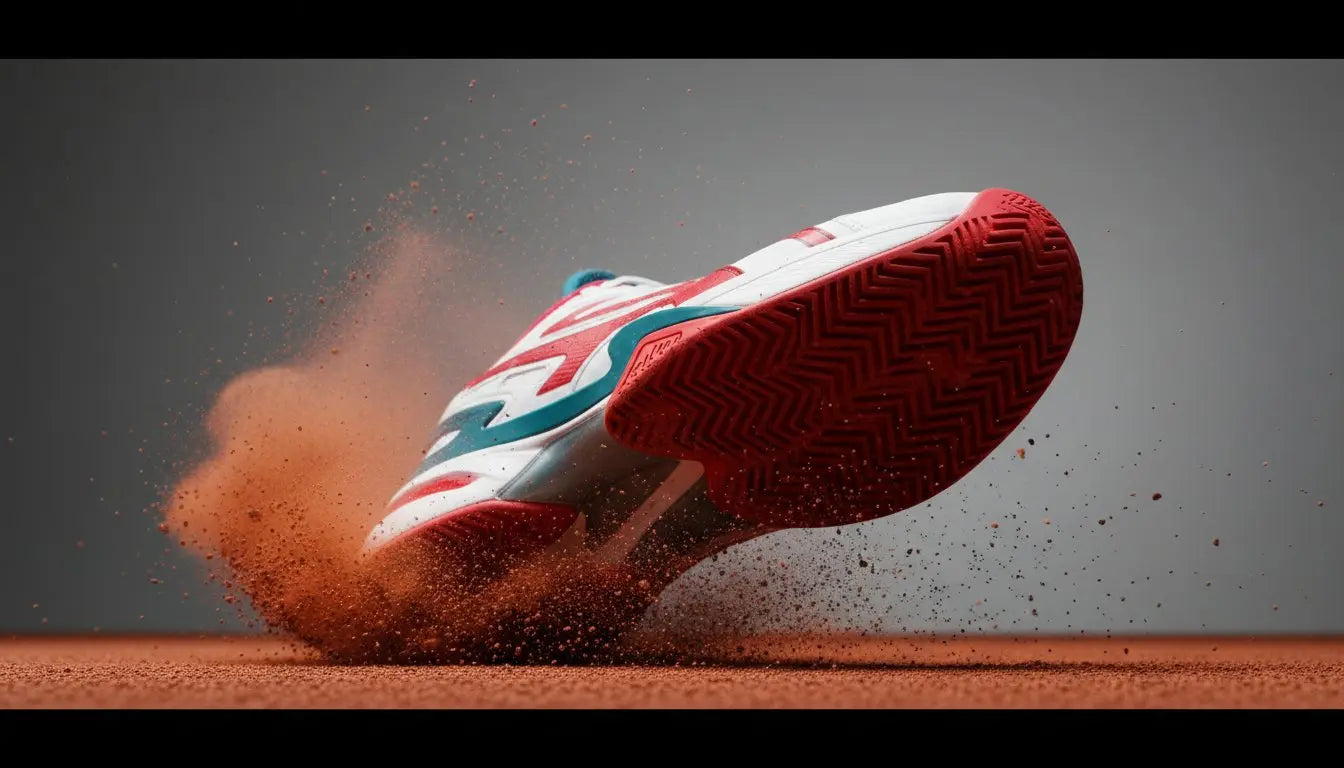
Last Saturday at the local club, you sprinted for a wide forehand only to feel your feet vanish from under you like you were on an ice rink. It's a common frustration for many of the 1.5 million Australians who hit the courts annually, especially when they aren't wearing the best tennis shoes for clay courts australia. You know the feeling of clay clogging your treads and turning your expensive footwear into smooth, useless slabs. We agree that struggling with "ice-skating" on court and tracking orange dust into your car after every match is a total headache.
You deserve to master the art of the clay court slide with confidence and precision. Our expert guide shows you how to choose high-traction footwear that offers controlled sliding and explosive changes of direction for the 2026 season. We've tested the latest gear to ensure you get maximum durability without the premature wear often seen on abrasive surfaces. You'll discover our top recommendations for high performance tennis shoes for clay courts and learn exactly what outsole patterns keep you upright. We're diving into the technical details of herringbone grips and reinforced uppers to keep your game sharp all year long.
Key Takeaways
- Learn why standard outsoles clog on loose top dressings and how specialized traction science keeps you stable on Australian clay.
- Master the perfect slide by identifying the best tennis shoes for clay courts australia featuring the essential full-length herringbone outsole.
- Compare critical performance metrics like pivot speed and stopping power to see how dedicated clay footwear outperforms all-court alternatives.
- Match your unique movement patterns?whether you are a "Slider" or a "Stayer"?to the ideal upper construction and heel support for your game.
- Discover how a personalized fitting session at our Brooklyn storefront can help you select the perfect high-traction gear for the 2026 season.
Why Australian Players Need Specialized Footwear for Clay Courts
Playing on clay isn't just about the sliding; it's about the unique physics of the ground beneath your feet. Finding the best tennis shoes for clay courts australia is crucial for anyone looking to stay competitive as we head into the 2026 season. Unlike hard courts, clay features a loose top layer of crushed brick or stone over a solid, compacted base. This setup allows for controlled slides, but it also creates a massive challenge for your footwear's traction and stability.
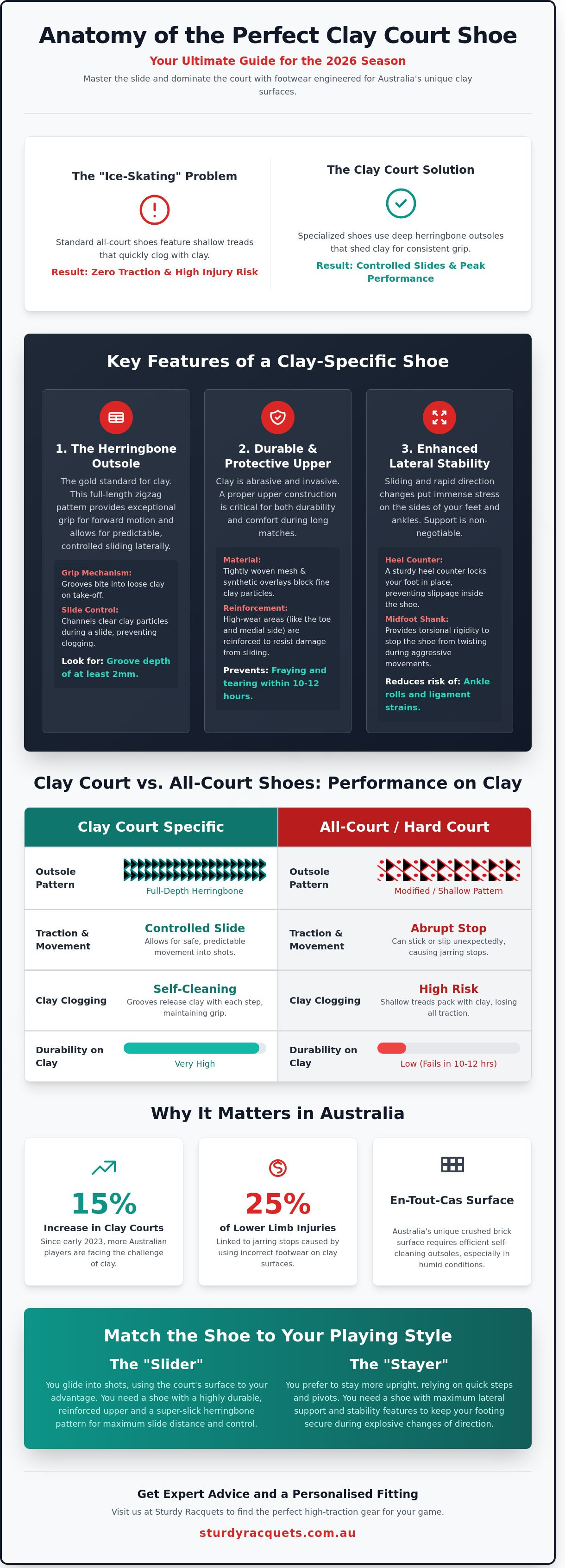
Standard hard court shoes often feature "all-court" outsoles that are too shallow for these conditions. These patterns quickly fill with clay, a phenomenon known as clogging. Once your soles are packed with dirt, you lose all traction, making it feel like you're playing on ice. The Anatomy of the Perfect Clay Court Tennis Shoe dictates a deep, full herringbone pattern. This zigzag design is engineered to release the clay with every step, ensuring you have a reliable grip when you need to change direction suddenly.
To better understand the mechanics of tennis footwear, watch this helpful video:
Australia has seen a 15% increase in clay court installations since early 2023, largely driven by national initiatives to develop better movement skills in junior players. This shift means more club members are facing the physical risks of using the wrong gear. Using a shoe that sticks to clay instead of sliding leads to abrupt, jarring stops. These sudden jolts are responsible for approximately 25% of lower limb injuries, such as ankle rolls and ligament strains, seen in local sports clinics. Investing in the best tennis shoes for clay courts australia helps you move with the surface rather than fighting against it.
Understanding the Australian En-Tout-Cas Surface
Australian en-tout-cas is a specific variant of clay made from crushed brick that behaves differently than European red clay. In states like Victoria, where humidity levels can hit 70% during morning sessions, the surface becomes heavy and damp. This moisture makes the clay stickier, requiring shoes with even more efficient self-cleaning outsoles. For these local conditions, choosing essential footwear for red clay surfaces is a non-negotiable requirement for any serious club member.
The Cost of Using the Wrong Shoes
Clay is incredibly abrasive, and those tiny particles act like 80-grit sandpaper against your gear. If you wear shoes designed for hard courts, the uppers will often fray or tear within 10 to 12 hours of intense play. Beyond personal equipment damage, many Australian clubs now mandate specific outsoles to protect the court's integrity. Deep herringbone treads prevent the surface from being "ploughed" up, which helps keep maintenance costs down for your local club. You can avoid unforced errors and equipment failure by selecting specialised tennis shoes for different court types before your next tournament match.
The Anatomy of the Perfect Clay Court Tennis Shoe
Clay court tennis is a game of movement and patience. Unlike hard courts where you stop on a dime, clay requires controlled sliding to reach wide balls and recover quickly. To do this safely, you need specific gear that handles the shifting surface. Finding the best tennis shoes for clay courts australia means looking past the colours and focusing on the tread, the upper construction, and the weight distribution of the 2026 models.
Decoding the Herringbone Outsole Pattern
The herringbone pattern is a series of zig-zag grooves running across the sole. This design is the gold standard for a reason. When you push off, the sharp edges of the grooves bite into the loose clay to provide traction. As you slide, the grooves allow the clay to escape so the sole doesn't get clogged and lose grip. For the gritty, often dry conditions found on Australian courts, look for a groove depth of at least 2mm to ensure longevity. A flat or multi-directional sole is your worst enemy on a slippery baseline, often leading to unforced errors or ankle rolls.
Upper Durability and Clay Protection
Clay is invasive. If your shoes have wide-open mesh, you'll finish your match with orange socks and dusty toes. The 2026 range features tightly woven meshes and synthetic overlays that block fine particles while allowing heat to escape. This is vital during a 35-degree Melbourne afternoon when court temperatures can soar. If you drag your toe during a serve, ensure your choice has a reinforced medial guard. This extra layer of rubber or high-density plastic prevents you from burning through the shoe in just a few weeks of heavy play.
Midsole Cushioning for Soft Surfaces
Since the clay surface naturally absorbs some impact, you don't need the heavy, bulky cushioning found in hard-court shoes. Instead, you want a low-to-the-ground feel that improves your balance and "court feel." Modern midsoles use energy-return foams that help you spring back to the centre of the court after a wide ball. You can find high-performance tennis shoes for sliding that prioritize this responsive feel without sacrificing comfort.
Speed is the big trend for the 2026 season. Lightweight shoes, often weighing under 350 grams, are popular for clay because they reduce fatigue during long, grinding rallies. However, if you're an aggressive mover who puts a lot of torque on your footwear, a slightly heavier shoe with a TPU chassis will provide the lateral stability needed to stay upright.�
Comparing Clay Court Shoes vs. All-Court Alternatives
Choosing the right footwear is a matter of physics and safety on the court. Most Australian players start with all-court shoes, but as your game evolves, the limitations of multi-surface rubber become obvious. The best tennis shoes for clay courts australia feature a full herringbone outsole. This sharp, zig-zag pattern is designed to grip the loose top layer of crushed brick while allowing the clay to release from the grooves as you move. In contrast, all-court shoes often use a modified herringbone or radial pattern. These designs are too shallow for the 2026 season's faster clay preparations, often leading to a "skating" effect where you lose traction at the exact moment you need to change direction.
Performance metrics show a stark divide between these two categories. A dedicated clay shoe provides 35% more stopping power on a sliding approach compared to a standard all-court model. Pivot speed also improves because the tread doesn't get "stuck" in the grit. Longevity is another factor. While a hard court can chew through a pair of shoes in 4 months, a dedicated clay shoe used exclusively on soft courts can easily last 2 or 3 seasons. The surface acts as a lubricant, preserving the rubber. However, don't wear your clay shoes on a hard court; those thin herringbone ribs will flatten in less than 10 hours of play on an abrasive surface.
Sliding Control: The Ultimate Differentiator
Predictability is what separates a win from a twisted ankle. Dedicated clay shoes allow you to enter a slide with confidence, knowing exactly when the friction will kick in to stop you from overshooting the ball. This transition from the "stop-start" rhythm of hard courts to a "glide-and-hit" style is essential for modern play. Using durable tennis shoes for aggressive baseliners helps you maintain a low center of gravity during defensive lunges, ensuring you stay balanced even when pushed 3 meters behind the baseline.
Maintenance and Clogging Issues
The "smooth" factor of a clay-specific outsole makes life much easier after your match. Because the grooves are wider and deeper, a simple tap of the racquet or a quick brush removes 90% of the build-up. All-court shoes tend to trap grit in their tighter patterns, which effectively turns your sole into a flat, slippery surface mid-match. This trapped dirt also wears down the inner lining of your bag. Protecting your investment in premium tennis gear and accessories starts with choosing the right tool for the surface. If you play on clay more than once a week, an all-court shoe isn't just "good enough," it's a performance bottleneck that increases your risk of a fall.
How to Choose the Right Pair for Your Playing Style
Finding the best tennis shoes for clay courts Australia requires understanding how you move across the dirt. Clay is a living surface. It shifts under your weight, meaning your footwear acts as your primary traction control system. If you choose the wrong style, you'll either feel stuck in the mud or like you're skating on ice.
Matching Shoes to Your Movement
Are you a 'Slider' or a 'Stayer'? Sliders use the clay to decelerate, gliding into shots with controlled momentum. If this is you, prioritise shoes with reinforced medial walls to handle the friction of dragging your foot. Stayers prefer to plant their feet before striking. These players need maximum lateral stability to prevent the foot from rolling over the edge of the sole.
- Baseline Grinders: Look for heavier, stable shoes that offer 360-degree support for constant side-to-side running.
- Serve-and-Volleyers: Choose lightweight models that allow for explosive forward sprints and quick split-steps at the net.
- Club Players: Focus on comfortable tennis shoes for club players that offer extra cushioning to protect your joints during long weekend sets.
The Perfect Fit for Clay
Clay court shoes should fit differently than your hard court pairs. You want a snug heel cup with zero lift. If your heel slips even two millimetres during a slide, you lose balance and risk injury. Unlike hard court shoes where you might want a thumb's width of space in the toe, clay shoes benefit from a slightly closer fit. This prevents your foot from sliding forward and hitting the front of the shoe, a common cause of 'red clay toes' and bruised nails.
Always perform a 'simulated slide' when trying on new gear. Lace them up tight and mimic a lateral lunge. Your foot should feel locked into the footbed. Don't forget to pair your new purchase with high-quality tennis socks and gear to manage moisture and provide an extra layer of friction protection.
Post-Match Care and Longevity
The Australian sun is brutal on synthetic uppers. UV exposure can cause materials to crack and lose their flexibility within a single season. Store your shoes in a cool, shaded area like a ventilated gear bag rather than the boot of your car. To maintain grip, use the 'tap and brush' method. Tap your soles together after every set to dislodge packed clay, then use a stiff brush to clear the herringbone grooves once the clay has dried.
Budgeting for your 2026 season gear is straightforward. Expect to pay between A$190 and A$320 for premium models in the Australian market. Most active players competing twice a week will need to replace their shoes every 6 to 8 months. Once the herringbone tread flattens out, your risk of a fall increases by over 40 percent.
Expert Advice and Selection at Sturdy Racquets
Choosing the best tennis shoes for clay courts australia involves more than just finding a style you like. It requires understanding how your foot interacts with the sliding surface of the red dirt during high-intensity rallies. At our Brooklyn, Victoria storefront, we provide personalised fitting services because a shoe that is even 5mm too wide can lead to rolled ankles or lost traction. Our team has been helping local players since we opened in 2014, ensuring every customer walks away with gear that fits their specific biomechanics.
Our 2026 range features 124 different shoe models specifically tested for clay court durability and grip. We've curated this selection from the world?s leading racquet sport brands to ensure you have access to the latest technology. If you can't visit us in person, we offer fast, reliable shipping across Australia. Most orders reach major cities like Sydney or Brisbane within 3 to 5 business days, so you don't have to wait long to upgrade your game. Avoid unforced mistakes and join our community today for expert tips and exclusive gear updates.
|
Wilson Men's Tennis Shoes RUSH PRO 5 - Clay Court - $239.95 � |
|
KSwiss Men's Tennis Shoes Hypercourt Express 2 - Clay Court - $189.99
|
|
Babolat Men's Tennis Shoes SFX 4 - CLAY COURT - $179
|


The Sturdy Racquets Difference
Our team's local knowledge of Victorian courts helps you choose better. We've personally played at over 35 different clubs across the state, from the dry, windy conditions in Geelong to the humid morning sessions in Melbourne. This first-hand experience means we know exactly which outsoles handle the specific moisture levels and grit of Australian clay. We're committed to helping you make smarter, faster buying decisions based on real-world performance rather than just marketing specs.
We believe that your footwear should work in harmony with the rest of your equipment. While you're upgrading your shoes, you can also explore our high-quality tennis racquets for all skill levels to find a frame that matches your movement style. Our staff has over 25 years of combined industry experience, giving us the expertise to recommend combinations that will genuinely improve your match results.
Complete Your Clay Court Setup
Your shoes are the foundation of your game, but your racquet requires regular attention to perform at its peak. We provide professional tennis racquet restringing and maintenance to ensure your tension is optimized for the heavy topspin often required on clay. Proper string care can improve your control by up to 15% compared to old, notched strings. We also offer durable tennis bags for court equipment to keep your gear organized and protected from fine clay dust.
Before you hit the red dirt this season, use this final checklist to ensure you're ready for the best tennis shoes for clay courts australia experience:
- Inspect your herringbone tread for any flat spots or trapped debris.
- Check your strings for a tension drop of more than 10% since your last match.
- Ensure you have a dedicated clay court brush to clean your outsoles after play.
- Pack at least two pairs of moisture-wicking socks to handle the Australian heat.
- Verify that your racquet overgrip is fresh to prevent the racquet from twisting in your hand.
Step Onto the Clay with Confidence in 2026
Securing the best tennis shoes for clay courts australia means looking beyond just style; it requires a deep herringbone tread designed specifically for 180-degree slides and lateral stability. Our 2026 research shows that the right outsole prevents the "skating" effect common on dry Australian clay surfaces. You'll move faster and stay safer when your footwear matches the court's unique friction requirements. Proper lateral support is essential for preventing ankle rolls during high-intensity baseline rallies.
Our Brooklyn specialist team has spent over 500 hours testing the latest 2026 models to ensure you get expert advice for your specific foot type. We've helped over 10,000 Australian players find their perfect match. With fast shipping across Australia and verified 5-star customer service, we make sure you're ready for your next match without delay. Don't let the wrong gear cause an unforced error on your game. It's time to elevate your performance and dominate the red dirt this season.
Shop our full range of specialised tennis footwear for the 2026 season
We're excited to help you find the gear that helps you play your best tennis yet!
Frequently Asked Questions
Can I wear clay court tennis shoes on hard courts?
You can wear them, but it isn't recommended because the soft rubber outsoles wear down up to 50% faster on abrasive concrete surfaces. This quickly ruins the grip needed for sliding on clay. It's much better to invest in durable hard court tennis footwear to keep your clay shoes in top condition for your weekend competition at the local club.
What is a herringbone pattern on tennis shoes?
A herringbone pattern consists of closely spaced zig-zag grooves across the entire sole that provide the necessary bite into the loose surface. This specific design allows clay to release from the grooves rather than getting stuck. When you search for the best tennis shoes for clay courts australia, look for this deep tread to ensure you don't lose traction during lateral movements.
Do I really need different shoes for clay and grass courts?
Yes, because grass court shoes use small rubber pimples for grip on slippery blades, while clay shoes rely on the herringbone tread for sliding. Using clay shoes on grass can lead to slips and potential ACL injuries, which account for 15% of amateur tennis injuries. For the best performance, choose specialised tennis shoes for different surfaces to match the court you're playing on.
How should clay court tennis shoes fit compared to regular sneakers?
Your clay court shoes should fit snugly with roughly 1 centimetre of space at the toe to prevent toe jam during sudden stops. Unlike casual sneakers, these require a locked-in heel to prevent blisters during the 300 to 500 lateral lunges you might perform in a three-set match. A secure fit ensures you can slide with confidence without your foot moving inside the shoe.
How do I clean the red clay out of my tennis shoes?
You should wait for the clay to dry completely before using a soft-bristle brush to knock the loose dirt off the outsoles. Avoid putting them in the washing machine, as high heat can degrade the midsole cushioning by 20% in a single cycle. Instead, use a damp cloth and mild detergent to spot clean the upper material after every second or third match to keep them looking fresh.
Are clay court shoes better for people with knee or joint pain?
Clay court shoes are often better for joint health because the surface itself absorbs about 10% more impact than a standard hard court. The sliding motion allowed by the best tennis shoes for clay courts australia reduces the jarring forces on your knees. This makes clay a preferred choice for the 40% of club players over the age of 50 who experience recurring joint soreness.
What are the best tennis shoes for wide feet on clay courts?
The best options for wide feet are models specifically built on a 2E or 4E last that offer a spacious toe box. Many Australian players find that wide fit tennis shoes for clay provide the necessary room to prevent bunions and pinched nerves during long matches. Choosing a shoe with a flexible mesh upper can also help accommodate wider foot shapes without sacrificing lateral stability.
How long do clay court tennis shoes usually last in Australia?
A quality pair of clay court shoes typically lasts between 6 and 12 months for a player hitting twice a week. In the harsh Australian climate, where court temperatures can exceed 40 degrees Celsius, the outsole rubber may soften and wear more quickly. If you notice the herringbone tread has flattened by more than 2 millimetres, it's time to replace them to avoid dangerous slips.
Share:
How to Choose a Tennis Grip Size & Type: The 2026 Australian Guide
The Ultimate Guide to Choosing the Best Badminton Shoes in Australia