


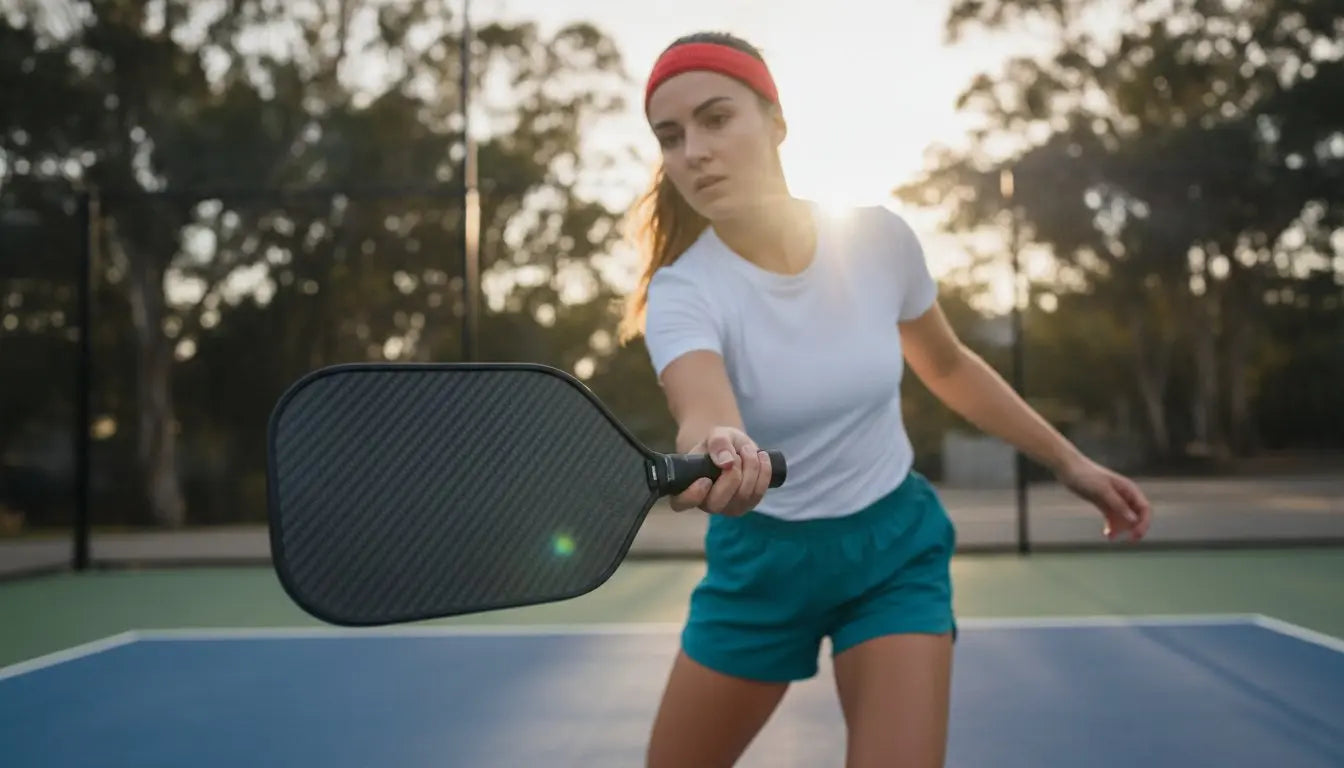
Carbon fiber isn't just a trendy material; it's a mechanical advantage that increases dwell time to give you total control over every shot. If you've felt your spin disappearing after a few months or experienced the literal sting of vibrations in your elbow, you know that not all equipment is created equal. It's easy to get lost in the jargon of T700 versus 3K weaves, but choosing the right gear shouldn't feel like a chemistry exam.
In this carbon fiber pickleball paddles review, you'll discover why these surfaces have become the gold standard for players who demand precision and longevity. We'll break down the latest 2026 construction methods that maximize RPM and help you stay compliant with the newest USA Pickleball regulations. Whether you're looking for durable pickleball paddles for spin or just want to understand the tech behind the face, we've got the expert insights to help you play your best game yet.
Key Takeaways
- Learn why high-modulus materials have become the 2026 benchmark for professional performance and durability on the court.
- Use this carbon fiber pickleball paddles review to distinguish between surface grades like T700 and Raw Carbon Fiber for elite spin potential.
- Understand the critical relationship between core thickness and face stiffness to find a paddle that offers a predictable sweet spot.
- Identify the ideal paddle shape for your game, comparing elongated reach against the stability of standard designs.
- Master essential maintenance techniques to keep your grit sharp and protect your equipment from the wear of Australian hard courts.
Why Carbon Fiber Pickleball Paddles Lead the Market in 2026
Carbon fiber has moved from a premium option to the undisputed industry standard for serious players. It's a high-modulus material prized for its incredible strength-to-weight ratio, allowing manufacturers to create gear that's both feather-light and remarkably durable. Carbon fiber is essentially a weave of carbon atoms that provides a uniform hitting surface across the entire paddle face. By 2026, professional tours are almost entirely dominated by these surfaces because they offer a level of consistency that older materials simply can't match.
When you compare it to fiberglass, the difference is immediate. Fiberglass is "poppy" and elastic, which helps with raw power but can often feel unpredictable during fast exchanges at the kitchen. Carbon fiber feels stiff and stable. This stiffness doesn't mean the ball just bounces off; instead, it allows for a more controlled energy transfer. This is a core reason why any modern carbon fiber pickleball paddles review highlights the shift toward these composite faces for competitive play.
To better understand how these materials perform in a real-world setting, watch this helpful video:
The Science of Dwell Time and Friction
The magic of carbon fiber lies in how it interacts with the ball. While the material is stiff, it's engineered to allow the ball to "sink" slightly into the face upon impact. This phenomenon, known as dwell time, gives you a split second longer to shape your shot. In Pickleball, this extra fraction of a second is the difference between a soaring out-ball and a perfect third shot drop. Surface friction is the other half of the equation. Raw carbon surfaces have a natural microscopic texture that grips the ball's skin, which is essential for generating the heavy topspin and sharp slices that define the current meta.
Carbon Fiber vs. Graphite: Clearing the Confusion
Many players use the terms "carbon fiber" and "graphite" interchangeably, but there's a structural hierarchy you should know. Graphite paddles often use a very thin veneer over a core. It's lightweight and decent for beginners, but it lacks the depth of a true carbon weave. In many cases, "graphite" is just a marketing term for lower-grade carbon applications that don't offer the same durability. True carbon fiber paddles utilize multiple layers of woven fabric, creating a much denser hitting area and a significantly larger sweet spot. When reading a carbon fiber pickleball paddles review, players often look for that damp, solid feel found in professional-grade pickleball equipment, which only a true weave can provide.
Understanding Different Types of Carbon Surfaces
Not all carbon is created equal. While early designs used generic sheets, the 2026 market relies on a specific hierarchy of grades to deliver elite performance. T300 carbon fiber is often found in budget-friendly models; it offers decent durability but lacks the refined "bite" of premium materials. As you move up the ladder to T700, you're getting a higher tensile strength material that's both thinner and more resilient. This specific grade has become a focal point in any modern carbon fiber pickleball paddles review because it allows manufacturers to stack more layers without adding unnecessary bulk to the paddle.
The manufacturing process has also seen a massive leap forward. In 2026, the best surfaces use a "peel ply" texture method. During the curing process, a textured fabric is pressed into the resin and then peeled away, leaving behind a permanent, microscopic grit. This isn't just a spray-on coating that will flake off after a few months of play; it's a structural part of the paddle's face. These advances in paddle technology ensure that your spin potential remains consistent from the first day to the hundredth. Modern resins have also improved the bond between these faces and the internal honeycomb core, virtually eliminating the dead spots that plagued older equipment.
Raw Carbon Fiber (RCF) and the T700 Standard
Raw Carbon Fiber (RCF) is the current king of the court. Unlike painted or UV-printed paddles, RCF leaves the T700 weave exposed to the ball. This matte, slightly fuzzy texture creates massive friction upon impact. You can identify genuine raw carbon by its non-reflective, textured appearance. It's designed to grab the ball's plastic skin, turning your swing speed into pure RPM. If you're looking to level up your spin game, you can browse our latest high-performance pickleball equipment to find these elite surfaces.
Thermoformed vs. Non-Thermoformed Construction
2026 has seen the perfection of "Gen 3" thermoforming. This process uses intense heat and pressure to mold the face, rails, and handle into a single, seamless piece. It eliminates the weak points found in older "sandwich" style paddles, providing much more power and a stable perimeter. While this unibody design is incredibly strong, it's worth checking for "core crush" or "disbonding" issues. These occur when the internal honeycomb collapses under extreme manufacturing heat, though 2026's improved bonding agents have made these failures increasingly rare in premium models.
Reviewing Performance: Spin, Control, and Power Dynamics
The performance of a paddle is defined by its ability to remain stable under pressure. A key takeaway from any modern carbon fiber pickleball paddles review is the expansion of the sweet spot. Because carbon fiber is inherently rigid, the energy transfer remains consistent even if you catch the ball slightly off-center. This predictability is what allows players to transition from survival mode to an offensive strategy. You aren't just fighting the paddle; you're using its structural integrity to place the ball exactly where your opponent isn't.
When selecting a face, you must consider the core thickness. A 13mm paddle combined with a stiff carbon face is a power-hitter's dream. It offers a crisp feel and high ball exit speed. Conversely, a 16mm core provides a plush sensation. The thicker core allows the carbon face to flex slightly more, which increases dwell time. This combination is ideal for those seeking high-performance pickleball paddles for intermediate players who value a soft touch at the kitchen and more forgiveness on resets.
Generating Professional Level Spin
Spin has become the great equalizer in the 2026 game. Modern testing standards now measure performance through Revolutions Per Minute (RPM) ratings. The raw carbon weave acts like a set of microscopic teeth. It bites into the plastic of the ball, allowing you to pull the paddle upward and create heavy topspin. This spin is essential for keeping high-velocity drives inside the baseline. Without this grip, the aerodynamic shapes of newer paddles would send balls sailing long. High RPM capabilities allow you to hit harder while maintaining a margin of error that keeps the ball in play.
Vibration Dampening and Arm Health
Arm fatigue and tennis elbow are serious concerns for the growing player base. As the average age of players has dropped to 34.8 years in 2026, younger and more aggressive playing styles have increased the risk of repetitive strain. High-grade carbon fiber possesses unique kinetic energy absorption properties. It dissipates the shock of impact before it travels up the handle and into your elbow. If you've struggled with joint pain, a 16mm carbon fiber option is almost always the better choice. It offers a dampened feel that protects your tendons during long sessions. For Melbourne and Sydney club players who often face windy outdoor conditions, the weight distribution in these paddles provides the extra stability needed to maintain control without over-swinging. This focus on ergonomics is a vital part of any carbon fiber pickleball paddles review for those looking to play multiple seasons without injury.
How to Choose the Right Carbon Paddle for Your Style
Your playing style dictates your gear. When reading a carbon fiber pickleball paddles review, you'll see equipment categorized by its intended use. Aggressive power players usually look for a higher swing weight to maximize their drive speed. Defensive players often prefer a balanced feel that allows for quick resets. If you play an all-court game, you need a paddle that doesn't sacrifice touch for power. Maneuverability at the kitchen is determined by the balance point; a head-heavy paddle offers more punch, while a handle-heavy design feels faster in hand-speed battles.
Handle length is another critical 2026 consideration. With the average player age dropping to 34.8 years, more athletes are bringing two-handed backhands from tennis into pickleball. A longer handle (5.25 inches or more) provides the necessary room for that second hand. It also adds leverage for increased spin. Before you buy, think about your grip size. A grip that's too small causes over-squeezing, which leads to fatigue, while one that's too large limits your wrist snap. A comprehensive carbon fiber pickleball paddles review should always account for how these physical dimensions affect your long-term comfort on the court.
Elongated vs. Standard Shapes
Elongated paddles are currently trending for both singles and high-level doubles. The extra inch of length provides a significant advantage for reach and leverage. However, this comes with a trade-off. The sweet spot on an elongated paddle is typically narrower and higher up the face. Standard shapes offer a wider hitting area and are often more forgiving for those still perfecting their timing. You can explore our complete range of pickleball gear to compare these different silhouettes side-by-side.
The 13mm vs. 16mm Debate
While we've discussed performance, the choice often comes down to personal feel. A 16mm core is the gold standard for carbon fiber control paddles. It absorbs more energy, making it easier to drop the ball softly into the kitchen. If you miss the "pop" of fiberglass but want the spin of carbon, a 13mm paddle is your solution. The thinner core returns energy faster, which is perfect for players who rely on hand speed and aggressive volleys. Core density also plays a role; a denser core paired with a T700 face creates a very consistent response across the entire surface.
Finding the right fit doesn't have to be a guessing game. If you're looking for specialist advice on pickleball gear, our team can help you find the perfect match for your swing style and experience level.
Maintaining Your Gear and Local Expert Support
Investing in high-end equipment is only the first step. While this carbon fiber pickleball paddles review has highlighted the mechanical advantages of T700 surfaces, keeping that performance sharp over multiple seasons requires a specific maintenance routine. Australian hard courts are notoriously abrasive on edge guards. A few low-ball scrapes can quickly lead to structural damage if the perimeter isn't protected. Many local players use weighted lead tape or specialized protective tape to shield the edges while fine-tuning the paddle's balance point for better maneuverability.
Storage is another critical factor for longevity. In cities like Perth or Brisbane, the extreme summer heat can be devastating to composite gear. Leaving your paddle in a hot car can cause the internal adhesives to soften and fail. This often leads to "disbonding," where the face separates from the honeycomb core, resulting in dead spots and a loss of power. Always store your equipment in a climate-controlled environment to ensure the structural integrity remains intact for years to come.
Restoring Surface Grit
Raw carbon fiber faces are famous for their elite grip, but that "bite" can seem to fade after a few months. This usually isn't the carbon wearing down. Instead, microscopic ball dust and skin oils fill the tiny gaps in the weave, creating a smooth surface. You can restore your spin potential by using a specialized rubber cleaning block. Simply rub the block over the face to lift the debris out of the texture. Never use water, glass cleaners, or harsh chemicals on a raw carbon face. These liquids can seep into the core or degrade the resin bond, permanently ruining the paddle's feel.
Visit Sturdy Racquets in Brooklyn, Victoria
Researching online is a great start, but nothing beats holding a paddle in your hand. Our specialist team in Brooklyn, Victoria, understands the nuances of the Australian pickleball scene. We provide expert advice on racquet customization and allow for hands-on testing so you can feel the swing weight before you commit. We know that every player has a unique swing, and a specialist can help you identify whether an elongated or standard shape fits your natural motion.
For players outside of Victoria, we offer fast Australia-wide shipping to Adelaide, Hobart, Canberra, and all major cities. We're committed to supporting the local community with gear that actually lasts. If you're just starting your journey, take a look at our comprehensive guide on essential pickleball equipment for beginners to ensure your kit is ready for competition. Buying from a specialist means you get gear that has been vetted for the tough Australian conditions, giving you a clear advantage every time you step onto the court.
Elevate Your Performance on the Court
The evolution of carbon fiber has fundamentally changed the way we play. From the extreme friction of raw T700 surfaces to the plush feel of a vibration-dampening 16mm core, these materials offer a mechanical advantage that was once reserved for the pros. This carbon fiber pickleball paddles review highlights that the best gear is the one that complements your specific style, whether you're a power-hitter or a master of the soft game.
Remember that longevity comes down to care. Protecting your edge guard on those abrasive hard courts and keeping your surface clean will ensure your spin remains lethal. If you're unsure which shape or thickness is right for you, browse our expert-selected range of pickleball equipment for gear that meets the 2026 standards. Our specialists in Brooklyn, Victoria, are ready with expert advice and custom tuning to help you play with confidence. We offer fast Australia-wide shipping so you can get the best gear delivered straight to your door. Get out there and make every shot count!
Frequently Asked Questions
Are carbon fiber pickleball paddles better than fiberglass?
Carbon fiber paddles offer superior control and spin compared to fiberglass models. While fiberglass is more elastic and provides a "poppy" feel that helps with power, carbon fiber is stiffer and more stable. This stiffness creates a more predictable sweet spot and allows for the precise shot-shaping required in competitive 2026 play. Most advanced players prefer the consistent response of carbon over the sometimes erratic bounce of fiberglass.
How long does the grit last on a raw carbon fiber paddle?
The texture on a raw carbon fiber paddle doesn't flake off because it's a structural part of the weave rather than a spray-on coating. While the "bite" might seem to fade, it's usually just clogged with ball dust and skin oils. If you use a rubber cleaning block regularly, the surface grit can remain effective for several seasons. This durability is a major reason why any modern carbon fiber pickleball paddles review focuses on raw surfaces for long-term value.
What is the difference between T700 and 3K carbon fiber?
T700 refers to the high tensile strength of the carbon yarn, while 3K describes the weave pattern containing 3,000 filaments per tow. T700 has become the 2026 industry benchmark for high-performance gear because it's more resilient and provides a finer texture for ball grip. While 3K weaves are still used, they often feel slightly softer and may not offer the same peak RPM (revolutions per minute) as a T700 raw carbon face.
Do carbon fiber paddles lose their "pop" over time?
Paddles eventually lose their responsiveness, but it's usually the internal honeycomb core that wears out rather than the carbon face. Repeated heavy impacts cause the core to lose its structural memory, leading to a "dead" sound or reduced ball exit speed. While carbon fiber is incredibly durable, you should expect to replace your primary paddle every 12 to 18 months if you play more than three times a week.
Is a 16mm carbon paddle better for control than a 13mm version?
A 16mm paddle is the preferred choice for control because the thicker core absorbs more impact energy. This increases the dwell time, giving you more "feel" to execute delicate dinks and resets. A 13mm version is thinner and returns energy to the ball much faster. If you're reading a carbon fiber pickleball paddles review to find gear for an aggressive, power-focused game, the 13mm is likely your best match.
How do I clean my carbon fiber pickleball paddle?
Use a specialized rubber cleaning block to lift residue out of the carbon weave. You simply rub the block across the face like an eraser to remove the white plastic dust left behind by the ball. Don't use water, glass cleaners, or any liquid detergents. These substances can seep into the edge guard or degrade the resin bond, which can permanently damage the paddle's internal structure.
Can carbon fiber paddles help with tennis elbow?
Carbon fiber is excellent for players with tennis elbow because it possesses natural vibration-dampening properties. It dissipates the shock of the ball strike before the kinetic energy can travel up the handle into your joints. For maximum protection, pair a carbon face with a 16mm core. This combination is often recommended in our Brooklyn store for players who want to stay on the court longer without pain.
Why are some carbon paddles more expensive than others?
Price differences are driven by advanced construction methods like thermoforming and the grade of carbon used. Premium paddles often feature a unibody design and foam-injected perimeters, which increase the manufacturing time and material costs. These features aren't just for show; they significantly expand the sweet spot and improve the paddle's overall durability. Investing in a high-quality model often saves you money over time by lasting longer than budget alternatives.
Share:
Essential Tennis Equipment for Beginners: The Complete 2026 Starter Guide
Best Tennis Racquets Under $200: 2026 Australian Buying Guide