



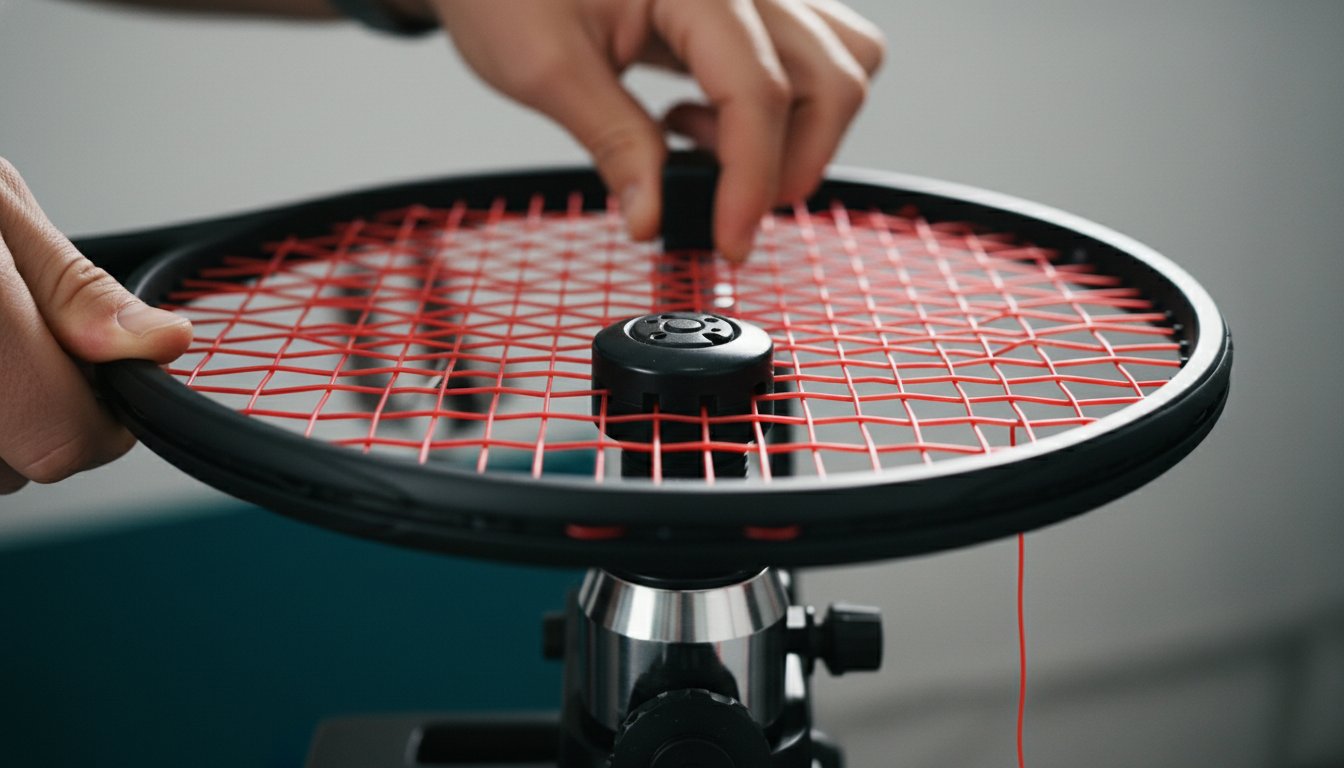
Does your favourite racquet feel… off? That crisp 'pop' has turned into a dull 'thud', and you're just not feeling connected to the ball. If you're wondering whether it's time to restring tennis racquet frames even when the strings aren't broken, the answer is a resounding yes! Old, 'dead' strings don't just rob you of performance; they can also put unnecessary strain on your arm, leading to discomfort or injury.
Many players wait far too long, losing out on the power and precision their racquet was built for. But the world of strings, tensions, and gauges can feel overwhelming. How do you know what's right for your game? And how often should you really be doing it to keep your gear in top-notch condition?
Don't worry, we're here to help! As your friendly local experts, we've created the ultimate guide to demystify the entire process. We'll show you exactly when and why to get a restring, how to choose the perfect setup, and how to unlock the fantastic power, control, and feel hiding in your frame. Let's get your gear playing its best, so you can too!
Why Restringing is Your Secret Weapon on the Court
Many players only think about restringing when a string finally snaps. But waiting that long means you've been playing with underperforming gear for weeks, or even months! Think of it like this: you wouldn't drive a performance car on bald tyres, so why play with dead strings? Getting a fresh restring is the single most impactful and affordable upgrade you can make to your game. It’s about unlocking your racquet's true potential, not just making a repair.
Our knowledgeable team can walk you through the process, but this video gives a fantastic look at what's involved:
Regain Lost Power and Pop
From the moment they're installed, your strings start losing tension and elasticity. They become 'dead', robbing your shots of their energy. A fresh set of strings restores that lively, crisp feel. They create a powerful 'trampoline effect' that propels the ball off the string bed with exceptional force. The result? You'll find yourself hitting deeper, heavier shots with less physical effort, keeping your opponent on the back foot.
Enhance Your Control and Spin
This is where a fresh string job truly shines. New strings have a clean surface and the ability to snap back into place on impact, which allows them to 'bite' the ball and generate incredible spin. Over time, strings wear down and develop notches where they cross. This prevents them from moving freely, causing the ball to slide off the string bed with less rotation. A consistent, freshly strung racquet gives you a predictable response on every shot, so you can swing with confidence. For a deeper dive into materials and gauges, this comprehensive guide to tennis strings is a top-notch resource.
Protect Your Arm from Injury
Don't underestimate the physical toll of playing with old strings. A 'dead' string bed loses its ability to absorb impact, transferring harsh vibrations directly up your arm. This constant shock can lead to serious discomfort and contribute to common ailments like tennis elbow and shoulder strain. When you restring your tennis racquet with a suitable string at the right tension, it acts as a vital shock absorber. This simple maintenance makes every hit more comfortable and is one of the best ways to protect your arm long-term.
The Telltale Signs: How to Know When to Restring
As a passionate player, you want your racquet to perform at its best every time you step on the court. A common rule of thumb is to restring as many times per year as you play per week. So, if you play twice a week, aim for a restring twice a year. However, this is just a starting point! The most important guide is how your racquet actually feels and performs. Even if it’s sitting in your bag, your racquet loses string tension over time.
Keeping an eye and an ear out for a few key indicators is the best way to know when it's time to give your racquet some love. Let’s break down the signs that you need to restring your tennis racquet.
Visual Clues Your Strings are Done
Sometimes, your strings will show you they're finished before you feel it. A quick inspection can reveal a lot about their health. Here are the top visual cues to look for:
- Notching: Look where the main and cross strings intersect. If you see deep grooves or 'notches' worn into the strings, it's a major red flag. This restricts string movement, killing spin potential and making a break much more likely.
- Fraying: This is especially common with multifilament and natural gut strings. While they offer exceptional feel, they begin to unravel as they wear. The type of string you use plays a huge role in its durability; understanding how to select the right strings for your game helps you know what signs of wear to look for.
- Discolouration: If your once-vibrant strings now look dull, dirty, and have lost their smooth texture, they are likely past their prime. This indicates material degradation and a loss of their original playing characteristics.
Performance Clues During Play
More often than not, you'll feel the decline in your strings during a match. If your racquet just doesn't feel 'right', it's probably not you-it's the strings! Listen to what your racquet is telling you:
- A 'Dead' Feeling: The most common complaint is a loss of 'pop'. The ball feels dull or 'dead' on impact, and you lose that connected feel you once had. The strings simply aren't pocketing and returning the ball with the same energy.
- Loss of Control: Are your shots suddenly flying long for no reason? Old, tension-depleted strings act like an unpredictable trampoline, making it tough to control the ball's depth and direction.
- A Change in Sound: Fresh strings make a crisp, satisfying 'ping'. Worn-out strings produce a lower-pitched 'thud'. If the sound of your shots has changed, it’s a clear sign the strings have lost their vitality.
- Reduced Power: If you feel like you have to swing much harder to generate your usual pace, your strings are no longer doing their part. You're supplying all the power, which can lead to fatigue and even injury.
Choosing Your Weapon: A Quick Guide to Tennis Strings & Tension
If your racquet frame is the body, the strings are the engine. They are the only part of your racquet that actually makes contact with the ball, and getting the right setup can make a fantastic difference to your game. When you decide it's time to restring tennis racquet, you're not just replacing old strings-you're getting a performance upgrade!
Understanding the basics of string types and tension will help you make a smarter choice. Let's break down the fundamentals to get you started.
The Main String Types
Each string material offers a unique blend of power, control, comfort, and durability. Here’s a quick look at the most popular options available at our stringing desk:
- Polyester (Poly): The top choice for advanced players and big hitters. These stiff strings offer exceptional control and spin, but can be harsh on the arm. They are built for durability and performance.
- Multifilament: Perfect for club players seeking comfort and power. Made from hundreds of microfibers woven together, these strings mimic the feel of natural gut and are much easier on your arm.
- Natural Gut: The gold standard for feel, power, and tension maintenance. It’s the most playable string type but comes with a higher price tag and is sensitive to weather.
- Hybrid: A fantastic compromise that combines two different string types (often Poly and Multifilament/Gut) to get the best of both worlds-like the control of a poly with the comfort of a multi.
Tension Basics: Power vs. Control
Tension refers to how tightly the strings are pulled into the frame, measured in pounds or kilograms. It’s a constant trade-off between hitting with power and hitting with precision.
- Lower Tension: Creates a "trampoline effect," giving you more power and a plusher, more comfortable feel. The trade-off is slightly less control as the ball stays on the strings longer.
- Higher Tension: Creates a firmer, more "board-like" string bed. This provides less power (you have to generate your own) but offers fantastic control and feedback on your shots.
Hot Tip: Check the side of your racquet frame for the manufacturer's recommended tension range. It's the perfect starting point!
This is just a quick overview to get you on the right track. For a complete breakdown, check out our Ultimate Guide to Choosing Tennis Strings.
The best way to find your perfect setup is to talk to a professional. Our expert stringers are passionate about helping players and can give you top-notch advice tailored to your racquet, playing style, and on-court goals. Let us help you get the most out of your next restring tennis racquet service!
The Big Decision: DIY vs. Professional Restringing
Once you’ve decided your strings are past their prime, the next question is: who does the work? For dedicated enthusiasts, learning to do it yourself is a tempting path. However, for the vast majority of players, trusting a professional is the smarter, faster, and more effective choice. Let’s break down why.
The Do-It-Yourself (DIY) Path
Learning to restring tennis racquet frames yourself can be a rewarding hobby, but it comes with a significant upfront investment and a steep learning curve. Before you dive in, consider the real costs involved:
- High Initial Cost: A reliable stringing machine is a serious purchase, with prices in Australia starting around A$500 for a basic manual model and soaring to over A$5,000 for electronic ones. Add in the cost of tools like cutters, pliers, and awls, and the budget grows quickly.
- Risk of Damage: Without proper training, it’s surprisingly easy to apply incorrect pressure, which can warp or even crack your expensive racquet frame. This is a costly mistake for any player.
- Time-Consuming: For a beginner, stringing a single racquet can easily take an hour or more. That’s valuable time you could be spending on the court.
- Inconsistent Results: Achieving the perfect, consistent tension across the entire string bed takes practice. Early attempts often lead to inconsistent feel and performance, defeating the purpose of a fresh restring.
The Professional Advantage
Choosing a professional stringer isn't just about convenience; it's an investment in your equipment and your game. When you bring your racquet to an expert, you get immediate access to top-tier service and peace of mind. Think of it as a pit stop for your most important piece of gear.
This mindset of professional care extends beyond the tennis court. Just as an expert stringer protects your racquet and enhances its performance, specialists in other fields provide similar value. For example, car enthusiasts understand that professional detailing and a high-quality car ceramic coating Singapore are crucial investments to preserve their vehicle’s condition and performance against the elements.
The benefits are clear:
- Expertise and Equipment: Professionals use high-end, calibrated electronic machines that guarantee precise tension every single time. Plus, you get fantastic, personalised advice on the best string and tension combination for your playing style.
- Guaranteed Quality: A professional job ensures your strings are installed correctly, maximising their lifespan and performance. This consistency helps you play with confidence, knowing your racquet will respond exactly as you expect.
- Time and Safety: Drop off your racquet and pick it up ready for action. It saves you hours of effort and completely removes the risk of accidentally damaging your frame.
Ultimately, while the DIY path has its appeal, the professional advantage provides unmatched quality, expert advice, and security. Let our experts give your racquet the pro treatment it deserves.
Your Racquet's Spa Day: The Sturdy Racquets Restringing Process
Ever wondered what happens behind the counter when you drop off your trusted racquet for a restring? At Sturdy Racquets, it’s not just a simple string swap-it's a professional service designed to get the absolute best performance out of your frame. The decision to restring a tennis racquet is the first step; trusting it to our expert hands is how you guarantee a fantastic result on court.
We’ve made our process simple, transparent, and focused entirely on you and your game.
Step 1: The Consultation & String Selection
It all starts with a chat. We don’t believe in a one-size-fits-all approach. Our knowledgeable team takes the time to understand your needs, helping you find the perfect setup. During your consultation, we will:
- Discuss your game: Are you a powerful baseliner or a touch player at the net? We’ll talk about your playing style and what you want from your strings.
- Consider your comfort: If you have any history of tennis elbow or arm sensitivity, we can recommend arm-friendly string options.
- Recommend the perfect match: Based on our chat, we’ll suggest the ideal string type and tension from our huge range of top brands like Babolat, Wilson, Luxilon, and more.
Step 2: Precision Restringing Service
Once we’ve landed on the perfect setup, your racquet is passed to our experienced technicians. Before the new strings go in, we perform a complimentary frame inspection, checking the grommets for wear and the frame for any stress fractures. Your racquet is then mounted on a professional electronic stringing machine, which guarantees precise and consistent tension throughout the entire string bed-something you just can't get with older equipment. This meticulous process ensures optimal playability and durability.
Step 3: Collection & Pro Tips
We’ll notify you by text or phone as soon as your racquet’s spa day is complete. When you pick it up, we’re happy to share a few pro tips on how to maximise the life of your fresh strings. The best part? Getting back on court and feeling that incredible "pop" and control that only a professional restring can provide. Ready to feel the difference? Bring your racquet in and let our friendly team help you play your best tennis.
Your Best Game is a Fresh Restring Away
Your racquet is more than just a frame-it's the engine of your game. As you've learned, fresh strings are the ultimate upgrade, transforming your power, control, and feel on the court. Recognizing when your strings have gone dead and understanding the impact of string and tension choice are the first steps toward unlocking your true potential.
When you're ready to restring tennis racquet for that winning edge, trust the passionate experts at Sturdy Racquets. We use professional electronic stringing machines for perfect consistency and provide friendly, knowledgeable advice from experienced players to match the right strings to your style. Plus, with our fast turnaround, you'll be back dominating the court in no time.
Ready to feel the incredible difference? Book your professional racquet restring online or visit us in-store!
Don't let old strings hold your performance back. Give your racquet the upgrade it deserves and play with renewed confidence and precision!
Frequently Asked Questions About Racquet Restringing
How much does it cost to restring a tennis racquet in Australia?
In Australia, the cost to restring a tennis racquet typically ranges from A$45 to over A$100. This total price is a combination of two things: the labour fee, which is usually around A$25-A$40, and the cost of the strings themselves. More affordable synthetic gut strings are at the lower end, while premium natural gut or high-performance polyester strings will be at the higher end. It’s a fantastic investment in your racquet's performance!
How long does a professional restringing service usually take?
Our expert stringers are quick and precise! A professional restringing service usually has a 24 to 48-hour turnaround time. This ensures your racquet is strung with the utmost care and attention to detail. If you're in a hurry for a tournament or a social hit, many specialist shops, including ours, offer an express or same-day service for a small additional fee. We’ll have you back on the court in no time!
What string tension should a beginner or intermediate player use?
That's a great question! For beginner and intermediate players, we generally recommend starting in the mid-to-low end of your racquet's suggested tension range, typically between 50-55 pounds. A slightly looser string bed provides a larger sweet spot, more power, and greater comfort for your arm, which is perfect while you're developing your strokes. Our friendly team can always provide personalised advice to find the perfect tension for your game.
Can you restring any brand or type of tennis racquet?
Absolutely! Our professional stringing machines and knowledgeable technicians are equipped to handle virtually any modern tennis racquet, regardless of brand or type. Whether you play with a Wilson, Babolat, Head, Yonex, or any other popular brand, we’ve got you covered. From oversized adult frames to junior racquets, we provide a top-notch, reliable service for every single player. Bring your racquet in, and we'll give it the expert care it deserves.
Will new strings really make a big difference to my game?
You bet it will! Fresh strings are one of the most impactful and affordable upgrades you can make to your equipment. Over time, strings lose their tension and elasticity, which kills your power, control, and feel. When you restring your tennis racquet, you'll immediately notice a fantastic improvement in ball pocketing, spin potential, and overall responsiveness. It’s like putting a brand-new engine in your favourite car-the difference is truly night and day!
Is it worth restringing an old or cheap tennis racquet?
In most cases, yes! As long as the frame itself is in good condition and free of cracks, a fresh set of strings can breathe new life into an older or more affordable racquet. It's an incredibly cost-effective way to dramatically improve its performance and playability. If you aren't ready to invest in a brand-new frame, a restring is a smart move that will give you a much better on-court experience for a fraction of the price.
Share:
Nike Tennis Shoes: The Ultimate 2026 Australian Buyer's Guide
What is Squash? A Beginner's Guide to the Ultimate Racquet Sport