



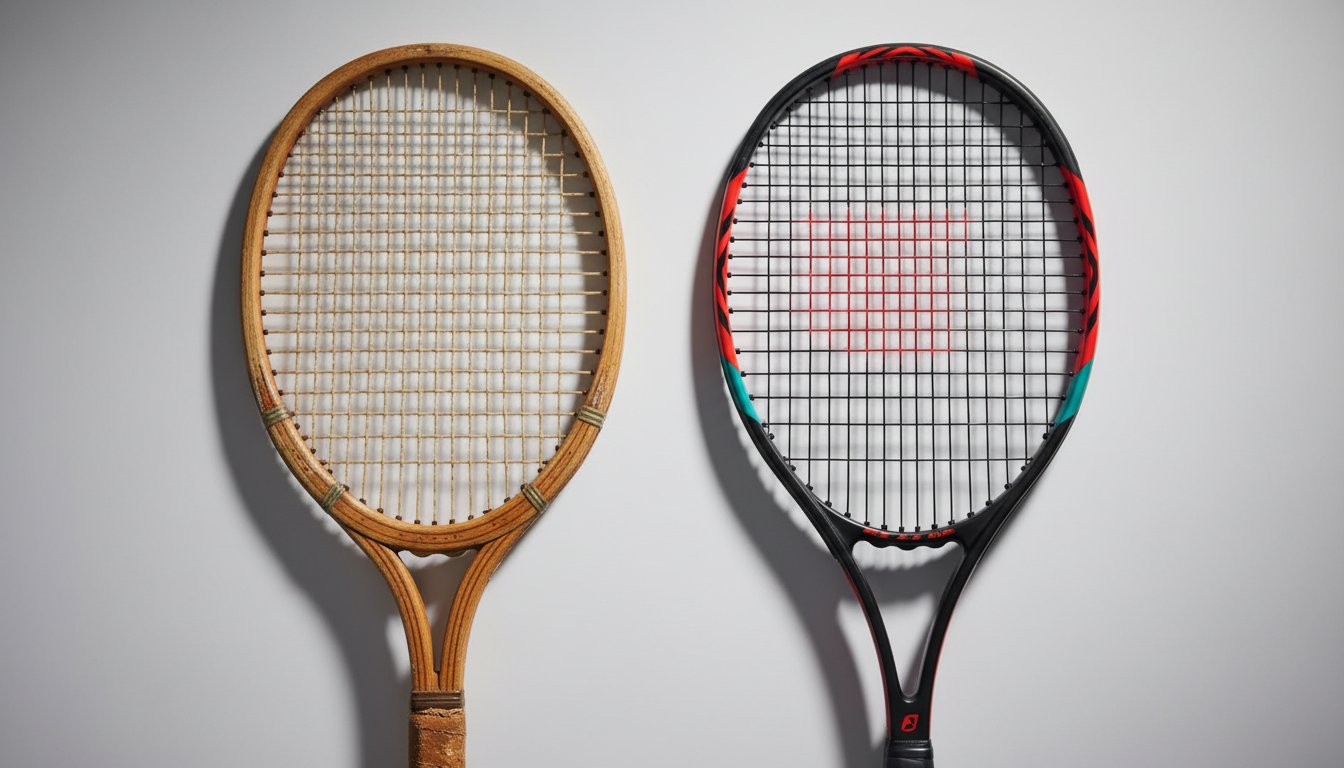
Feeling like you're in a slump on the court? Your shots feel flat, unforced errors are creeping into your game, and maybe your arm is feeling it after every match. Before you start overhauling your technique, it's worth asking a crucial question: is your trusty racquet the real culprit? It?s a common dilemma for Aussie players, and the answer isn't always as simple as a broken string.
Knowing when to part with a beloved frame can be tricky. That?s why our team of experts has put together this guide on the definitive signs you need a new tennis racquet. We're here to help you distinguish between a simple fix, like a fresh set of strings, and a clear signal that your equipment is holding your game back. Consider this your ultimate checklist to confidently decide if it's time for an upgrade, ensuring your gear helps?not hinders?your performance.
Key Takeaways
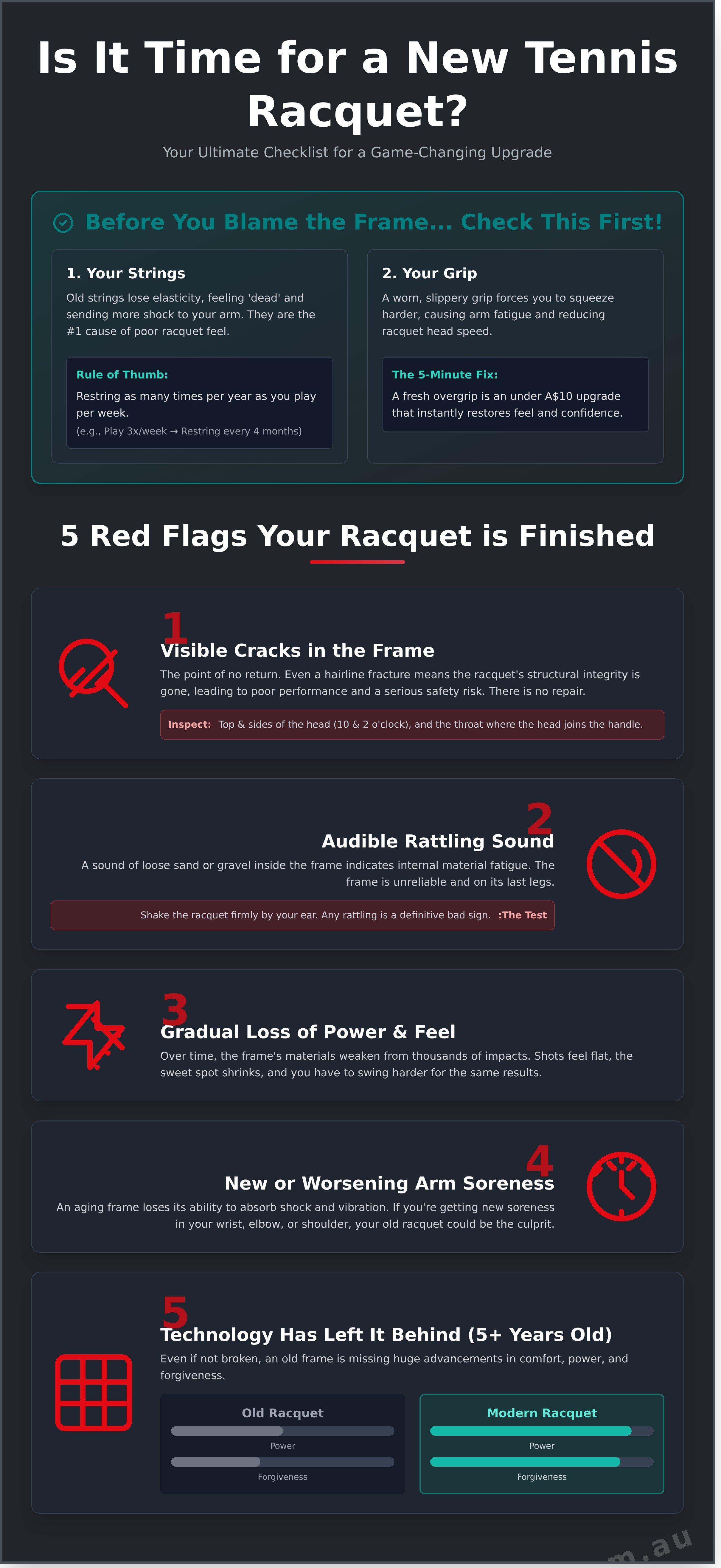
- Before blaming the frame, check your strings and grip. A simple, affordable fix here can often restore your racquet's feel and save you from a needless purchase.
- Visible cracks, fractures, or a persistent rattling sound are non-negotiable signs you need a new tennis racquet for both your safety and performance.
- A gradual loss of power, new arm soreness, or feeling like your skills have surpassed your equipment are key on-court clues that your racquet is holding you back.
- Even if it isn't broken, a racquet over 5 years old is likely missing huge technological advancements that make modern frames more powerful, comfortable, and forgiving.
Before You Blame the Frame: Check Your Strings & Grip First
Is your racquet feeling sluggish, unpredictable, or just plain wrong? Before you start looking for signs you need a new tennis racquet and prepare to spend hundreds on a new frame, let's talk about a much cheaper fix. While the evolution of tennis racquet technology has given us incredible graphite and carbon fibre frames, the soul of any racquet is its stringbed and grip. These two components are responsible for the vast majority of its feel and performance, and a simple refresh can make your trusted stick feel brand new again.
How Old Strings Mimic a 'Dead' Racquet
Think of your strings like the engine of a car?they lose power over time. As you play, strings constantly stretch and return to position, but they gradually lose their elasticity. This loss of tension and resilience results in a 'dead' or 'board-like' feeling on impact. You'll notice a significant drop in power, a less forgiving sweet spot, and poor ball feedback. More importantly, these 'dead' strings no longer absorb impact shock effectively, sending harsh vibrations straight to your arm and increasing the risk of tennis elbow.
The Rule of Thumb: When to Restring
A fantastic guideline for club players is to restring as many times per year as you play per week. If you play three times a week, you should aim for a fresh set of strings every four months, even if they haven't broken. Other clear signs it's time for a restring include:
- Your strings are visibly frayed or have deep notches where they intersect.
- The sound of impact has changed from a crisp 'ping' to a dull 'thud'.
- You're losing control and your shots are spraying unexpectedly.
If your strings look and feel tired, they probably are. Not sure if it's time? Chat with our stringing experts for advice.
Is Your Grip Slipping? An Easy 5-Minute Fix
Your grip is your only connection to the racquet. When an overgrip becomes worn, smooth, and slippery, you subconsciously squeeze the handle harder to prevent it from twisting in your hand. This constant tension causes arm fatigue, reduces racquet head speed, and can lead to sloppy technique. For under A$10, a fresh overgrip is the cheapest and fastest upgrade in tennis. It takes just five minutes to apply and instantly restores a secure, tacky feel, giving you the confidence to swing freely.
Sign 1 & 2: Visible Damage and Audible Warnings
Some performance issues can creep up slowly, but physical damage is your racquet waving a big red flag. Of all the signs you need a new racquet, these are the most critical and non-negotiable. Playing with a compromised frame isn?t just bad for your game?it?s a safety risk. Let?s break down the clear visual and audible cues that mean it's time for an immediate replacement.
Visible Cracks in the Frame: The Point of No Return
This is the most serious sign of all. Even a tiny, hairline fracture in the graphite means the racquet's structural integrity is gone. A cracked frame won?t transfer energy properly, leading to a dead feel, loss of power, and unpredictable shots. More importantly, it can snap completely during a powerful swing, which is incredibly dangerous. There is no safe or effective way to repair a cracked frame. Grab your racquet and carefully inspect these key areas:
- The top and sides of the racquet head (the 10 and 2 o'clock positions).
- The throat area, where the head joins the handle.
- Anywhere you've had a significant impact with the court or net post.
The 'Rattle Test': Is Something Loose Inside?
Here?s a simple test you can do right now. Hold your racquet by the grip and shake it firmly next to your ear. Do you hear a rattling sound, like a small piece of sand or gravel is trapped inside? That noise is often a piece of graphite or resin that has broken free from the frame's inner wall. This is a clear indicator of internal material fatigue. While it might still feel okay to hit with, a rattling frame is an unreliable one that's on its way out.
Worn-Out Bumper Guard and Grommets
The plastic strip at the top of your racquet (the bumper guard) and the small inserts where the strings enter the frame (the grommets) are your racquet?s first line of defence. They protect the graphite from scrapes, impacts, and the friction of the strings. When they become cracked, flattened, or worn through, the frame itself is exposed to damage. While you can replace a grommet set, severe wear is often one of the first signs you need a new tennis racquet, as it suggests the frame has seen countless hours of tough play.
Sign 3 & 4: Performance Clues on the Court
While a cracked frame is an obvious deal-breaker, some of the most important signs you need a new tennis racquet aren't visible at all?they're felt during play. These performance issues creep up slowly, and it?s easy to blame your technique. But often, the real culprit is your equipment. This is usually due to "frame fatigue," where the graphite fibres in your racquet break down after thousands of impacts. Trust your gut; if your racquet just doesn't feel right anymore, it probably isn't.
Your Shots Have Lost Their 'Pop' (Loss of Power)
Do your groundstrokes feel a bit flat? Does your serve lack its usual sting? Over time, a racquet's frame becomes 'soft' or 'played out'. Think of it this way: a fatigued frame starts to absorb more of the impact energy instead of transferring it back into the ball. The result is a noticeable drop in power. If a fresh set of high-quality strings doesn't bring back that familiar punch, your frame is almost certainly the reason.
You're Struggling with Control and Consistency
Frame fatigue doesn't just steal power; it wreaks havoc on your control. A 'soft' frame is less stable and predictable, especially when you don't strike the ball perfectly. Suddenly, balls that used to find the court are sailing long or wide for no apparent reason. You might also notice that the sweet spot feels smaller and less forgiving, leading to a frustrating increase in unforced errors that can't be explained by a change in your swing.
You Feel More Vibration and Discomfort
One of the most critical performance clues is how the racquet feels at impact. A healthy frame is engineered to absorb and dampen harsh vibrations. As it wears out, more of that shock travels directly up your arm, creating a jarring, unpleasant sensation. This isn't just uncomfortable; it's a leading contributor to arm fatigue and can seriously increase your risk of developing nagging injuries like tennis elbow. If your arm is aching more than usual after a hit, your old racquet could be to blame.
Sign 5 & 6: Your Game Has Outgrown Your Racquet
Sometimes, the need for a new racquet isn't about wear and tear?it's about your own fantastic progress on the court! This is one of the most positive signs you need a new tennis racquet, because it means you've put in the hard work and your skills have levelled up. Think of it less as a replacement and more as a well-deserved promotion. Upgrading is a smart investment in your game, ensuring your equipment can keep up with your growing talent.
You've Graduated from a Beginner Frame
That first racquet was perfect for learning the ropes. It was forgiving, easy to swing, and helped you find the middle of the strings. But now, you're generating your own power and looking for more precision. If your starter frame feels too light or unstable against hard-hitting opponents, it's likely holding you back. It?s time for a racquet that offers the control and feel your new skills demand.
Your Playing Style Has Evolved
As you play more, your unique style begins to shine through. Perhaps you've transitioned from a defensive player to an aggressive baseliner who loves hitting with heavy topspin. Your original racquet might not be suited for this new approach. Different specs are designed for different games:
- Heavier racquets offer more stability and power for baseline battles.
- Head-light racquets provide extra manoeuvrability for all-court players and volleyers.
Matching the frame to your playing style is crucial for peak performance.
You're Developing Aches and Pains
While technique is often the primary cause, don't overlook your equipment if you're feeling new aches in your arm, wrist, or shoulder. A racquet mismatch can contribute significantly to issues like tennis elbow. A frame that is too stiff, too light, or has the wrong balance for your swing can increase vibrations and strain. Modern racquets feature exceptional dampening technologies designed to protect your arm and improve comfort, making every hit feel smoother.
If these points resonate with you, it's a clear signal that it's time to find a frame that truly complements your game. Our knowledgeable team at sturdyracquets.com.au is always here to offer expert advice to help you make the perfect choice.
Sign 7: Technology Has Left Your Racquet Behind
Are you still playing with that trusty frame you?ve had for five, ten, or even fifteen years? We get it. It feels familiar, and you?ve shared some great wins with it. While it might not be cracked or broken, its outdated design could be holding your game back. If you haven't upgraded in a long time, you're likely missing out on one of the clearest signs you need a new tennis racquet: the incredible leap forward in technology.
Think of it like using an old wooden driver in golf; you can still play, but you?re making the game much harder for yourself. Modern racquets are engineered to make tennis more enjoyable, powerful, and arm-friendly.
What Has Changed in Racquet Design?
Racquet technology isn't just marketing hype; the changes are real and deliver tangible results. Modern frames use sophisticated graphite and carbon layups with built-in dampening materials to filter out harsh vibrations without sacrificing feel. Beam shapes have become more aerodynamic, allowing you to swing faster with less effort. Most importantly, engineers have perfected frame geometry to create much larger, more forgiving sweet spots than ever before.
The On-Court Benefits of Modern Tech
So, what does all that science mean for your game? When you step on the court with a new racquet, you'll immediately feel the difference. The benefits are fantastic:
- Effortless Power: Modern frames do more of the work for you, generating extra pop on your serves and groundstrokes. This means you can hit bigger without swinging harder, reducing strain on your arm and shoulder.
- Amazing Consistency: The larger sweet spot is a game-changer. Shots that would have felt clunky or flown wide with your old racquet now feel solid and find the court, giving you the confidence to go for your shots.
- Better Feel and Spin: New materials provide a cleaner, more connected feel to the ball. You?ll have more touch on your volleys and drop shots, and the frames are designed to help you generate heavy topspin with ease.
Is It Time to Demo Something New?
Reading about the benefits is one thing, but feeling them is another. The only way to truly understand the advancements is to get a modern racquet in your hands. A great starting point is to demo a new version of the racquet you currently use?it provides a perfect baseline for comparison.
If you're ready to see how new tech can elevate your game, why not explore what's available? Check out our latest range of racquets to see what?s new from the world's best brands. You might just find your new favourite frame!
The Final Verdict: Is It Time for a New Racquet?
Recognising the signs you need a new tennis racquet is the first step toward elevating your performance on the court. From visible cracks and strange buzzing sounds to a noticeable drop in power or the simple fact that your skills have outgrown your beginner frame, your equipment plays a monumental role in your confidence and success. Don't let an outdated or damaged racquet be the unforced error that holds your game back.
Making the switch is an exciting opportunity to unlock your true potential. Here at Sturdy Racquets, we're more than just a store; we're a team of passionate players ready to offer expert advice to help you find that perfect match. With Australia's biggest racquets range and a professional in-store stringing service, you can be confident you're getting the best gear and setup for your unique style of play.
Feel like it's time for a change? Explore our huge range of new tennis racquets!
Here's to finding your perfect match and hitting your best shots ever. We can't wait to see you on the court!
Frequently Asked Questions
How long does a tennis racquet actually last for a regular club player?
For a club player on the court a couple of times per week, a racquet frame will perform at its best for about 2-3 years. After thousands of impacts, the frame's materials naturally soften and lose some of their original stiffness. This "frame fatigue" leads to a loss of power and a less responsive feel. While the racquet won't suddenly break, getting a new one will feel like a fantastic upgrade in performance and feel.
Can a cracked or broken tennis racquet be repaired?
Unfortunately, repairing a cracked racquet frame is not a safe or recommended solution. Modern racquets are built from precisely layered composites like graphite, and any crack permanently compromises their structural integrity. A repair can create an unpredictable weak spot that affects performance and could fail during play. A crack is one of the most definite signs you need a new tennis racquet, and it?s the perfect time to find a great replacement.
Does restringing my racquet often make the frame wear out faster?
That's a great question! Professional restringing is essential maintenance and does not cause your frame to wear out faster. Racquets are specifically engineered to handle the high tension of strings. The real wear comes from the cumulative stress of hitting the ball thousands of times. Keeping your racquet freshly strung actually helps it perform at its best and is much better for your arm, so don't hesitate to do it regularly!
Is it worth buying an expensive, modern racquet if I only play occasionally?
While a top-tier racquet (often A$300+) offers exceptional technology, a casual player might find better value in a mid-range model. You can get a fantastic racquet in the A$150 - A$250 price range that provides a perfect blend of power, control, and comfort for social games. It will be a huge step up from a basic racquet without the premium price tag. Our team can always offer great advice to find the perfect fit.
How do I know if the problem is my racquet or just my technique?
The best way to find out is to demo a new racquet. If you try a modern frame suited to your style and notice an immediate, positive difference in feel, power, or control, it?s a strong indicator that your old racquet is holding you back. However, if the same issues persist with the new racquet, it might be a good time to focus on some coaching to refine your technique. Often, it's a bit of both!
Will a new racquet instantly improve my game?
A new racquet that fits your game can provide an immediate boost in confidence and feel. You might find serves have more pop or volleys feel crisper right away. However, it?s a tool, not a magic fix for technique. The right racquet allows you to play your best tennis, but true, long-term improvement will always come from practice and dedication. A new frame simply makes that hard work more rewarding.
Share:
Is an Expensive Tennis Racquet Worth It? An Expert Breakdown
Professional Racquet Restringing Melbourne: The Ultimate Guide to Power and Precision