



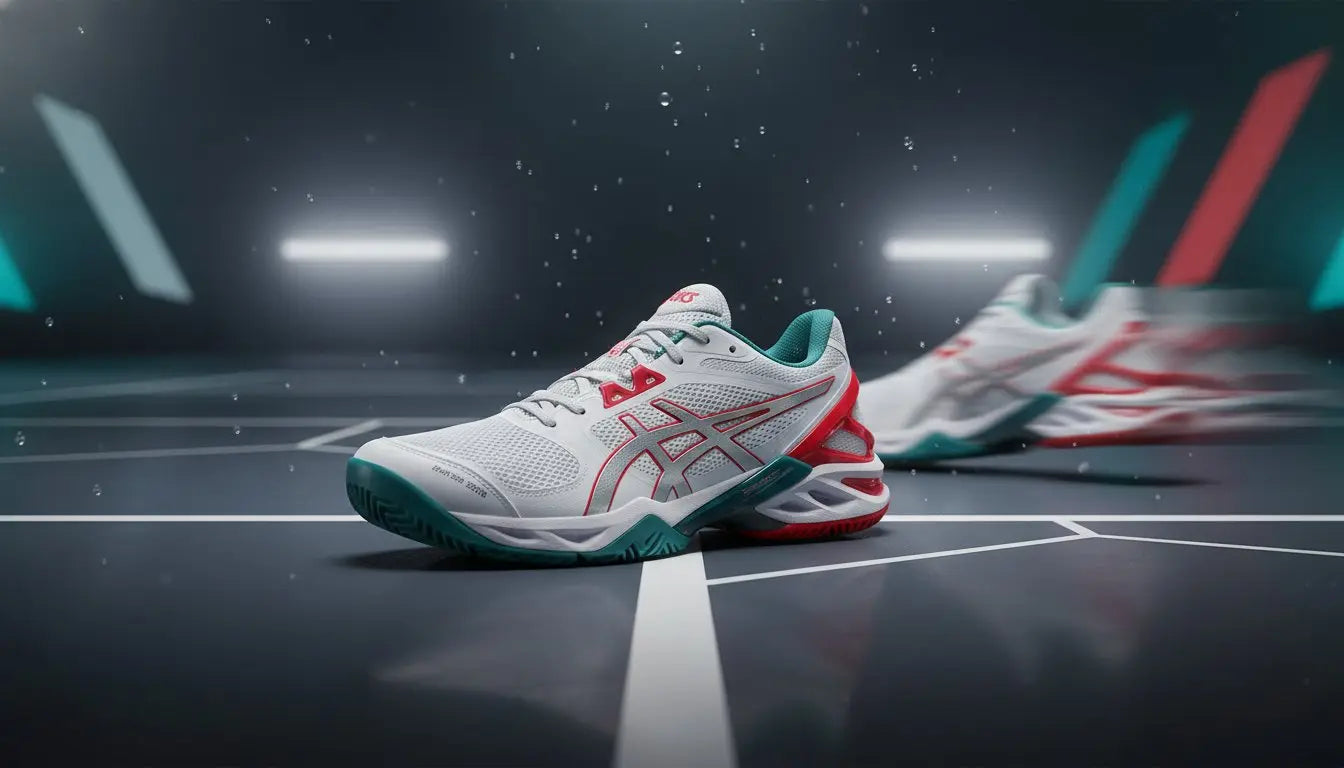
Imagine it's a 36-degree Saturday afternoon in Sydney, and you're lunging for a crucial cross-court volley when your grip suddenly falters. That split second of instability often leads to the dreaded ankle roll, an injury that sidelined 15 percent of club players in a 2023 sports medicine survey. We understand the frustration of seeing your gear wear down after just twelve weeks of intense play on abrasive Australian courts. By choosing the right asics au models, you can secure the lateral support needed to stay upright and the breathability to keep your feet cool during a third-set tiebreak.
In this guide, you'll learn exactly how to select high-performance footwear that boosts your speed while protecting your joints. We'll show you how to identify the durable court shoes for hard surfaces that can survive a full 2026 season without losing their structural integrity. This breakdown covers the essential technology for superior stability and explains which designs offer the best court coverage for both tennis and pickleball enthusiasts. From preventing common injuries to shaving seconds off your sprint, we're here to help you make a smarter, faster buying decision for your next match.
Key Takeaways
- Learn how specialized court footwear protects against common ankle and knee strains by supporting the intense lateral movements required on Australian courts.
- Identify your unique "footwear DNA" to determine whether you need a stability-focused model for the baseline or a lightweight, speed-oriented design.
- Discover the critical differences between outsole patterns to ensure you have the perfect traction for hard courts, clay, or synthetic grass.
- Master the "Thumb Rule" and explore width considerations to find a secure, high-performance fit within the asics au range.
- Understand the performance benefits of getting a professional fitting from local racquet specialists who play the game in the Melbourne community.
Why Specialised Footwear Matters for Australian Racquet Sports
Australian tennis and pickleball players face unique physical challenges every time they step onto the court. Whether you're competing in a local tournament or hitting with friends at the club, your feet endure immense stress. Choosing the right gear from the asics au range isn't just about aesthetics; it's about surviving the high-intensity environment of modern racquet sports. Most players start with a pair of standard runners, but they quickly realize that forward-motion shoes don't hold up when you're lunging for a cross-court volley or sliding into a defensive baseline shot.
Understanding the history of athletic shoes helps us see how far technology has evolved to meet these demands. Early designs were basic, but today's court-specific models are precision-engineered for 360-degree movement. In Australia, where hard courts can reach surface temperatures over 55 degrees Celsius in mid-summer, the combination of friction and heat requires a much higher standard of construction than a typical gym shoe. To better understand how these technical elements come together, watch this helpful video analysis:
Lateral Support vs. Linear Cushioning
Running shoes are built for a repetitive heel-to-toe gait. They're lightweight and flexible, which is perfect for a straight-line jog but dangerous on a tennis court. Court-specific footwear prioritizes side-to-side stability by using reinforced side-walls that prevent the foot from sliding off the footbed during sharp cuts. Torsional stability is the resistance to twisting during heavy court movement. Without this rigidity, you risk painful ankle rolls and knee strains. When you're playing at a high level, your joints can absorb up to five times your body weight during a sudden stop, making the asics au support system essential for long-term joint health.
Durability Standards for 2026
As we move into the 2026 season, outsole technology has reached a new peak of performance. Manufacturers now use high-abrasion rubber compounds designed specifically for the abrasive grit of Australian hard courts. These materials provide the grip needed for explosive starts without wearing down after a few weeks of heavy use. If you're an aggressive mover who slides on hard courts, look for shoes with integrated toe-drag protection to prevent premature holes in the upper. You can find a wide range of options in our specialized footwear for court sports to ensure your gear lasts through the toughest summer sets. Transitioning to sport-specific shoes is the most effective way to improve your footwork while protecting your body from the repetitive impact of competitive play.
Stability vs. Speed: Identifying Your Footwear DNA
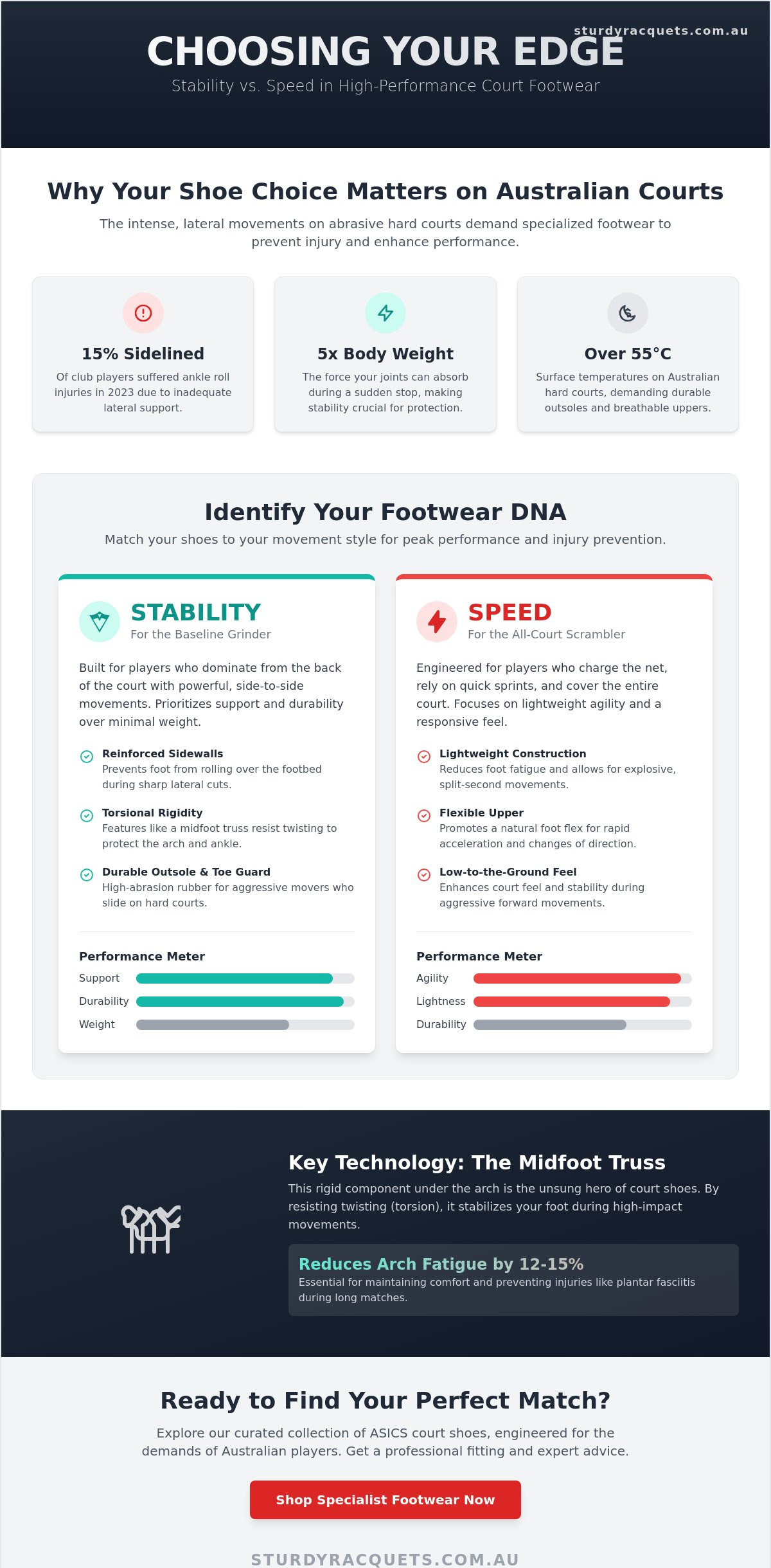
Choosing the right pair of shoes isn't just about the aesthetic. It's about matching your footwear to your specific movement patterns on the court. In Australia, where hard courts are the standard for most club competitions, the choice between stability and speed determines how your joints feel after a two-hour session. When you look at the latest asics au range, the models are split into two distinct categories based on how you move.
Stability-focused models are built for the grinders. If you find yourself pinned to the baseline, sliding into wide balls and hitting heavy cross-court winners, you need a platform that won't roll. Conversely, speed-focused designs cater to the "scramblers" who charge the net and rely on lightweight agility. For the average club player, hybrid options offer a middle ground, often weighing around 360 grams while still providing enough lateral support for weekend matches.
A key technical feature in these shoes is the midfoot truss. This rigid component sits under the arch to prevent the shoe from twisting. By controlling torsion, it reduces arch fatigue by roughly 12% to 15% during extended play. This keeps your foot in a neutral position, which is vital for preventing common injuries like plantar fasciitis.
The Baseline Specialist Profile
Baseline specialists require a "locked-in" feel to handle aggressive side-to-side shifts. These shoes are typically heavier, often exceeding 400 grams, to accommodate maximum cushioning and extensive lateral wraps. These wraps are essentially extensions of the outsole that move up the side of the shoe, providing a solid wall for your foot to push against during a change of direction.
The wrap-around outsole is particularly beneficial for sliding on hard courts. Recent research on tennis shoe outsole patterns shows that specific tread designs and rubber compounds significantly impact how a shoe grips and releases. For baseline players, a durable outsole that covers the toe and medial side prevents premature wear during those deep defensive lunges. If you're looking to upgrade your setup, you can explore a wide range of high-performance tennis footwear designed for this exact playing style.
The All-Court Attacker Profile
If your game is defined by quick transitions from the baseline to the net, an all-court shoe is your best bet. These models prioritize a low-to-the-ground feel, which improves your proprioception and reaction time. They use flexible uppers and reduced foam density to keep the weight closer to 300 grams. This lightness is essential for those explosive first steps needed to chase down a drop shot.
Vertical flexibility is the secret weapon here. While stability shoes are stiff to prevent rolling, speed shoes allow the forefoot to bend naturally. This flexibility mimics the foot's natural biomechanics, allowing for a more efficient toe-off. This is why many top-tier players in the asics au lineup prefer a more minimalist upper that doesn't restrict movement during high-intensity rallies.
Comparing Outsoles: Hard Court vs. Clay Court Performance
Choosing the right outsole isn't just about style; it's about staying upright during a heavy rally. In the diverse Australian club environment, you'll often find yourself switching between gritty hard courts and slippery synthetic grass. This is where your choice of asics au footwear becomes a tactical advantage. Most local players gravitate toward "All-Court" outsoles. These designs provide a balanced grip that handles the abrasive nature of acrylic hard courts while still offering enough bite for a weekend match on a "classic clay" synthetic surface.
Safety starts from the ground up. You should inspect your tread every 3 to 4 months if you play twice a week. Once the pattern flattens or you see the midsole material peeking through, your grip levels drop significantly. This increases your risk of ankle rolls or slips during lateral lunges. If you're playing at indoor centers across Victoria, non-marking outsoles are a strict requirement. These specialized rubber compounds ensure you don't leave streaks on the polished surfaces, keeping you in the good books of the club manager. Investing in quality asics au models means you're getting rubber compounds specifically tested for these high-friction environments.
Hard Court Durability Features
Hard courts are unforgiving. They generate intense heat through friction as you sprint and stop. Shoes designed for these surfaces use a denser, high-abrasion rubber compound in high-wear areas like the pivot point and the medial toe. This material resists the "grinding" effect of the court, ensuring your investment lasts longer. You can explore a variety of premium tennis footwear for all court surfaces to see how these reinforced tread patterns differ from standard trainers. This extra density helps dissipate heat, preventing the rubber from softening and wearing down prematurely during a hot afternoon set.
Clay and Grass Court Traction
True clay courts and many Australian synthetic grass surfaces require a full herringbone pattern. This zig-zag design is engineered to "bite" into the loose surface and then release the material as the shoe flexes. Without this specific grip, clay or sand builds up in the grooves, turning your shoe into a smooth, dangerous slide. A dedicated clay sole is non-negotiable for safety on slippery surfaces because it provides the predictable "slide and stop" mechanic that prevents groin strains. The difference in slide control is massive; while a hard court shoe might "stutter" on clay, a herringbone pattern allows for a smooth, controlled glide into your shot.
Finding the Perfect Fit: Sizing and Width Considerations
Choosing the right pair from the asics au range involves more than just picking your standard street shoe size. Court sports require explosive lateral movements and sudden stops, which place unique stress on your feet. To ensure peak performance, you should always use the "Thumb Rule." There should be roughly 1.2 centimetres of space, about the width of your thumb, between your longest toe and the front of the shoe. This gap prevents your toes from smashing into the toe box during aggressive lunges, which is the primary cause of "black toe" or bruised nails among competitive players.
Width is equally critical for Australian players. While many standard models are built on a medium last, players with broader feet should specifically look for dedicated D (wide) or 2E (extra wide) options. Selecting a shoe with a broader toe box prevents the midfoot from spilling over the side of the sole. This prevents stability issues and stops the synthetic uppers from blowing out prematurely. If you feel a pinching sensation on the outer edge of your pinky toe during side-to-side drills, it's a clear sign you need a wider fit.
Heel lockdown is the final piece of the fit puzzle. If your heel slips even slightly, you risk friction blisters and lost energy during sprints. Most high-performance models in the asics au lineup feature an extra eyelet at the top. Use this for a "runner's loop" to pull the heel cup snugly against your Achilles. Don't forget to account for your socks. A thick, cushioned tennis sock can add up to 3 millimetres of volume compared to thin trainer socks, which can effectively change your required shoe size by a half-step.
Addressing Common Fit Issues
If you have high arches or flat feet, standard factory insoles might not provide enough support. Many competitive players replace these with specialised orthotics to improve alignment. Modern synthetic uppers are designed to be durable, but they still require a break-in period. Expect about 3 to 5 hours of light hitting before the materials fully soften and conform to your foot shape. If you experience pressure on the top of your foot, try "window lacing" to skip an eyelet and relieve tension on the bridge.
Junior to Adult Transitions
Younger players often face a tricky transition when moving from junior sizes into the adult performance ranges. Junior shoes are built for lighter frames; once a player reaches 45kg to 50kg, they often need the enhanced cushioning and torsion control found in adult models. Matching the right footwear with high quality tennis gear for younger players ensures they develop proper footwork habits without injury risks.
Why Shop with an Australian Racquet Specialist?
Choosing the right gear involves more than just picking a pair of shoes from a digital shelf. When you browse the latest asics au range, shopping with a local specialist ensures you receive equipment that actually fits your specific needs. Our team consists of active players who hit the courts in Melbourne every week. We understand how the local climate and surface grit impact your footwear's lifespan. You aren't just talking to a retail clerk; you're getting advice from someone who knows why a specific lateral support system works better for your movement patterns.
Visiting our Brooklyn, Victoria location allows for a precision physical fitting. This is vital because court shoes must be snug to prevent blisters but flexible enough for explosive sprints. Since 2018, we've helped thousands of players find their perfect size. If you can't make it to the store, we offer fast, reliable shipping across all Australian states. We process 95% of online orders within one business day so you don't miss your next match. We also help you build a complete setup by matching your asics au shoes with technical socks and court accessories to maximise comfort during long three-set battles.
The Sturdy Racquets Difference
We provide personalised recommendations based on your specific racquet and playing style. Whether you're a baseline grinder or a net rusher, your gear needs to work in harmony. We curate a range of the highest performing models to ensure quality across every price point. To keep your new investment protected, consider pairing your footwear with durable tennis bags for carrying multiple racquets and court essentials. This keeps your kit organised and prevents your shoes from getting scuffed in transit.
Join the Local Community
Our Brooklyn store is open Monday to Saturday, providing professional stringing services with a 24-hour turnaround for most players. We're proud to support Victorian tennis and pickleball clubs, helping grow the sport through sponsorship and equipment support. You'll often find us at local tournaments or hosting demo days at clubs across the western suburbs. We believe in building long-term relationships with every player who walks through our doors. Ready to upgrade your game? Explore our full range of high-performance court footwear and find your perfect match today.
Step Onto the Court with Confidence in 2026
Selecting the right footwear is the most critical equipment decision you'll make this season. Your choice directly affects lateral stability and joint protection during intense rallies. By matching your shoe to your specific movement DNA and court surface, you'll reduce the risk of injury and improve your reaction times. Finding the perfect asics au fit ensures you have the technical support required for the fast paced nature of modern racquet sports.
Sturdy Racquets is more than a store; we're a hub for passionate players. Our expert team offers professional fittings at our Brooklyn, VIC location to help you find the right width and support. We're highly rated by local club players for our knowledgeable advice and commitment to the game. With fast shipping across Australia, you can upgrade your gear and get back to winning sooner. Don't let the wrong equipment hold your performance back.
Shop the latest high-performance court shoes to find your perfect match today. We're here to help you play your best game yet!
Frequently Asked Questions
How long should a pair of high-performance tennis shoes last?
High-performance court shoes typically last between 45 and 60 hours of competitive play before the midsole cushioning loses its structural integrity. If you hit the court twice a week for two hours, expect to replace your gear every four to five months. Look for visible wear on the outsole tread or feel for a lack of "bounce" during lateral movements to know it's time for a fresh pair.
Can I use running shoes for tennis or pickleball?
You shouldn't use running shoes for court sports because they lack the lateral support needed for side-to-side movements. Running shoes are designed for forward motion and often have high stacks that increase the risk of ankle rollovers on the court. Investing in dedicated [durable footwear for court sports] ensures you have the reinforced outsoles and stable wraps required for the 70% of tennis movements that happen laterally.
What is the difference between a stability shoe and a speed shoe?
Stability shoes feature reinforced midfoot wraps and sturdier materials to prevent foot twisting, making them ideal for baseline players. Speed shoes prioritize weight reduction, often weighing under 350 grams, to help aggressive movers reach the ball faster. When browsing the asics au range, choose stability for maximum protection or speed models for a lightweight, "closer to the ground" feel that enhances your quickness.
Do I really need different shoes for clay and hard courts?
Yes, using court-specific outsoles is essential for safety and performance on different surfaces. Clay court shoes feature a full herringbone tread pattern that releases packed dirt and allows for controlled sliding. Hard court shoes use a more durable rubber compound with a modified tread to withstand the high friction of concrete surfaces. Using the wrong [performance shoes for different surfaces] can lead to slips or premature wear.
How do I know if I need a wide-fit court shoe?
You likely need a wide-fit shoe if you experience numbness or "hot spots" on the sides of your feet after 20 minutes of play. Use a Brannock device at a local Australian sports store to check if your forefoot exceeds a standard D width for men or B width for women. Many players in the asics au community find that 2E or 4E widths provide the necessary room to prevent bunions and discomfort during long matches.
What are the best court shoes for preventing ankle rolls?
The best shoes for ankle protection feature a wide lateral outrigger and a firm heel counter to lock the foot in place. Look for models with a lower stack height, which keeps your center of gravity closer to the court surface to minimize leverage during sharp turns. Choosing [stable footwear for lateral movement] helps reduce the 25% of tennis injuries that involve the ankle joint, giving you more confidence to sprint for every ball.
Are these shoes suitable for both tennis and netball?
Most high-performance tennis shoes are excellent for netball because both sports require intense lateral braking and pivoting. The non-marking rubber outsoles and reinforced toe caps found in our [versatile indoor and outdoor court shoes] meet the strict requirements of Australian netball associations. They provide the necessary cushioning to handle the high-impact landings common in "goal circle" play while maintaining long-term durability on abrasive outdoor courts.
How should I clean and maintain my court shoes to make them last longer?
Clean your shoes by hand using a soft brush and mild detergent, rather than putting them in a washing machine which can break down technical glues. Always air dry them at room temperature, as high heat from a dryer or direct Australian sun can shrink the synthetic materials. Removing the insoles after a match helps moisture evaporate faster, preventing the growth of bacteria and maintaining the shoe's shape for a more comfortable fit.
Share:
2026 Racket Technology: The Future of Racquet Sports Gear and Trends
Signs You Bought the Wrong Tennis Racquet: How to Spot a Spec Mismatch