



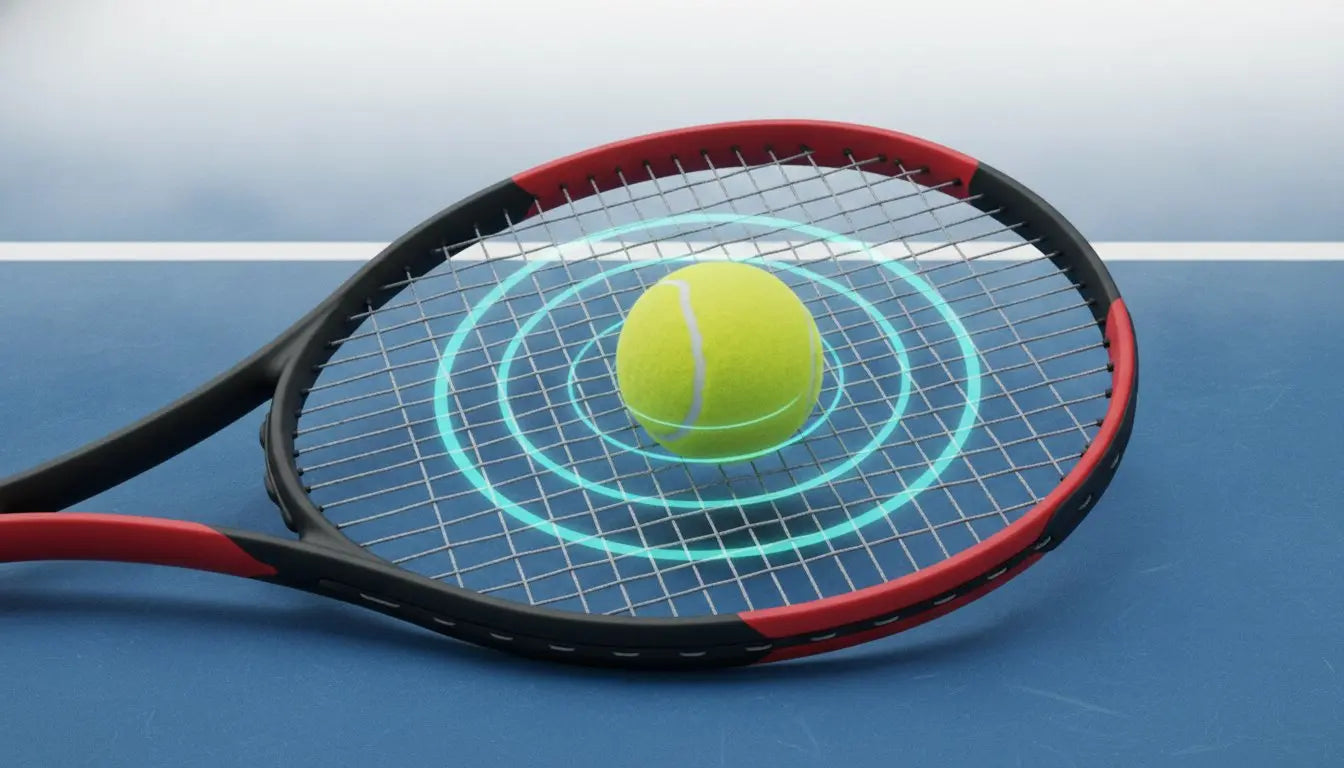
What if your quest for maximum spin is actually the primary reason you're sidelined? For many club players, the stiff polyester setups used by the pros are a direct ticket to chronic injury. If you're feeling a sharp pain in your outer elbow during off-centre hits, you aren't alone. Finding the best tennis strings for tennis elbow is often the single most effective equipment change you can make to get back on the court and stay there.
We know how frustrating it is to lose precious court time while trying to decode technical terms like "stiffness" or "elasticity." You just want to swing freely without reaching for an ice pack after every match. This guide simplifies the science to help you discover the most arm-friendly strings and professional setups available in 2026. We'll explore why high-performance materials can absorb 15% more shock than traditional monofilaments. You'll learn how to choose a setup that prioritizes your health without sacrificing the performance you need to win. Let's get you back to the game you love, pain-free.
Key Takeaways
- Learn why the organic structure of natural gut remains the undisputed leader for shock absorption and total elbow protection.
- Identify the best tennis strings for tennis elbow by comparing the elasticity and dwell time of various high-performance multifilament options.
- Master the art of the setup by discovering how lower tensions and thinner string gauges can significantly reduce the vibration transferred to your arm.
- Find out why consistent restringing on professional electronic machines is vital for managing chronic injuries and maintaining tension accuracy.
- Gain expert insights into creating a personalized, arm-friendly racquet profile that gets you back to pain-free play.
Understanding the Link Between Tennis Strings and Elbow Pain
Every time you strike a tennis ball, a massive amount of kinetic energy is generated. If your equipment isn't designed to handle that force, your tendons become the shock absorbers. Finding the best tennis strings for tennis elbow starts with understanding that vibration is the enemy. While professional players use stiff monofilament strings for extreme control and spin, these materials often transfer harsh impact energy directly into the outer elbow. Off-centre hits exacerbate the problem. When you miss the sweet spot, the racquet twists in your hand, sending a high-frequency vibration through the frame that intensifies the strain on your elbow tendons.
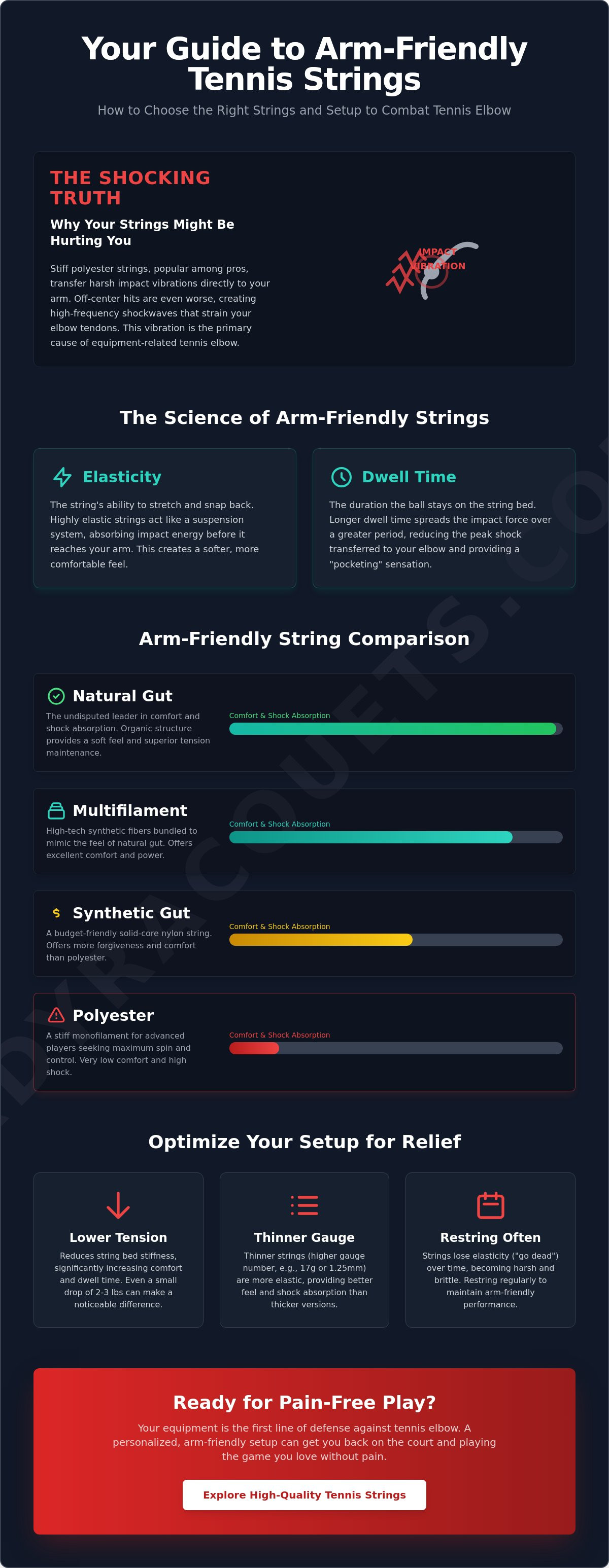
True comfort comes down to two primary metrics: elasticity and dwell time. Elasticity is the string's ability to stretch and snap back, while dwell time refers to how long the ball stays in contact with the string bed. The longer the dwell time, the more the impact is spread out over time, reducing the peak force hitting your arm. Stiff polyester strings have very low dwell time. This makes every hit feel like a collision rather than a smooth stroke. If you're playing with a setup that's too rigid, you're essentially hitting the ball with a picket fence.
To better understand this concept, watch this helpful video:
What is Vibration Dampening in Tennis Strings?
Many players mistakenly believe that the small rubber inserts placed in the string bed prevent injury. These only dampen the "ping" sound and frame resonance; they do almost nothing to reduce the actual shock of the ball hitting the strings. Real protection comes from how string material affects elbow comfort. Highly elastic materials, like natural gut or multifilament, act as a suspension system for your racquet. They absorb energy before it travels down the handle to your grip, protecting your joints during long rallies.
Why Your Current Strings Might Be Hurting You
If you haven't changed your strings in six months, they're likely "dead." Old strings lose their internal elasticity and become brittle, even if they haven't snapped yet. This is especially dangerous with polyester, which can become harsh and unforgiving after just 10 hours of play. Temperature also plays a role. In colder weather, synthetic materials contract and become significantly stiffer, which is why your arm might ache more during winter sessions. If you're struggling with pain, it's time to browse a fresh range of high-quality tennis strings to find a more forgiving option that prioritizes your health.
Comparing String Materials for Maximum Shock Absorption
Choosing the best tennis strings for tennis elbow isn't just about picking a popular brand. It's about understanding the hierarchy of materials and how they react when the ball makes contact. If your arm is already feeling the strain, you need to transition away from stiff, plastic-based materials toward softer, more elastic options. The choice usually falls into three main categories: natural gut, multifilament, and synthetic gut. Each offers a different level of protection, but they all share one common goal: keeping vibration away from your tendons.
- Natural Gut: The undisputed leader in comfort and energy absorption.
- Multifilament: High-tech synthetics designed to mimic the feel of natural gut.
- Synthetic Gut: A budget-friendly nylon option that offers more "give" than polyester.
Natural Gut: The Ultimate Luxury for Injured Arms
There's a reason why many professional players still use natural gut despite the rise of modern synthetics. Made from organic serosa fibres, its molecular structure is uniquely suited to absorbing shock. Unlike man-made materials that can feel "crisp" or "brittle," natural gut has a soft, pocketing feel that cradles the ball. This organic structure also gives it superior tension maintenance. While other strings might start soft and become harsh as they lose tension, gut stays elastic until the moment it breaks. It's a premium investment, but when you consider the cost of physiotherapy or months of missed playing time, it's often the most logical choice for long-term health.
Multifilament Strings: The Modern Comfort Solution
If natural gut is out of your price range, multifilament strings are the next best thing. These are constructed by wrapping thousands of microscopic synthetic fibres together, often bonded with polyurethane. This complex architecture allows the string to stretch significantly more than a solid-core string. You get a massive boost in power and a "plush" feel that filters out the high-frequency vibrations that cause elbow flare-ups. They're an excellent choice for intermediate players who want a soft feel but need a bit more durability than organic gut can provide.
For casual players who only hit once a week, a standard synthetic gut is a great starting point. It's far more forgiving than the stiff polyester strings found in many pre-strung racquets. If you're currently struggling with pain, it's worth speaking with a specialist about the softest racquet strings for sensitive arms to find a setup that matches your swing speed. If you are unsure which material fits your playing style, our team is always available for expert racquet stringing advice to ensure you stay on the court and out of the clinic.
Top String Recommendations for Sensitive Arms in 2026
Finding the best tennis strings for tennis elbow in 2026 is easier than ever thanks to advancements in multi-poly fusion and high-density polyurethane. While we've discussed why materials matter, choosing a specific string depends on your playing frequency and budget. For those seeking the absolute peak of synthetic performance, premium multifilaments like Wilson NXT or Tecnifibre X-One Biphase provide a gut-like feel. These strings use thousands of micro-fibres to absorb significantly more shock than traditional monofilaments, making them a top choice for players recovering from injury. They offer a plush response that transforms the feel of any racquet.
Best Premium Comfort Strings
The most elastic synthetic strings on the market today don't just protect your arm; they actually improve the playability of your frame. By increasing the dwell time of the ball on the string bed, these strings effectively expand the sweet spot of your racquet. This means off-centre hits feel less jarring and more controlled. For competitive club players who need a mix of power and protection, exploring performance tennis strings is the best way to maintain a high level of play without the risk of flare-ups. Options like HEAD Velocity MLT offer incredible value, providing a soft response at a more accessible price point while maintaining excellent tension stability.
The Hybrid Solution: Comfort Meets Control
Many hard-hitting players feel they must choose between the spin of a polyester and the comfort of a multifilament. In 2026, the hybrid setup has become the go-to middle ground for those who refuse to compromise. By placing a soft string like natural gut or a premium multifilament in the main strings, you get the majority of the comfort and feel where it matters most. You then use a slick, soft polyester like Babolat RPM Soft in the crosses to maintain snap-back and spin. This combination reduces the overall stiffness of the string bed while providing the durability that frequent string breakers require. It's a strategic way to balance arm health with the aggressive performance needed for modern baseliners.
If you find yourself snapping strings every few weeks, look for multi-poly fusion options like Tecnifibre Triax. Research shows these strings can absorb 15% more shock than a classic monofilament while offering a 20% improvement in durability over standard multifilaments. This specialized construction ensures that even the most powerful hitters can enjoy a pain-free experience on the court without visiting the stringer every other day. Choosing the right gauge also plays a role, which we will explore in the next section.
Optimising Your Setup: Tension, Gauge, and Racquet Choice
Even if you purchase the best tennis strings for tennis elbow, an incorrect installation can still leave your arm feeling the strain. The physical interaction between the ball and the string bed is heavily dictated by how tight those strings are pulled. Tension is the primary lever you can pull to change the impact profile of your racquet instantly. If you're playing with a setup that feels like a wooden board, it doesn't matter how high-quality the material is; the shock will still find its way to your tendons.
The Magic of Lower String Tension
Lowering your tension creates what experts call the "trampoline effect." When the strings are looser, they deflect more upon impact. This increases the dwell time and spreads the force of the ball over a longer duration, which significantly lowers the peak shock sent to your arm. For players struggling with elbow pain, we recommend dropping your tension by 5 to 10 lbs from your current setup. Most comfort-focused setups now fall within the 44 to 53 lbs (20 to 24 kg) range. You might find the ball flies a bit further at first. To compensate for the increased power, focus on adding more topspin or slightly shortening your backswing rather than tightening the strings again.
Selecting the Right String Gauge
The thickness of your string, known as the gauge, is another vital factor in arm health. String gauge refers to the thickness of the tennis string, where a higher gauge number indicates a thinner string that provides more elasticity and reduced vibration upon impact. Most recreational players use a 16-gauge string for durability, but switching to a 17-gauge or even an 18-gauge option offers much more "give." While thinner strings will break more quickly, the trade-off is a significantly softer feel and better pocketing. It's a small price to pay for being able to play three sets without reaching for the anti-inflammatories.
Your racquet's stiffness also plays a role in this equation. If you play with a rigid, modern power frame, you must use an even softer string and lower tension to compensate for the frame's lack of flexibility. Regardless of your setup, you should follow the "hours played" rule for maintenance. Polyester strings often go "dead" and lose their elasticity after just 10 to 15 hours of play. Once they lose that internal snap, they become harsh and jarring. Even if they haven't broken, old strings are a leading cause of injury because they no longer absorb the energy of the ball. Ensuring your equipment is working for you is easy when you book a professional racquet stringing service to get a personalized tension recommendation based on your injury history.
Professional Stringing and Personalised Advice for Aussie Players
Finding the best tennis strings for tennis elbow is only half the battle. The quality of the installation is what ensures those premium materials actually perform their job of protecting your arm. For Australian players, consistent restringing isn't just about performance; it's a critical part of injury management. A string bed that has lost its tension or elasticity becomes a vibration conductor rather than an absorber. If you're serious about staying on the court, you need a setup that is as precise as your technique.
We use high-quality electronic stringing machines because they offer a level of tension accuracy that manual crank machines simply cannot match. When you're managing a chronic injury, a variation of even one or two pounds can be the difference between a pain-free match and a week on the sidelines. These machines ensure that the tension is pulled exactly to your specifications every single time. This consistency allows you to isolate variables and truly understand what works for your arm.
One of the biggest mistakes players make is waiting for their strings to break. Modern materials often "go dead" long before they snap. You can identify this by a hollow sound at impact, a sudden loss of control, or a harsh feeling that wasn't there during the first few hours of play. If your arm starts to ache during a session, it's usually a sign that the string's internal elasticity has been exhausted. Keeping a simple log of your court time in a notebook from Mega Office Supplies is a great way to ensure you restring before the pain returns, acting as a reliable insurance policy against injury.
The Sturdy Racquets Approach to Arm Health
Our team is committed to helping Australian players stay on the court longer by providing expert guidance on equipment transitions. We don't just pull strings; we consult with you to find a custom setup tailored to your specific swing speed and injury history. Many players find that our professional racquet stringing service is the turning point in their recovery. We help you move away from stiff, generic setups toward arm-friendly alternatives that don't compromise your competitive edge.
Next Steps: Testing and Refining Your Setup
Recovery is a process of testing and refining. We often suggest a "demo" approach where you try different comfort strings or hybrid combinations to find your perfect match. Pay close attention to how your elbow reacts the day after a long match. If you feel stiffness, we might need to drop the tension further or switch to a thinner gauge. You can also explore our range of comfort-focused tennis gear to find additional support like vibration-absorbing grips. By taking a holistic approach to your equipment, you can stop worrying about injury and start focusing on your next win.
Take Control of Your Arm Health Today
You don't have to let injury dictate your time on the court. By switching to highly elastic materials and significantly lowering your tension, you can eliminate the harsh vibrations that cause recurring flare-ups. We've explored how the best tennis strings for tennis elbow create a softer impact profile that protects your joints while maintaining the power you need to compete. Finding that perfect balance between comfort and control is the key to a long, pain-free playing career.
Our team is here to support your journey back to full strength. We combine professional in-store stringing expertise with a wide range of premium comfort strings to help you find a setup that matches your specific swing speed. With national shipping across Australia, we make it easy to access high-performance equipment that prioritizes your health. Don't wait for the pain to return before making a change to your equipment. It's time to put your physical longevity first.
Your most comfortable season of tennis is just one professional string job away. Book your professional racquet restringing service today and experience the difference that a specialized, arm-friendly setup makes to your game. See you on the court!
Frequently Asked Questions
Can strings really cure tennis elbow?
Strings cannot medically cure tennis elbow, but they are the most effective tool for managing symptoms and preventing the injury from returning. By switching to the best tennis strings for tennis elbow, you reduce the high-frequency vibration that inflames your tendons. This equipment change allows your arm to heal while you continue playing. It should always be paired with proper rest and technique adjustments for the best results.
How often should I restring if I have arm pain?
You should restring your racquet every 10 to 15 hours of play if you use polyester, or at least every three months for multifilament strings. Old strings lose their internal elasticity and become "dead," which means they no longer absorb shock. Even if the strings haven't snapped, their ability to protect your arm diminishes significantly over time. Regular maintenance ensures your setup remains soft and forgiving.
Does a vibration dampener help with tennis elbow?
A vibration dampener does not prevent or alleviate tennis elbow because it only filters out the high-pitched "ping" sound of the string bed. It has almost no impact on the actual shock that travels into your arm from the ball's collision. To protect your tendons, you must focus on the material and tension of the strings rather than relying on small rubber inserts to solve the problem.
What is the softest tennis string available in 2026?
Natural gut remains the softest material available in 2026 due to its unique organic serosa fibre structure. These fibres offer the highest level of elasticity and shock absorption of any string on the market. For players who find natural gut too expensive, premium multifilaments are the closest synthetic alternative. These high-tech options use thousands of micro-fibres to mimic the plush, pocketing feel of organic gut.
Is natural gut worth the extra money for injury prevention?
Yes, natural gut is worth the investment because it provides superior arm protection and stays soft longer than any synthetic material. While the initial cost is higher, it maintains its tension and elasticity until the moment it breaks. This prevents the harshness that develops in cheaper strings as they age. Many players find that spending more on strings is cheaper than paying for ongoing physiotherapy sessions.
Should I lower my string tension if my elbow hurts?
You should definitely lower your string tension by 5 to 10 lbs if you are experiencing elbow pain. Lower tension creates a trampoline effect that increases dwell time and reduces the peak force of the impact. Most injury-prone players find success with tensions between 44 and 53 lbs. This simple adjustment is the fastest way to make any racquet feel more comfortable and arm-friendly instantly.
What string gauge is best for preventing arm injuries?
Thinner gauges, such as 17g or 18g, are best for preventing arm injuries because they offer more elasticity and "give" than thicker options. A thinner string deflects more upon impact, which helps absorb vibration before it reaches your handle. While these strings are less durable than standard 16g options, the increased comfort is a vital trade-off for anyone struggling with chronic elbow sensitivity or sharp pains.
Can I still use polyester strings if I have mild tennis elbow?
You can use polyester strings with mild tennis elbow only if you choose specific "soft" poly versions or use them in a hybrid setup. A hybrid setup involves using the best tennis strings for tennis elbow in the mains and a soft polyester in the crosses. This configuration provides the spin and control of polyester while the softer main string handles the majority of the shock absorption for your arm.
Share:
Tennis Racquets for All Playing Levels: The Ultimate 2026 Buying Guide
The Complete Guide to Pre-Strung Tennis Racquets for 2026