



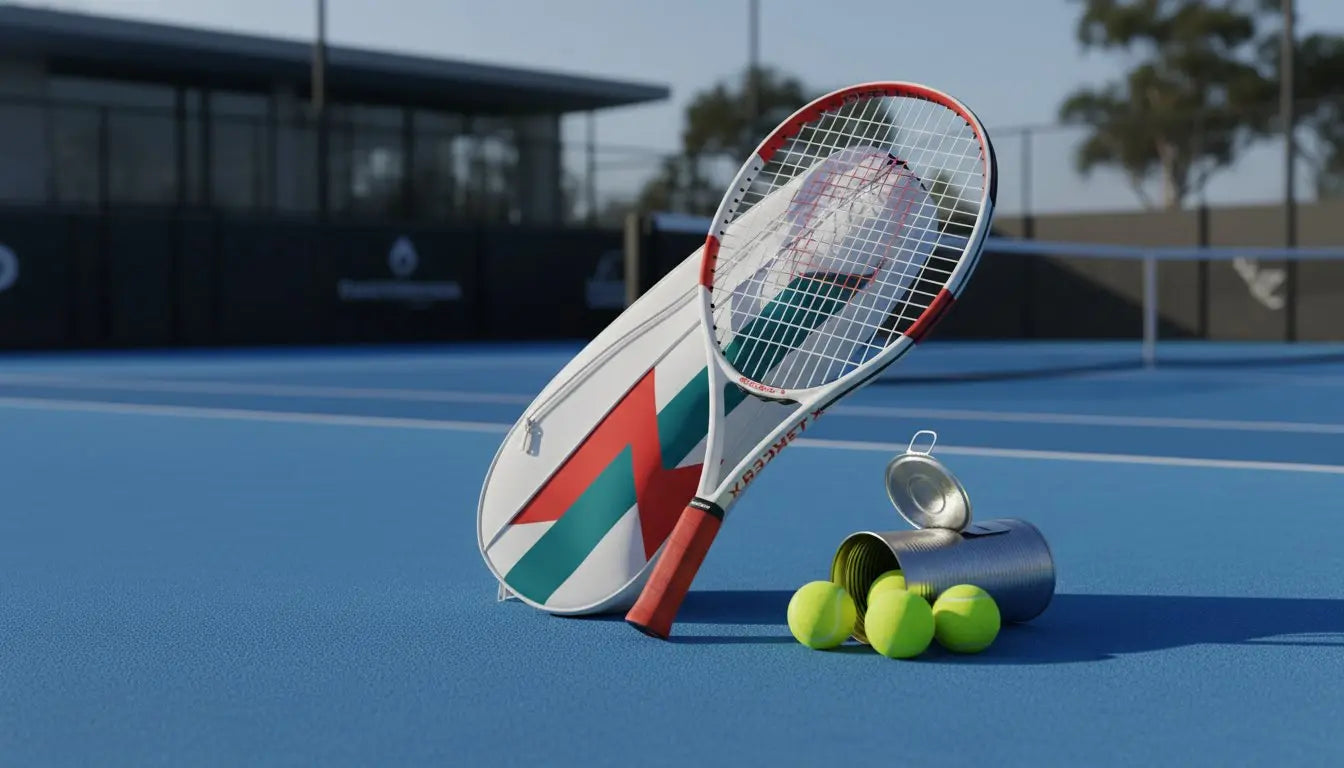
Buying a cheap department store racquet is often the most expensive mistake a new player can make. These heavy aluminum frames often lead to stubborn elbow pain and a frustrating lack of control that might make you quit the sport before you have even mastered your swing. It is completely normal to feel overwhelmed by technical jargon while searching for the best tennis racquets for beginners. You simply want a frame that feels light and helps you hit the ball over the net with more consistency.
This 2026 guide is designed to help you master the technical specifications and selection criteria needed to find a racquet that builds confidence and prevents injury from your very first serve. We'll show you exactly how to identify frames with a larger sweet spot and comfortable grip sizes. By the end of this article, you'll know how to pick a high-quality frame that supports your development and stays in your bag as your skills grow on the court.
Key Takeaways
- Identify the specific "game improvement" features that provide a massive sweet spot for maximum forgiveness on every hit.
- Navigate technical specs like weight and head size to find the best tennis racquets for beginners that won't cause elbow or wrist strain.
- Choose between power and control based on your athletic profile to ensure your equipment grows with your developing skills.
- Discover why professional racquet stringing is essential for maintaining the feel and performance of your new frame.
- Learn how expert customization from a specialist store can help you avoid the common pitfalls of buying from general retailers.
What Defines the Best Tennis Racquets for Beginners in 2026?
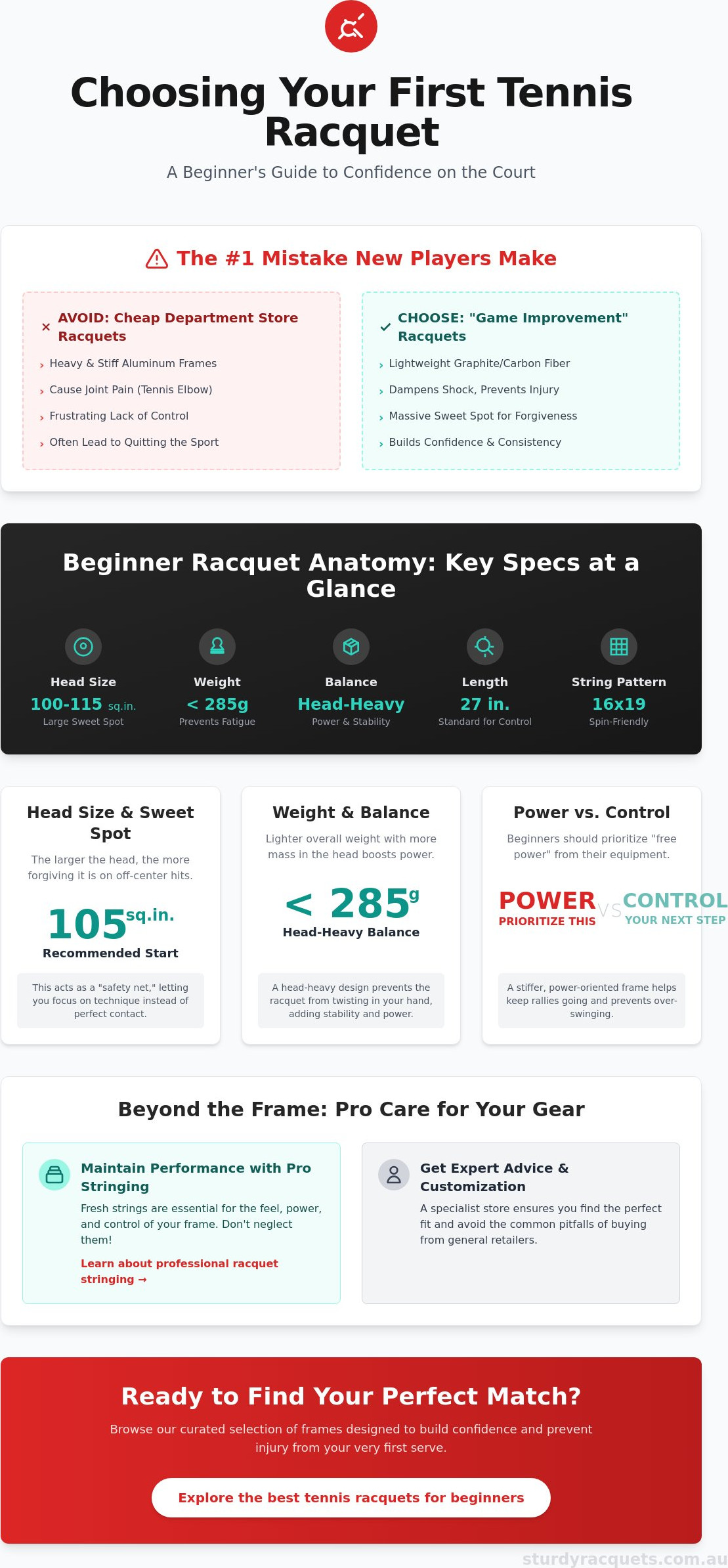
In the world of tennis, "Game Improvement" isn't just a marketing term; it's a specific technical category designed for maximum forgiveness. These racquets are built to help you enjoy the game from day one by compensating for the common mistakes every new player makes. The most critical feature is the sweet spot, which is the central area of the string bed where the ball rebounds with the most power and the least amount of vibration. Because your footwork and timing aren't yet perfected, a larger sweet spot ensures that even off-centre hits still clear the net.
It's vital to distinguish between a recreational frame found at a department store and an entry-level performance racquet. Cheap aluminum frames are often heavy and transmit harsh vibrations directly into your joints. Investing in the best tennis racquets for beginners means choosing a frame made from lightweight materials like graphite or carbon fiber. These materials utilise modern tennis racquet technology to dampen shock, which is the most effective way to prevent common injuries like tennis elbow or wrist strain during your first few months on court.
To see these features in action, watch this helpful breakdown of what makes a frame suitable for new players:
The Forgiveness Factor: Head Size and Sweet Spots
A head size between 100 and 115 square inches is considered the "Goldilocks" zone for new players. Most experts recommend starting with at least 105 square inches to provide a massive hitting area. This oversized design acts as a safety net for inconsistent contact. While a larger head can feel slightly less aerodynamic, the benefit of getting more balls back into play far outweighs the need for lightning-fast swing speeds at this stage. It allows you to focus on your technique rather than worrying about hitting the frame.
Power vs. Control: Finding the Right Balance
Beginners should almost always prioritise "free power" from their equipment. Since you likely haven't developed a full, fast-paced swing yet, a stiffer frame helps the ball travel deep into the opponent's court with less effort. This "free power" keeps rallies going and prevents you from over-swinging, which often leads to poor form. You will know you're ready to move toward a more control-oriented frame once you can consistently generate your own pace and find your shots landing past the baseline too frequently.
The Core Specifications: How Weight, Head Size, and Balance Impact Your Game
Understanding the numbers printed on a racquet frame is the best way to avoid a costly mistake. Static weight is the number you see on the sticker. Most of the best tennis racquets for beginners weigh under 285 grams to prevent early fatigue. Swing weight, however, measures the inertia of the frame as it moves through your hitting zone. This explains why two racquets with the same static weight can feel completely different once the rally starts. A racquet with a higher swing weight offers more stability but requires more strength to move quickly.
Racquet length also plays a subtle but important role. The standard length for an adult racquet is 27 inches. While some "extended" models offer more reach and leverage for serves, they are often harder to control at the net. For most new players, sticking to the standard length is the safest bet. You should also look at the string pattern. An open 16x19 pattern is the gold standard for those starting out. The wider spacing allows the strings to bite the ball, which helps you generate the spin needed to keep your shots inside the lines.
Weight Distribution: Head-Heavy vs. Head-Light
Balance is where many beginners get confused. Most lightweight beginner tennis racquet models are designed to be "head-heavy." This means more of the mass is located in the top of the frame. This distribution provides extra stability and power, preventing the racquet from twisting in your hand when you hit the ball off-centre. If you already have a fast, natural swing from other sports, you might prefer a "head-light" balance. This puts the weight closer to the handle, making the racquet feel more nimble and easier on your wrist and shoulder over long matches.
Grip Size and Comfort: Avoiding the Most Common Error
Playing with the wrong grip size is a fast track to injury. A grip that is too small forces you to squeeze the handle too tightly, while one that is too large prevents you from snapping your wrist naturally. To find your size, use the index finger rule. Hold the racquet in your hitting hand with a normal grip; you should be able to fit the index finger of your other hand comfortably in the gap between your ring finger and your palm. Grip size is measured by the circumference of the handle in inches. If you are between sizes, it's always better to go smaller. You can easily use overgrips to build up a handle, but you can't make a large grip smaller. If you are unsure which specs fit your style, you can always reach out to a specialist for a personalized recommendation.
Matching Your Strategy: Power vs. Control for Developing Players
Finding the right gear isn't just about your current skill level; it's about matching your physical strengths to the racquet's personality. Beginners generally fall into two categories. An "Athletic/Strong" player often has natural power from other sports and might find that the ball flies out of bounds too easily. These players need a frame that offers a bit more control. On the other hand, a "Finesse/Touch" player relies on timing and technique rather than raw strength. Senior players often fit this profile and benefit significantly from ultra-lightweight, oversized frames that generate depth without requiring a massive swing.
There's also the "Serious Beginner" to consider. If you've committed to coaching multiple times a week, you might find that you outgrow a basic starter racquet within six months. In this case, skipping the entry-level tier for a more versatile frame is a smart investment. You can find more detailed brand comparisons and technical deep-dives in our comprehensive 2026 buyer’s guide to help you decide which path fits your goals.
The Recreational Path: Maximum Forgiveness
If your goal is social play and occasional weekend matches with friends, your priority should be maximum forgiveness. These frames are designed to make the game fun immediately. You don't need to spend a fortune on high-end competitive tech; instead, focus on a fair price-point and high durability. The best tennis racquets for beginners in this category are often "set and forget" tools. They're built to withstand the occasional scrape on the court surface while providing a consistent, comfortable feel that keeps you coming back to the club every week.
The Competitive Path: Transitioning to Intermediate
For those with their sights set on club competition, look for "tweener" racquets. These frames bridge the gap between starter models and intermediate tennis gear. Choosing a slightly smaller head size, such as 100 square inches, might feel harder at first, but it encourages better long-term technique. These racquets provide better "frame feedback," which is the vibration that tells your brain exactly where you hit the ball on the strings. This feedback is essential for players taking regular coaching, as it helps you adjust your swing and develop the "feel" necessary for advanced play.
Maintenance and Protection: Keeping Your New Gear in Peak Condition
Many new players assume the strings that come with a pre-strung frame are permanent. They aren't. In fact, factory strings are often the weakest link in even the best tennis racquets for beginners. Over time, strings lose their elasticity and go "dead," even if you aren't playing every day. When strings lose their bounce, you're forced to swing much harder to get the ball over the net. This extra effort is a leading cause of arm fatigue and injury. Investing in professional racquet stringing ensures your equipment works with you rather than against you from your very first session.
A simple way to stay on top of your maintenance is the "Times per Week" rule. If you hit the court twice a week, you should aim for a fresh restring twice a year. Even if the strings don't snap, the loss of tension will eventually compromise your control and comfort. Don't forget about the handle, either. Overgrips are thin, inexpensive wraps that go over your main grip to absorb sweat and provide traction. Replacing these every few weeks keeps your grip secure and prevents the racquet from twisting in your hand during off-centre hits.
String Tension and Material for Beginners
For new players, the choice of string material is just as vital as the frame itself. Soft multifilament strings are far superior to stiff polyester options, which are designed for professionals with high swing speeds. Multifilament strings are synthetic fibres that mimic the feel of natural gut. They offer much better shock absorption for developing joints and help prevent tennis elbow. Aim for a tension range between 50 and 55 lbs. This creates a slightly softer string bed that provides a larger sweet spot and more "free power" on your shots.
Storage and Care in the Australian Climate
The Australian climate can be brutal on tennis equipment. High temperatures cause racquet frames to expand and strings to lose tension rapidly. Never leave your racquet in a hot car during a summer afternoon. You can protect your investment by using high-quality tennis bags that feature thermal lining. These specialised compartments act like a climate-controlled shield for your racquets. Keep your grommets clean by wiping away clay or hard-court grit after every session to prevent premature wear on the frame. If you want to ensure your gear stays in top shape, check out our full range of tennis equipment and maintenance tools.
The Sturdy Racquets Advantage: Professional Advice and National Delivery
Choosing the right equipment is the first step toward a lifelong love of the game. While it's tempting to grab the first frame you see at a general sports store, there's a significant advantage to working with a specialist. General retailers often lack the technical expertise to explain why one frame might suit your swing better than another. At Sturdy Racquets, we don't just sell equipment; we provide the guidance needed to ensure you're hitting the court with confidence. We understand that finding the best tennis racquets for beginners involves more than just picking a pretty colour. It's about matching the weight, balance, and string setup to your specific physical profile.
Our expert team takes the guesswork out of the process. We can customise your racquet from the moment you order it, ensuring the grip size and string tension are exactly where they need to be. This level of attention to detail prevents the common "wrong purchase" cycle that leaves many new players frustrated. Along with your frame, we help you complete your starter kit with the right tennis shoes and accessories. Proper footwear is non-negotiable for court safety, as it provides the lateral stability required for the quick side-to-side movements of tennis.
Why Specialist Knowledge Beats Big-Box Retail
The value of specialist knowledge becomes clear when you speak to people who actually use the gear. Our staff includes professional stringers and competitive players who understand the technical nuances of the latest 2026 equipment. We can explain how a specific frame's vibration dampening will protect your arm better than a cheaper alternative. This community-focused approach ensures that every Australian player, regardless of their location or skill level, has access to the same high-quality advice you'd find in a professional club house. We're here to support your journey from your first lesson to your first tournament.
Shopping with Confidence: National Shipping and Support
You shouldn't have to live near a major city to access performance tennis gear. We've streamlined our online experience to provide national Australian shipping on all our products. Every racquet is inspected and packed with care to ensure it arrives at your door ready for your first serve. You can also easily browse our collection of premium tennis accessories to find everything from dampeners to high-performance overgrips. If you're ready to start your journey with the right equipment, find your perfect beginner racquet today and join our growing community of enthusiasts.
Ready to Start Your Tennis Journey?
Choosing your first racquet is a major milestone. You now know that the right combination of head size, weight, and balance creates the forgiveness you need to keep rallies alive and build your skills. By prioritizing modern materials and professional maintenance, you aren't just buying equipment; you're investing in your long-term comfort and performance—a philosophy that applies to everything from your sporting gear to the designer pieces from Attica House that define your home. Finding the best tennis racquets for beginners is easy when you match the technical specs to your personal athletic style and goals.
Our passionate team of racquet sport specialists is ready to help you find the perfect fit. We provide expert in-store stringing services to ensure your frame is ready for action, and we offer reliable national shipping across Australia for your convenience. Don't let the wrong gear hold you back from enjoying this incredible sport. Browse our curated collection of beginner tennis racquets today and get ready to hit the court with confidence. We'll see you at the baseline!
Frequently Asked Questions
Is a 300g racquet too heavy for a beginner?
Yes, a 300g racquet is generally too heavy for someone just starting out. Most players look for the best tennis racquets for beginners that weigh under 285 grams to maintain control and prevent early fatigue. A heavier frame requires more strength to swing correctly and can quickly lead to wrist or shoulder strain. Starting with a lighter frame allows you to focus on developing proper form without fighting the weight of the equipment.
How much should a beginner spend on their first tennis racquet?
You should expect to spend between $150 and $250 AUD for a quality entry-level racquet. It's important to avoid department store models under $100, as these are typically made of heavy aluminum that transmits harsh vibrations to your arm. Investing in a graphite or carbon fiber frame ensures you have the necessary shock absorption to prevent injury while providing a more consistent feel as you learn the game.
Can I use a junior racquet as a small adult beginner?
No, adults should avoid using junior racquets regardless of their height. Junior frames are significantly shorter and lighter than adult models, which makes them unstable for an adult's natural strength. Using one can lead to poor technique and increase the risk of injury. Instead, look for lightweight adult frames that offer the standard 27-inch length while remaining easy to manoeuvre during long rallies.
What is the most common grip size for adult tennis players in Australia?
The most common sizes in the Australian European system are L2 for women and L3 for men. L2 corresponds to a 4 1/4 inch circumference, while L3 is 4 3/8 inches. Choosing the right size is crucial for comfort and control. If you're unsure, it's always safer to choose a smaller grip and use an overgrip to build it up to your perfect fit.
What happens if I use a racquet with a head size that is too small?
Using a small head size makes it much harder to hit the ball consistently. You'll find that off-centre hits lack power and cause the racquet to twist uncomfortably in your hand. Most of the best tennis racquets for beginners feature a head size of 105 square inches or more. This larger hitting area provides a more forgiving sweet spot, helping you keep the ball in play more often as your timing improves.
How do I know if my tennis racquet strings are "dead"?
Your strings are likely dead if you notice a significant loss of tension or if the racquet feels "mushy" upon impact. You might find yourself swinging much harder just to get the ball to the baseline. Visually, look for deep notches where the strings cross or excessive fraying. If the strings no longer "snap back" into place after a hit, it's definitely time for a fresh restring.
Do I need to buy a specific brand of racquet to get the best quality?
No, the brand name is less important than the construction materials used in the frame. While major manufacturers all produce high-quality gear, you should focus on finding a frame made from graphite or carbon fiber. These materials provide the stability and vibration dampening required for a safe experience. A specialist can help you compare features across different brands to find the one that fits your budget and style.
Can a beginner use a professional player’s racquet?
It is not recommended for a beginner to use a professional-grade racquet. These frames are designed for players with very fast swing speeds and perfect timing, meaning they have small sweet spots and high static weights. A beginner using a pro racquet will likely struggle with generating power and hitting the ball consistently. It's much better to start with a "game improvement" frame that offers the forgiveness you need while you're learning.
Share:
Tennis Racquets for All Playing Levels: The Ultimate 2026 Buying Guide
Best Tennis Strings for Tennis Elbow: A 2026 Guide to Pain-Free Play