



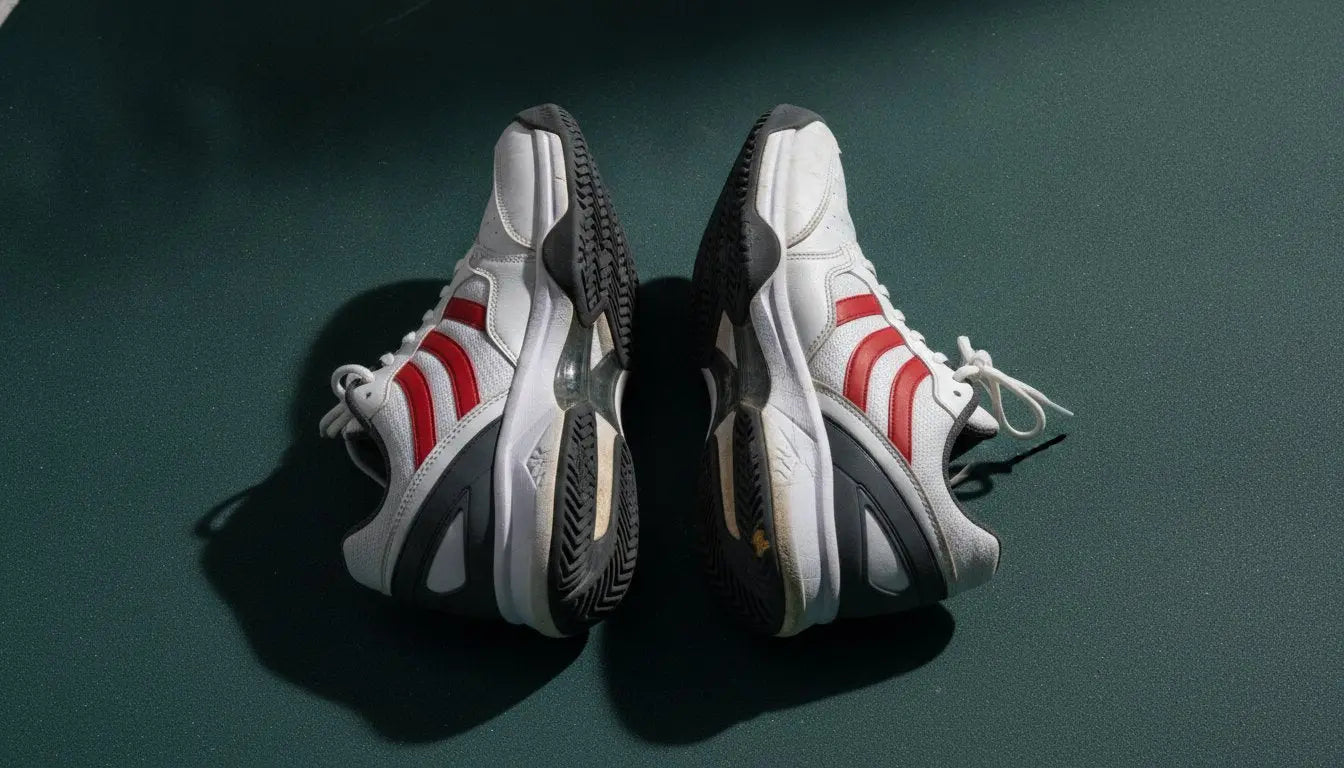
Have you ever lunged for a cross-court winner only to feel your foot slide unexpectedly on the grit? That split-second loss of traction isn't just frustrating; it's a major injury risk. Many club players don't realize their outsoles are bald until they're already nursing a sore knee or a painful rolled ankle. If you're wondering how long do tennis shoes last on hard court, you're likely already feeling the effects of worn-down tread or flattened cushioning during your matches.
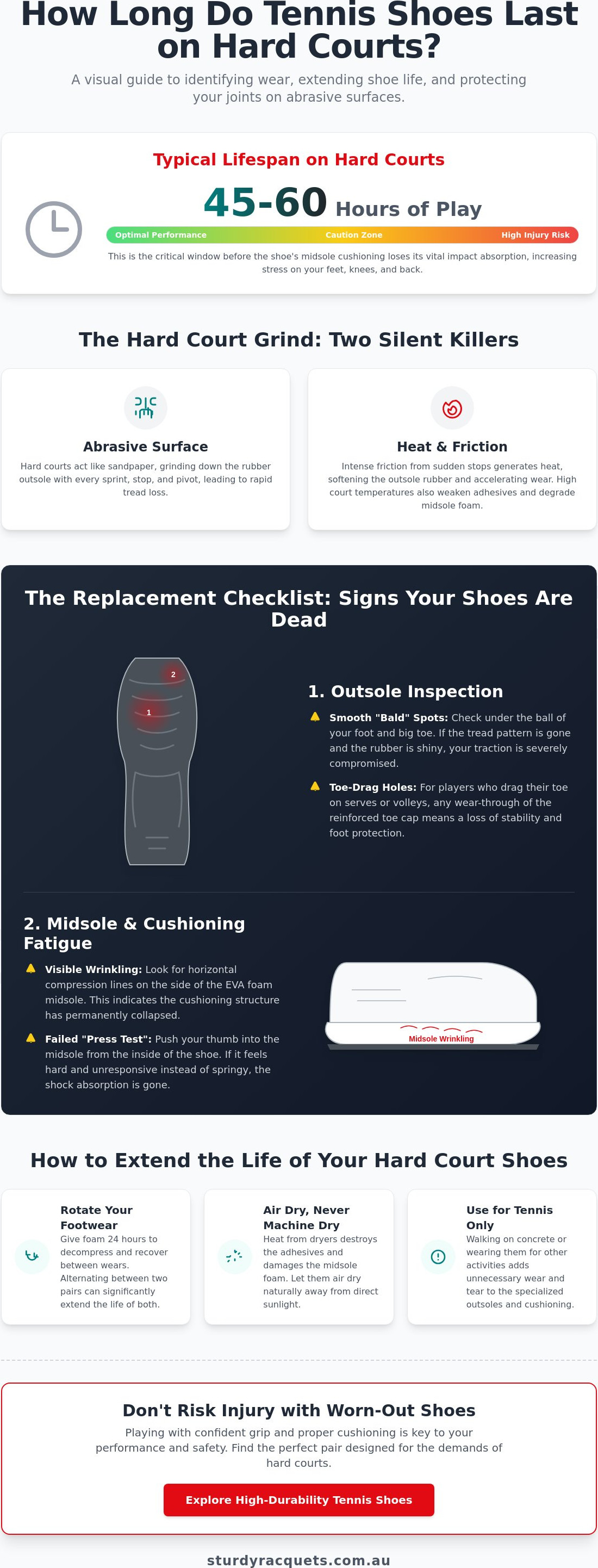
We understand the frustration of gear wearing out faster than expected, especially when high-performance tennis footwear is a significant investment. It's common to feel a bit of "shoe guilt" when eyeing a new pair, but your joints will thank you for the fresh support. Verified data shows that 45 to 60 hours of play is usually the limit before the midsole loses its vital impact absorption on abrasive surfaces.
This 2026 guide will show you exactly when to replace your shoes based on your specific playing frequency. You'll learn how to identify the hidden signs of shoe death and how to protect your equipment from the intense Australian heat. We've put together a clear checklist so you can step onto the court with total confidence in your grip.
Key Takeaways
- Identify the specific "smooth spots" on your outsole that signal a loss of traction before you experience a dangerous slide.
- Learn how to spot midsole compression and foam wrinkling to prevent the foot and knee pain caused by flattened cushioning.
- Understand how long do tennis shoes last on hard court by measuring your play frequency and movement style against standard durability metrics.
- Discover why surface-specific outsoles are essential for managing the intense heat and friction generated by abrasive asphalt surfaces.
- Master the rotation strategy to give your footwear time to recover, significantly extending the life of your performance gear.
The Hard Court Grind: Why Tennis Shoes Wear Out Faster
Think of a hard court as giant sheets of sandpaper stretched across the ground. Most hard court surfaces consist of a rigid base like asphalt or concrete topped with a textured acrylic finish. While this setup provides the predictable bounce we love, it's incredibly abrasive. Every time you sprint or slide, that texture bites into your outsoles, effectively shaving off tiny layers of rubber with every step.
When players ask how long do tennis shoes last on hard court, they often overlook the unique challenges of the Australian environment. Our intense summer sun can heat court surfaces to well over 50 degrees Celsius. This doesn't just wear the tread; it cooks the shoe from the bottom up. High temperatures cause the adhesives holding the shoe together to weaken and the foam midsoles to lose their spring much faster than they would in cooler climates.
To better understand how these surfaces impact your gear over time, watch this helpful video:
Friction and Heat: The Silent Killers
Every high-intensity stop creates a burst of thermal energy. Think about the friction generated when you slam on the brakes in a car. On a tennis court, your shoes are the brake pads. This friction generates localized heat that softens the rubber compounds in your outsole. Once the rubber is soft, it wears down much more quickly. During a typical two-hour match in the peak of summer, your shoes endure hundreds of these heat events. This leads to rapid balding of the tread pattern, especially under the balls of your feet where you pivot most often.
Surface Texture and Grip Requirements
Not all hard courts are created equal. You might play on a smooth, older recreational court one day and a gritty, pro-style surface the next. Grittier surfaces offer better grip but act like a coarser grade of sandpaper. To handle this, manufacturers use high-density rubber compounds specifically designed for these conditions. If you're curious about how different materials react to these surfaces, check out our comprehensive guide to tennis footwear for more details. Using shoes designed for clay on these surfaces is a mistake. The softer rubber will shred in just a few sessions because it's not built for the constant friction and high-temperature hard court environment.
Signs Your Tennis Shoes Are Dead: The Replacement Checklist
Many players wait until they see a literal hole in their gear before considering a replacement. This is a mistake. By that stage, the shoe has likely been "dead" for weeks, leaving your joints unprotected. Understanding how long do tennis shoes last on hard court requires you to look beyond the surface. You need to evaluate the outsole, the internal foam, and even how your body feels after a long session.
The Outsole Inspection
The most obvious sign of wear is the "smooth spot." Flip your shoe over and examine the area directly under your big toe and the ball of your foot. This is where you pivot and explode into sprints. If the tread pattern has disappeared or turned into a flat, shiny surface, you're at risk of a dangerous slide. The balding point is the specific level of wear where a shoe loses 70% of its traction, making it unsafe for competitive play. You should also check the upper integrity for toe-drag holes. If the reinforced material near the toe box is gone, your foot will shift during lateral movements, which causes blisters and a loss of stability.
Midsole and Cushioning Fatigue
While the tread is visible, the midsole is the shoe's hidden engine. Most high-performance models use EVA foam, which has a finite number of compression cycles before it stays flat. Verified research suggests that 45 to 60 hours of play is the limit for most cushioning systems. Look for visible "wrinkling" or horizontal lines in the foam on the side of the shoe; this is a clear sign the material has collapsed. You can also perform the "Press Test" by pushing your thumb into the midsole from the inside. If it feels hard and unresponsive rather than springy, the shock absorption is gone. Playing in "flat" shoes significantly increases your risk of plantar fasciitis, shin splints, and chronic knee pain.
Don't ignore the "squeak factor" either. New rubber is tacky and makes a distinct sound on clean hard courts. If your shoes have become silent, the rubber has likely hardened due to heat exposure, losing its essential grip. Your body often provides the final clue. If you're experiencing unexplained soreness in your arches or knees after a match, your shoes are no longer doing their job. It's likely time to invest in durable tennis shoes for hard courts to ensure you stay on the court instead of in the physio's office.
If you're noticing these warning signs, it's safer to upgrade your gear before an injury occurs. You can find a wide range of high-quality court equipment designed to handle the toughest playing conditions.
Factors That Influence How Long Your Shoes Last
Every player's journey is different. You might find your gear lasts a full season, while your hitting partner needs a fresh pair every few months. The answer to how long do tennis shoes last on hard court isn't a single static number because it depends on your physical profile and how you move. Factors like your weight, the intensity of your footwork, and even the specific rubber density of your footwear all play a role in the countdown to replacement.
Hours vs. Months: The Real Metric
Industry standards for high-end footwear typically sit between 45 and 60 hours of active court time. If you hit the courts for two hours twice a week, you'll likely reach this limit in about three to four months. Competitive daily players can burn through a pair in as little as six weeks. Even if you aren't playing, rubber oxidation is a factor. Rubber naturally hardens over time when exposed to oxygen and temperature changes, meaning a pair sitting in your closet for a year won't have the same "tackiness" or shock absorption as a fresh set. Budget-friendly models often have a shorter lifespan, sometimes providing only 30 to 40 hours of peak performance before the materials fatigue.
Footwork and Dragging Habits
Your technique is a massive variable in durability. "Toe draggers" who scrape their trailing foot during serves or volleys will find the front of the shoe disappears long before the heel wears down. This is why many performance tennis shoes feature reinforced medial wrap-arounds and thicker toe caps. Similarly, baseliners who play a "grinder" style covering the entire back of the court generate significantly more friction than serve-and-volley players. If the court surface itself is poorly maintained or overly gritty, it acts like a file on your outsoles. It's often worth checking if your club uses durable tennis court accessories to keep the playing surface consistent, as uneven grit can cause premature, patchy wear on your tread.
Body weight and explosive force also dictate the timeline. A heavier player or someone with a very aggressive vertical leap exerts more pounds per square inch on the EVA foam during every landing. This extra pressure accelerates the "bottoming out" of the cushioning. While a lightweight junior might get 70 hours out of a shoe, a powerful adult athlete might feel the midsole collapse at the 40-hour mark. Understanding these personal variables helps you predict your own replacement cycle with much better accuracy.
Hard Court vs. Clay and Grass Shoe Durability
While we've established the 45 to 60 hour lifespan, that timeline assumes you're actually using the right tool for the job. Surface-specific footwear isn't a marketing gimmick; it's a structural necessity. Hard courts are unforgiving, non-yielding surfaces that demand a specific type of armor for your feet. If you've ever wondered how long do tennis shoes last on hard court when you're wearing the wrong tread, the answer is usually measured in days, not months.
The Danger of Surface Mismatch
Clay court shoes feature a full herringbone pattern with thin, sharp rubber ribs designed to bite into loose dirt. On a hard court, these delicate lugs are shredded almost instantly. Because there's no loose top layer to slide on, the friction focuses entirely on those thin ribs, causing them to snap or melt away. Conversely, wearing hard court shoes on clay is like driving on ice; you'll have no "bite" to stop your slide. You should never wear standard running shoes for lateral court sports because they lack the reinforced side walls required to prevent ankle rollovers.
Why Hard Court Shoes Are Built Differently
To survive the sandpaper-like texture of asphalt, manufacturers use high-abrasion rubber compounds (H.A.R.C.). These are denser and heavier than the rubber found on grass or clay models. This added density is why hard court footwear often feels slightly more robust and less "airy" than other variants. You'll also find rigid midfoot shanks, usually made of plastic or composite materials, which prevent the shoe from twisting on a surface that doesn't "give" during a hard plant.
The outsole patterns also differ significantly. While clay uses a zig-zag herringbone to channel dirt away, hard court shoes utilize a modified herringbone or multi-directional pattern. This design provides a balance of "grip and give," allowing you to stop quickly without sticking so hard that you trip. You can see these structural differences yourself when comparing specialized footwear for all levels. While a clay shoe might prioritize being lightweight for sliding, a hard court shoe is a tank built for impact. This extra weight provides the lateral stability and cushioning depth needed to protect your joints from the concrete beneath you.
Choosing the right gear is the first step toward peak performance and injury prevention. If you're ready to step up your game, explore our full range of high-performance tennis gear to find the perfect match for your home court.
How to Extend the Life of Your Hard Court Shoes
If you want to maximize your investment, you need a proactive maintenance plan. While knowing how long do tennis shoes last on hard court helps you budget for the season, active care can actually push those boundaries. Small habits prevent the rubber from degrading prematurely and keep the cushioning responsive for more matches. Don't let your gear fail early because of simple storage mistakes or avoidable wear.
The Importance of Foam Recovery
Most players don't realize that the EVA foam in their midsoles acts much like a sponge. When you play, you compress those tiny air pockets with every lunging step. Verified research shows that this foam needs 24 to 48 hours to fully decompress and return to its original shape. If you hit the court daily with only one pair, the foam never has a chance to recover. This leads to a "permanent set" where the cushioning stays flat and loses its ability to absorb shock. By alternating between two pairs of shoes, you give each pair the necessary time to breathe. This rotation strategy can significantly extend the total lifespan of your footwear. You can find high-quality essential tennis accessories like specialized shoe bags to keep your rotation organized and protected between sessions.
Cleaning and Storage Tips
Hard courts are dusty environments. That fine grit acts as a micro-abrasive, slowly eating away at the rubber and the stitching of the upper. After every match, use a simple brush-and-wipe technique to remove surface debris. Keeping the rubber clean ensures it maintains its "tackiness" for better grip. Never put your shoes in a washing machine or a dryer. The high heat and intense tumbling action destroy the structural adhesives and cause the foam to become brittle. Similarly, avoid leaving your sports bag in a hot car boot. In the Australian summer, the temperature inside a parked car can easily exceed 60 degrees Celsius. This level of heat melts the glue holding your shoes together and can even warp the outsole shape.
The "court-only" rule is perhaps the most effective way to save your gear. Walking on concrete pavements or bitumen in the car park adds unnecessary friction to your outsoles. More importantly, it compresses the midsole while you aren't even playing. Keep your footwear strictly for the court. Change into slides or casual sneakers as soon as you finish your session. This simple habit ensures that every mile on that rubber is spent winning points rather than running errands. If you're trying to figure out how long do tennis shoes last on hard court for your specific style, remember that your off-court habits are just as important as your footwork during a tiebreak.
Protect Your Performance and Your Health
Your footwear is the only thing standing between your joints and the abrasive reality of the court. We've explored the critical signs of shoe death, from the subtle collapse of internal foam to the obvious balding of the outsole. By implementing a rotation strategy and keeping your gear strictly for match play, you can maximize every hour of support. This proactive approach doesn't just save you money; it keeps you moving at your peak without the fear of unexpected slides.
Understanding exactly how long do tennis shoes last on hard court empowers you to make smarter buying decisions before a slip leads to a physical setback. Our team provides expert shoe-fitting advice in-store, ensuring you find the perfect fit from Australia's most trusted durability-focused brands. With fast national shipping on all footwear, getting the support you need is simple. Upgrade your game with our range of high-performance tennis shoes and feel the difference that fresh cushioning makes in your next tiebreak. We look forward to seeing you back on the court with total confidence.
Frequently Asked Questions
Can I use running shoes on a hard tennis court?
No, you should never wear running shoes for tennis because they lack the lateral stability required for side to side movements. Running shoes are designed for forward motion and have high midsoles that increase the risk of rolling an ankle during a hard plant. Additionally, the soft rubber on running outsoles will shred quickly on abrasive hard court surfaces, offering very little protection or durability.
How many hours of play should a pair of tennis shoes last?
High performance models typically last between 45 and 60 hours of active court time. This is the industry standard for how long do tennis shoes last on hard court before the structural materials begin to fatigue. If you play twice a week for two hours, you'll likely need a new pair every three to four months. Budget friendly options often have a shorter lifespan of 30 to 40 hours.
What is a 6-month outsole guarantee and how does it work?
This is a one-time replacement warranty offered by manufacturers on specific premium shoe models. If you wear through the outsole rubber and expose the midsole within six months of the purchase date, the brand will provide a new pair at no cost. It's an excellent value for aggressive baseliners who tend to destroy outsoles quickly. Always keep your original receipt to qualify for the claim.
Why do my feet hurt even though my tennis shoes look new?
Your midsole cushioning has likely bottomed out even if the tread looks perfect. The internal foam that absorbs impact has a finite lifespan and often fails before the rubber wears thin. Once this foam collapses, your feet and knees take the full force of every jump and sprint. This lack of shock absorption is a primary cause of arch pain, plantar fasciitis, and shin splints.
Does the Australian heat actually melt tennis shoe soles?
The heat won't turn your soles into liquid, but it does soften the rubber compounds significantly. When court surfaces exceed 50 degrees Celsius, the friction from your movement causes the softened rubber to shave off faster than it would in cooler conditions. Intense heat also degrades the adhesives used in shoe construction, which can lead to the outsole peeling away from the upper during a match.
How can I tell if my midsole has collapsed?
You can identify a collapsed midsole by looking for horizontal wrinkles or stress lines in the foam on the side of the shoe. These marks indicate that the air pockets in the material have stayed compressed and lost their rebound. You can also press your thumb into the foam from the inside. If the material feels hard and unresponsive rather than springy, the cushioning system is dead.
Should I buy shoes a size larger to account for foot swelling on hard courts?
You don't need to size up significantly, but you should ensure there's about a thumb's width of space at the end of your toes. While feet do swell during long matches in the heat, a shoe that's too big is a major hazard. Excess space allows your foot to slide internally, which causes painful blisters and reduces your stability during quick lateral changes of direction.
Are expensive tennis shoes more durable than budget ones?
Yes, premium shoes are built with higher density materials specifically designed for durability. Higher priced models typically feature high abrasion rubber compounds and reinforced toe caps for players who drag their feet. While budget shoes are fine for occasional recreational play, they usually lack the structural shanks and robust foams needed to survive the daily grind of competitive tennis on hard courts.
Share:
The Ultimate Guide to Hybrid Stringing Setups for Tennis in 2026
Pickleball Paddle Grip Size Importance: The Ultimate 2026 Performance Guide