



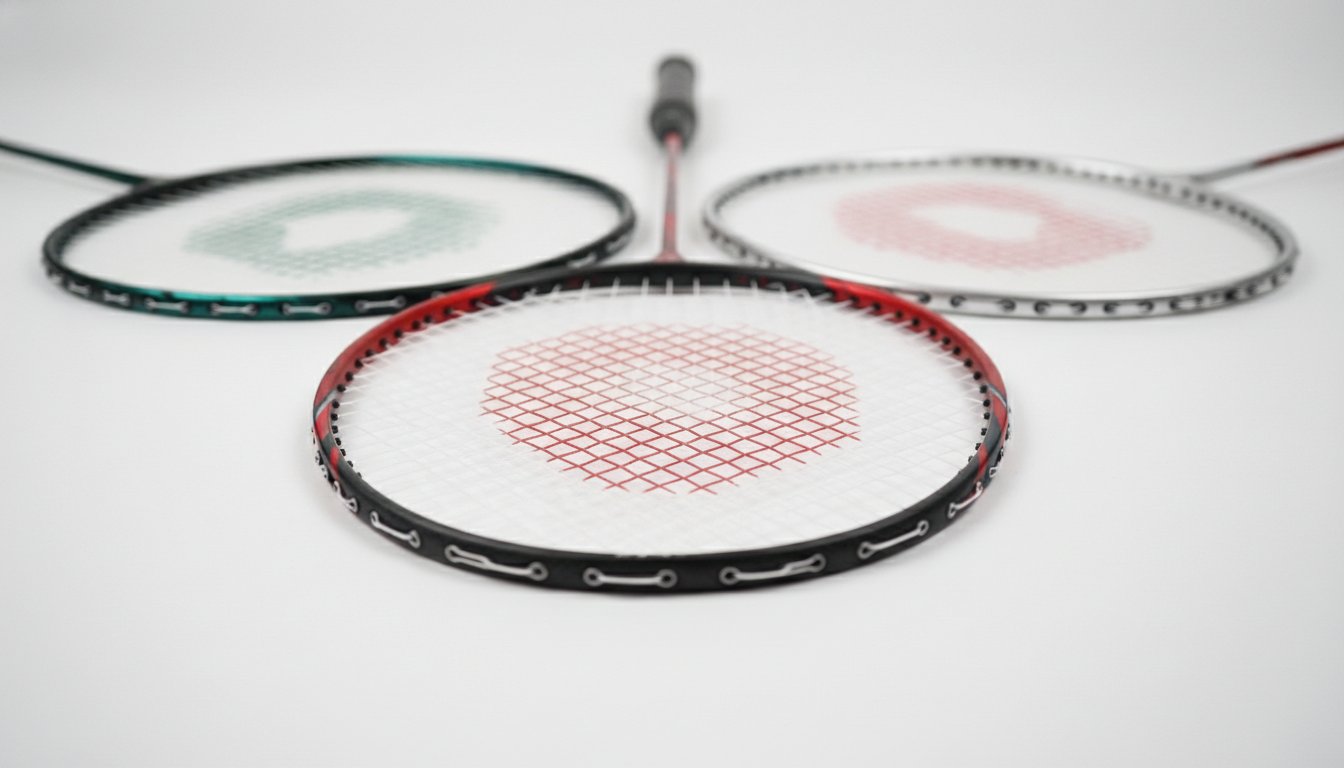
Stepping onto the court is an exciting feeling, but choosing your gear can feel overwhelming. If you're staring at a wall of options, confused by terms like 'balance point' and 'shaft stiffness', you're not alone. The fear of spending your hard-earned money on the wrong equipment is real. But finding the perfect badminton racket shouldn't feel like a guessing game. It's about matching the right technology to your unique playing style, and we're here to help you get it right.
Think of us as your friendly, knowledgeable teammate. This ultimate buyer's guide breaks down everything you need to know in simple, clear terms. We'll walk you through weight, balance, shaft flexibility, and string tension, showing you how each element impacts your power and control. By the end, you'll have the confidence to choose a fantastic racket that suits your skill level and budget, feels great in your hand, and helps take your game to the next level. Let's make this a smart investment in your new favourite sport!
Anatomy of a Badminton Racket: Understanding the Key Components
Before choosing the perfect badminton racket, it’s crucial to know what it’s made of. Think of it like a high-performance car-every single part is engineered for a specific purpose. Each component plays a vital role in generating power, providing control, and defining how the racket feels in your hand. Getting familiar with these parts now will make understanding technical specifications much easier later on.
For a fantastic visual breakdown of the key parts, check out this helpful video guide:
The Head and String Bed
The head is the powerhouse of your racket. Its frame holds the string bed, which is your only point of contact with the shuttlecock. The head's shape directly influences the size of the 'sweet spot'-the most effective hitting area. The design of the head is a key part of the modern Anatomy of a Badminton Racket, with two main shapes dominating the market:
- Isometric: A squarer shape that creates a larger sweet spot, making it more forgiving on off-centre hits. Perfect for beginners and intermediate players.
- Oval: A traditional, rounded shape with a more concentrated sweet spot. It can offer more power if you have consistent, accurate timing.
Tiny plastic inserts called grommets line the frame, protecting the strings from friction and wear.
The Shaft
Connecting the head to the handle, the shaft is the engine of repulsion and flexibility. Its stiffness is one of the most critical factors in matching a racket to your swing style. A more flexible shaft bends easily, providing a 'whip' effect for extra power, ideal for beginners. A stiffer shaft offers more control and is preferred by advanced players with fast, powerful swings. Modern shafts are typically made from lightweight, high-performance graphite.
The T-Joint and Throat
The throat is the area where the head and shaft meet. At its core is the T-Joint, a critical point for stability. A well-designed T-Joint prevents the frame from twisting on impact, ensuring your shots are accurate and stable. In the past, this was a separate piece, but today's top-notch rackets feature a built-in T-Joint for exceptional durability and a seamless transfer of energy.
The Handle and Butt Cap
This is where your connection to the racket begins. The handle, or grip, is typically made of wood and wrapped with a factory grip. The size of the handle is important for comfort and preventing injury. At the very bottom, the butt cap flares out, giving you a secure hold and preventing the racket from slipping out of your hand during a powerful smash.
The 3 Pillars of Racket Selection: Weight, Balance & Stiffness
Ever picked up a badminton racket and wondered what all the codes and jargon mean? You're not alone! At the heart of every racket's design are three core characteristics that determine how it feels in your hand and performs on the court: weight, balance, and stiffness. Understanding these pillars is the key to unlocking your potential and finding a racket that truly complements your playing style. Let's demystify the specs so you can choose your next racket with total confidence.
Racket Weight (The 'U' System)
Manufacturers use a simple 'U' rating to classify a racket's weight (without strings). The lower the number, the heavier the racket. It’s a straightforward system that gives you an instant idea of the racket's feel.
- 3U (85-89g): A heavier frame. This weight class offers fantastic stability and power, making it a favourite for aggressive singles players who love to smash from the back of the court. However, it can be slower to manoeuvre in fast defensive exchanges.
- 4U (80-84g): The all-rounder's choice. This is the most popular weight for a reason. It provides a perfect blend of power and speed, making it versatile enough for both singles and doubles play.
- 5U (75-79g): A lightweight and speedy frame. Lighter rackets are incredibly fast to handle, ideal for quick defensive blocks, net kills, and fast-paced doubles rallies. The trade-off is a reduction in raw smashing power.
Balance Point: Head-Heavy vs. Head-Light
This refers to where the weight is concentrated along the racket's frame. It dramatically affects the swing and is a crucial factor in matching a racket to your game. The distribution of mass is a huge factor in generating power, a concept explored in depth by engineering experts looking into the science behind racket performance. Here’s how it breaks down:
- Head-Heavy: More mass is located in the racket head, creating momentum for powerful smashes and clears. This is the go-to for attacking players who want to end rallies with force.
- Head-Light: The weight is shifted towards the handle, making the racket head feel lighter and easier to move. This provides exceptional speed and manoeuvrability for defence, net play, and quick reactions.
- Even Balance: The perfect middle ground. An evenly balanced badminton racket offers a fantastic mix of power and control, making it a reliable and versatile option for players who do it all.
Shaft Stiffness: Flexible vs. Stiff
Shaft stiffness, or flex, is how much the racket shaft bends when you swing. This is all about energy transfer and should be matched to your swing speed for the best results.
- Flexible: A flexible shaft bends more easily, creating a "whip" effect that helps generate power for players with slower, developing swings. It’s a great choice for beginners as it’s more forgiving.
- Stiff: A stiff shaft bends less, offering a more direct and responsive feel. It provides exceptional control and power for advanced players with fast, powerful swings who can generate the force needed to flex the shaft properly.
- Medium Flex: A popular compromise that suits a wide range of intermediate players. It provides a good balance of power and control without being too demanding or too forgiving.
How to Choose a Racket for Your Skill Level and Playing Style
Understanding the technical specs is one thing, but applying that knowledge to your game is where the magic happens. The best badminton racket for a beginner is vastly different from what a professional player needs. To find your ideal match, it’s crucial to be honest about your current skill level and on-court style. This ensures you choose a racket that helps you develop and win points, rather than one that holds you back.
For the Beginner Player
Welcome to the game! Your main priority is finding a racket that's easy to use, durable, and forgiving. Look for a large sweet spot to make off-centre hits more effective. We highly recommend starting with:
- Flex: Medium flex for easy power generation without a full-speed swing.
- Balance: Even-balance or slightly head-light for quick maneuverability and defence.
- Weight: 4U (approx. 80-84g) is a fantastic starting point that's light enough for fast reactions.
The goal is to build solid technique without having to fight a demanding racket.
For the Intermediate Player
You've got your basic shots down and are starting to develop a distinct playing style. Now it's time for a more specialised racket to elevate your game. If you're an aggressive, attacking player who loves to smash, consider a medium-stiff, head-heavy racket for extra power. If you're a defensive specialist or play a lot of doubles, a more maneuverable medium-flex, head-light racket will be your best friend for quick blocks and drives. This is also a great time to experiment with 3U or 4U weights to see what gives you the perfect combination of speed and power.
For the Advanced Player
With a fast, consistent swing and refined technique, you can generate your own power. Your focus now shifts to pinpoint precision and control. Stiff or extra-stiff shafts are ideal, as they provide an instant response and transfer maximum energy from your swing into the shuttle. The balance point becomes a matter of personal preference, fine-tuned to your specific attacking or defensive strategies. You know what you need to dominate the court. Explore our range of advanced badminton rackets.
Top Brands and Technologies in the Badminton World
Navigating the badminton market is much easier when you know the key players. The professional circuit is dominated by three titans: Yonex, Victor, and Li-Ning. Each brand brings its own signature technologies and iconic racket series to the court, offering distinct advantages for different playing styles. Understanding what makes them unique is a fantastic step towards narrowing down your choices and finding the perfect badminton racket for your game.
Yonex: The Market Leader
Yonex is renowned for its relentless innovation and exceptional quality control, with many of its top-tier rackets still made in Japan. They are famous for pioneering the Isometric head shape, which creates a larger sweet spot for more consistent and forgiving shots. Their most popular series are tailored to specific needs: the head-heavy Astrox for devastating power, the head-light Nanoflare for incredible speed, and the even-balanced Arcsaber for pinpoint control.
Victor and Li-Ning: The Top Contenders
Hot on Yonex’s heels, Victor and Li-Ning are trusted by many of the world's best players. Victor has a strong reputation for producing exceptionally fast rackets, with its Auraspeed and Jetspeed series being favourites among doubles players who thrive on quick exchanges. Li-Ning is known for its highly aerodynamic frames and bold, aggressive designs, particularly in its popular Aeronaut series. Both brands offer top-notch quality and performance that rival the very best.
Decoding Racket Technology Jargon
The technical terms can seem confusing, but they all come from innovations in material science. Sourcing the components for these advanced materials is a complex challenge, now being tackled by specialized technologies like AI for Critical Minerals. Instead of getting bogged down in that deep science, let's focus on the benefit to your game. Here are a few key terms explained simply:
- Nanometric / Nanomesh: This refers to advanced carbon materials that make the frame stronger and thinner. The result is a lighter racket that can be swung faster without sacrificing power.
- Aero Frame: A design principle where the racket head is shaped to be more aerodynamic. This reduces air resistance, allowing for a much quicker swing and faster reaction times.
- Rotational Generator System: A signature Yonex technology that uses counterbalance theory to distribute weight throughout the grip, frame, and joint. This allows for a smoother transition between shots and prepares you for rapid, continuous attacks.
Ultimately, the goal is to find a racket with technology that complements your strengths. Ready to see them in action? Explore our great range of rackets from the world's top brands and find the perfect fit for your game!
Beyond the Frame: Why Strings and Grips are Crucial
You've found the perfect frame, but the journey to your ultimate badminton racket isn't over yet. A great frame is only half the battle. The components you interact with on every single shot-the strings and the grip-are what truly define your racket's performance and feel on the court. While factory strings and grips are a decent starting point, customising them is a complete game-changer that unlocks your gear's full potential.
Choosing the Right Badminton String
Think of strings as the engine of your racket. They dictate how the shuttle feels and reacts at impact. Finding the right balance for your game involves understanding a few key trade-offs:
- Gauge (Thickness): Thinner strings (around 0.65mm) provide more repulsion and a better "pop," giving you excellent feel and control. Thicker strings (0.70mm and up) are designed for durability, making them a fantastic choice for players who hit hard or want to restring less often.
- Tension: Higher tension (24+ lbs) offers superior control for advanced players with precise technique. Lower tension (20-22 lbs) creates a larger sweet spot and generates more power, making it ideal for beginners and intermediate players.
The Importance of a Good Grip
Your grip is your only connection to the racket, so it needs to be perfect. The grip that comes on a new racket is called a replacement grip. Most players wrap a thinner overgrip on top for enhanced feel and sweat absorption. You can choose between tacky synthetic grips for a secure, firm hold, or soft towel grips for maximum moisture wicking. Regularly changing your overgrip is a cheap and easy way to maintain fantastic control and hygiene.
Getting Your Racket Professionally Strung
Don't let a poor string job undermine your new equipment. An expert stringer uses professional machines to ensure consistent tension across the entire string bed, which is crucial for predictable performance and protecting your frame from warping. A specialist can also provide top-notch advice, helping you select the perfect string and tension for your specific playing style. Investing in professional stringing is an investment in your performance and the longevity of your gear.
Ready to feel the difference a professional setup can make? Check out our expert racquet stringing services in Melbourne.
Step Onto the Court with Confidence
Choosing the right badminton racket isn't just about the brand; it's about finding the perfect synergy between weight, balance, and stiffness for your unique playing style. Whether you're a beginner focused on control or an aggressive player chasing powerful smashes, the ideal frame will elevate your game. Remember that the journey doesn't end there-custom strings and a quality grip are the final, crucial pieces to unlocking your full potential on the court.
Feeling empowered to make your choice? The passionate team at Sturdy Racquets is here to help you take the next step. We're not just a store; we're players, just like you. For expert advice and a fantastic range, find your perfect badminton racket in our extensive collection! We offer fast, Australia-wide shipping from our Melbourne store and have a professional in-store stringing service available to get your new gear court-ready.
The right equipment is a game-changer. Now go on, gear up, and play your best game yet. We're cheering for you!
Frequently Asked Questions About Badminton Rackets
How much should I spend on my first good badminton racket?
For your first significant upgrade, a budget of A$80 to A$150 is a fantastic starting point in Australia. This price range gets you a high-quality graphite racket that offers a massive improvement in feel, power, and control compared to basic models. While professional rackets can cost upwards of A$250, investing in this mid-range ensures you get top-notch technology that will help you develop your skills without breaking the bank. It's the perfect balance of performance and value.
What is the difference between a 3U and 4U racket, and which should I choose?
The "U" rating refers to a racket's weight. A 3U racket typically weighs 85-89 grams, while a 4U is lighter at 80-84 grams. A heavier 3U racket provides more mass, which translates to more powerful smashes and greater stability. In contrast, a lighter 4U racket offers faster swing speed and superior manoeuvrability, making it ideal for quick defensive plays and fast-paced doubles exchanges. For most intermediate players, a 4U racket is a highly recommended, versatile choice.
Are pre-strung badminton rackets good enough for beginners?
Yes, absolutely! Pre-strung rackets are a convenient and cost-effective option perfect for those just starting their badminton journey. They allow you to get on the court and play immediately. However, keep in mind that factory strings are usually strung at a lower, general-purpose tension. As your skills improve, you will benefit greatly from a custom restring, which allows you to choose a string and tension that perfectly complements your playing style for exceptional control and feel.
How do I know when it's time to restring my badminton racket?
A great rule of thumb is to restring as many times per year as you play per week. So, if you play three times a week, you should aim for three restrings a year. Other key signs include visible fraying on the strings, a dull sound on impact, or a noticeable loss of tension and control. Restringing your badminton racket with fresh strings is one of the easiest ways to revitalise its performance and bring your A-game back to the court.
Can I use a tennis overgrip on my badminton racket?
We'd highly recommend against it. While they look similar, tennis overgrips are typically much thicker and heavier than grips made specifically for badminton. Using a tennis grip can negatively affect the delicate balance point of your badminton racket, making it feel sluggish and clumsy during play. To maintain the quick, responsive feel your racket was designed for, it's always best to stick with a specialist badminton grip. We have a fantastic range perfect for the job!
Share:
Wilson Pro Staff Classic: Heritage Feel, Modern Performance
ASICS Australia: The Ultimate Guide to Their Best Shoes & Tech