



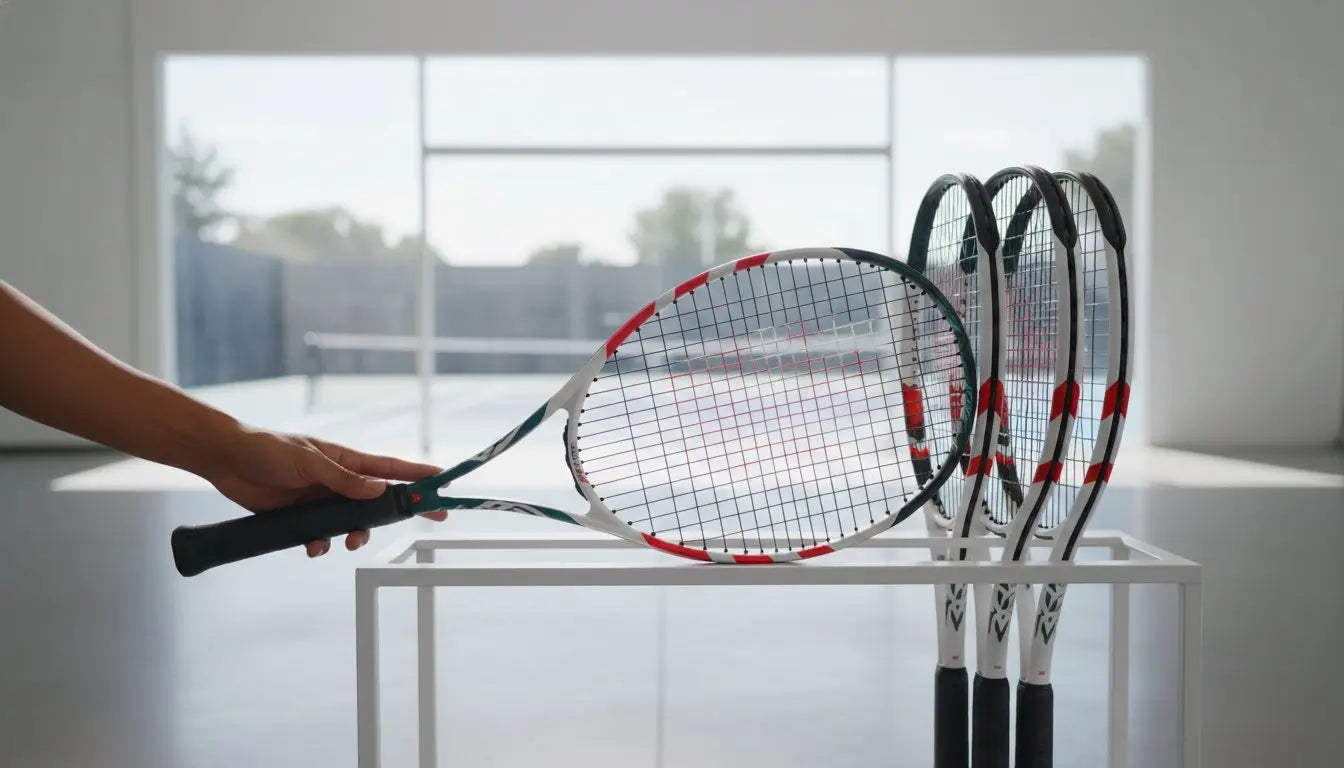
That $430 performance racquet might be the exact reason your game has plateaued. It's easy to feel overwhelmed by technical jargon like swingweight and stiffness when you just want to hit a cleaner ball. You've likely searched for a tennis racquet buying guide that actually accounts for the high-rebound Australian hard courts we play on. We understand the frustration of investing in gear that feels great in the shop but causes "tennis elbow" by the third set. Knowing how to choose a tennis racquet is about more than just picking a famous name; it's about finding the tool that fits your unique swing.
Finding the best tennis racquet for your level shouldn't be a guessing game. Our 2026 guide simplifies the process by matching technical specs to your specific playing style and physical needs. You'll learn why advanced players typically choose frames between 300g and 315g and how the 2026 Australian competitive play regulations affect your gear choice. We'll walk through the latest technology in tennis racquets for beginners and choosing the right tennis racquet for intermediate players to ensure you find a perfect match. From grip sizing to professional racquet stringing, you're about to master your equipment and improve your control on the court.
Key Takeaways
- Understand how weight and grip size impact your physical health to avoid common injuries like tennis elbow during long matches.
- Master the technical differences between static weight and swingweight to ensure your racquet feels comfortable and responsive mid-swing.
- Follow our comprehensive tennis racquet buying guide to find the ideal balance of power and forgiveness based on your current skill level.
- Learn why custom professional racquet stringing is essential for adapting your game to specific Australian court surfaces like synthetic grass or hard courts.
- Discover how expert advice and physical trials at a local specialist shop help you select your next frame with absolute confidence.
Understanding Your Game: Why the Right Tennis Racquet Matters in Australia
Picking a racquet isn't just about the paint job or which pro uses it on TV. In Australia, our high-rebound hard courts and intense summer heat change how equipment performs. If you're choosing the right tennis racquet, you need a frame that works with your body, not against it. The right choice helps you find the sweet spot more often. The wrong one can leave you nursing a sore elbow by the second set. Your mental game also shifts when you trust your gear. That "perfect feel" gives you the confidence to go for a line-painting winner on a break point.
The Consequences of a Poor Match
Many players pick up a racquet that's too heavy, thinking it provides more power. Instead, a frame exceeding your physical limit often leads to long-term shoulder strain and chronic arm fatigue. Cheap department store frames often have a "dead feel" because they lack the sophisticated materials found in the evolution of racquet technology. These low-quality frames vibrate excessively, which is a leading cause of tennis elbow. Using a specialist tennis racquet buying guide helps you avoid these pitfalls. A frame that matches your strength and swing speed accelerates skill acquisition. This is especially true for those looking for tennis racquets for beginners. One size fits all is a myth; your racquet needs to be as unique as your swing.
Defining Your Playing Style
Your equipment should be an extension of how you want to play. Are you a baseline grinder who loves long rallies? Or are you a net-charging volleyer looking to end points quickly? A baseline player usually benefits from a more aerodynamic frame that generates spin. Conversely, an aggressive net player needs a racquet with high stability for crisp volleys. Your swing speed is another critical factor. If you have a short, compact swing, you'll need a racquet with more inherent power. If you have a long, fast swing, you'll want a control-oriented frame that allows you to swing out without the ball flying long. Finding the best tennis racquet for your level means honest self-assessment of these traits.
Don't forget the Australian sun. High UV exposure and 35-degree days can soften strings and change the flex of certain materials. Choosing a frame designed for durability and performance in these conditions ensures your game stays consistent from January through December. When you match your gear to your style and environment, you reduce unforced errors and have more fun on the court.
The Technical Breakdown: Head Size, Weight, and Balance Explained
Understanding the numbers printed on the frame is the next step in how to choose a tennis racquet. While our previous section focused on your playing intent, these technical specs determine how the racquet actually behaves at the moment of impact. Most modern frames revolve around the 100 square inch mark, but small adjustments in weight or balance can drastically change your experience on the court. For a deeper look at global industry standards, Tennis Magazine's racquet guide offers excellent context on how these measurements have evolved.
Static weight is simply what you feel when holding the racquet in your hand. Swingweight, however, is a measurement of how heavy the frame feels while it's actually moving through the air. A racquet with a high swingweight offers more stability against fast incoming serves, but it requires more physical strength to maneuver. Balance points also shift this feel; head-light racquets are easier to flick at the net, while head-heavy designs provide extra "plow-through" for baseline power. This tennis racquet buying guide helps you navigate these trade-offs to find your perfect match.
Head Size and the Sweet Spot
The head size dictates the "sweet spot," the area where you get the most predictable response. Smaller heads offer precision but require cleaner ball striking. Most players find their rhythm in the midplus range. Here is how they generally break down:
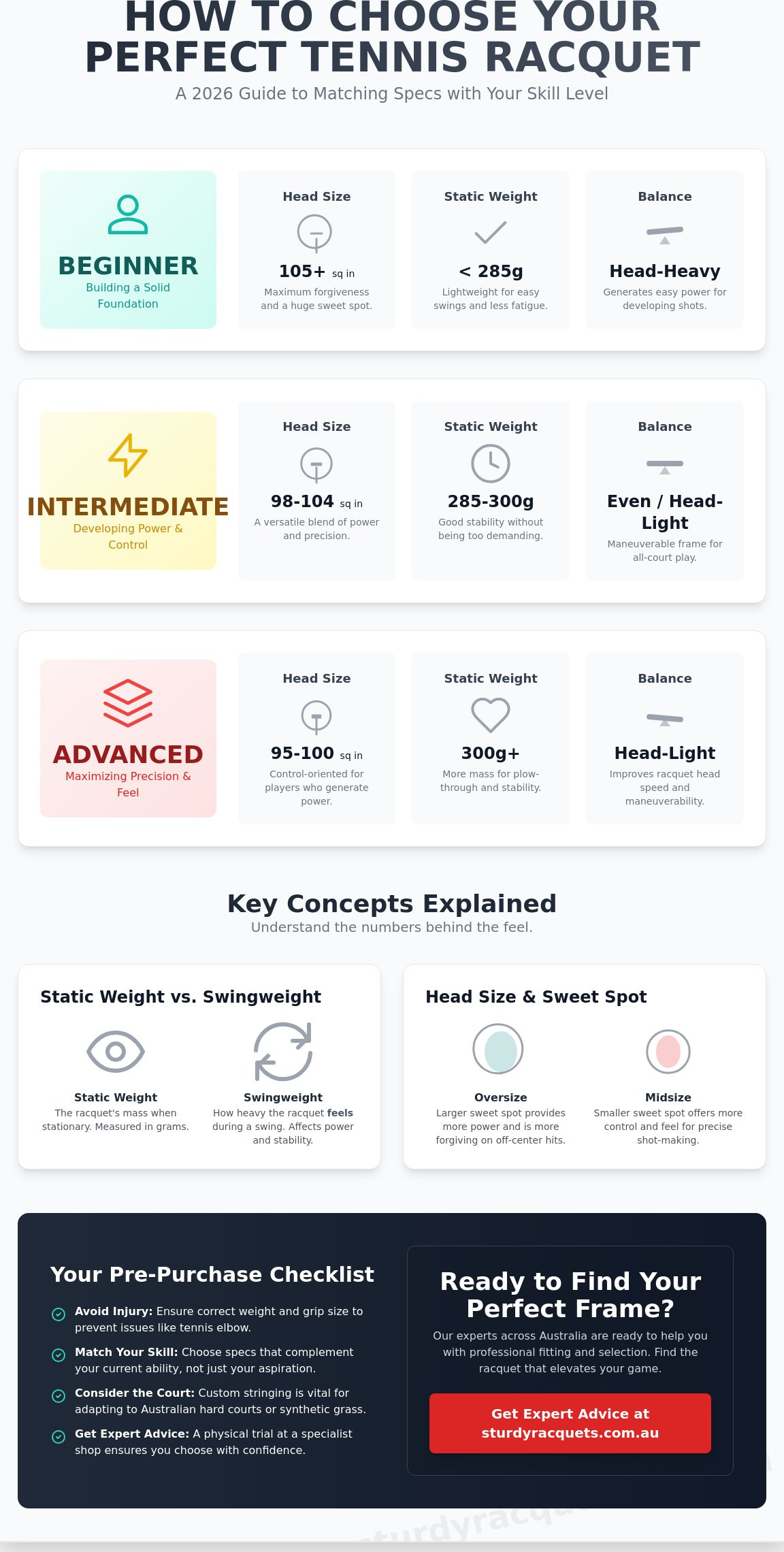
- Oversize (105+ sq in): These provide maximum forgiveness. They are often the best choice in tennis racquets for beginners who need help generating depth.
- Midplus (98-102 sq in): This is the "golden standard." It offers the perfect blend of control and power for the vast majority of club players.
- Midsize (under 97 sq in): Reserved for advanced players who prioritize surgical precision and can generate their own power.
Weight and Balance Dynamics
Weight influences both the power of your shots and the health of your joints. Choosing the wrong weight can lead to the fatigue we discussed earlier. Consider these categories:
- Lightweight (under 285g): Ideal for juniors transitioning to adult frames or beginners looking for easy handling.
- Medium (285g-310g): This is the sweet spot for an intermediate tennis player looking to balance maneuverability with stability.
- Heavy (310g+): Found in performance tennis racquets, these frames are for players who have the technique to handle extra mass.
Grip Sizing for Comfort and Safety
A grip that's too small forces you to squeeze harder, leading to wrist tension and "tennis elbow." To find your size, use the index finger rule: when holding the racquet in a standard Eastern grip, you should be able to fit the index finger of your other hand between your ring finger and the palm of your hand. If there's no room, the grip is too small. You can always use tennis overgrips to slightly increase a handle's size, but it's much harder to make a large grip smaller. If you're still unsure about the numbers, you can always ask a local expert for advice.
Matching Gear to Skill: The Best Tennis Racquet for Your Level
Your skill level acts as the ultimate filter when you're using a tennis racquet buying guide. A frame that's perfect for a club champion will likely hinder a newcomer. Most adult frames are 27 inches long, but the internal geometry and weight distribution vary wildly to suit different technical abilities. Identifying where you sit on the spectrum from beginner to advanced ensures you don't fight your equipment on the court. If you're looking for a deep dive into 2026 technical trends, check out our How to Choose a Tennis Racquet: The Ultimate 2026 Buyer’s Guide.
Starting Strong: Beginner Selection
In your first 12 to 24 months of play, focus on frames that offer high maneuverability. You should look for best tennis racquets for beginners that weigh between 260g and 285g unstrung. A larger head size, typically 105 square inches or more, creates a generous sweet spot. This forgiveness helps you build consistent contact habits while your swing is still developing. At this stage, the racquet should do most of the work to get the ball over the net.
Leveling Up: Intermediate Considerations
You'll know it's time for a change when your beginner frame starts to feel "flimsy" against harder hitters. Most intermediate tennis racquets shift the focus from pure power to a blend of control and spin. These frames usually feature a head size between 98 and 102 square inches. As your swing speed increases, a slightly heavier frame (285g to 300g) provides the stability you need to direct the ball with intent. Choosing the right tennis racquet at this stage is a pivotal moment in your development as a player.
Performance and Pro Specs
Advanced players require stability against heavy hitters and the potential for customisation. These performance tennis racquets typically weigh between 300g and 315g unstrung. They often have thinner beams for better "feel" and lower RA ratings for arm comfort. For those seeking a professional perspective on these high-end frames, expert advice from Tennisnerd highlights how even small spec changes impact competitive play. If you're a junior transitioning to adult gear, don't rush into these heavy frames until your physical strength matches your technical skill. Finding the best tennis racquet for your level means being honest about your current game to unlock your future potential.
Beyond the Frame: Strings, Grips, and Local Court Considerations
Your frame is the chassis, but the strings and grips are the engine and tires of your game. Even the best tennis racquet for your level won't perform if the setup is wrong. Most performance racquets are sold unstrung for a reason; players need a customized response. If you buy a pre-strung frame, the factory strings are often a generic nylon that loses 10% of its tension within the first 24 hours. Matching your string choice to the Australian climate and your local club's surface is vital for consistent play. This step is often overlooked in a standard tennis racquet buying guide, yet it's where the fine-tuning happens.
The Australian sun is a major factor in equipment maintenance. On a 35-degree day in Adelaide or Perth, the heat causes strings to expand and lose elasticity. This tension drop makes the ball fly further than intended, leading to unforced errors. Similarly, intense humidity in Brisbane can turn a standard grip into a slippery liability. Using high-quality absorbent tennis overgrips and storing your gear in a thermally lined bag helps mitigate these issues. Small additions like vibration dampeners also help by removing the high-pitched ping sound, providing a more solid acoustic feel on impact.
The Engine: Choosing Your Strings
Your strings account for 50% of the racquet's performance. Beginners should prioritize multifilament strings, which mimic natural gut to provide exceptional comfort and easy power. Big hitters often prefer polyester strings because they offer the durability and snap-back required for heavy spin. For a deep dive into tension and material types, read our guide on how to restring a tennis racquet for power and control. Finding the right balance here is just as important as choosing the right tennis racquet itself.
Australian Surface Specifics
Australia has a unique mix of court surfaces that dictate your gear needs. Hard courts, like those found at major centers in Sydney and Melbourne, are physically demanding. They offer a true bounce but transmit more shock to your arm, making comfort-oriented strings a wise choice. Conversely, many local clubs use synthetic grass. This surface produces a lower, faster bounce that requires a racquet with good maneuverability to get under the ball. Regardless of the surface, using high-quality tennis balls ensures you get the most out of your equipment. If you need a personalized recommendation for your local club's conditions, contact our expert stringing team for advice.
Expert Fitting and Selection at Sturdy Racquets Across Australia
An online questionnaire can suggest a frame, but it can't feel the vibration in your palm. That's why a physical "hand test" is the final step in how to choose a tennis racquet with total confidence. While digital tools provide a starting point, they can't replace the expert eyes of a local pro who sees your swing in person. At Sturdy Racquets, we believe the right gear is a synergy between your technique and professional Australian customization. We're proud to be the one stop sports shop for tennis lovers who want to get it right the first time.
Local Expertise in Every Major City
Our specialists in Melbourne, Sydney, and Brisbane offer personalized fittings that account for your physical build and playing history. Our teams in Perth and Adelaide provide specific advice on gear that withstands 40-degree summer days and localized wind conditions. Visiting us in-person allows you to swing a variety of tennis racquets for all playing levels before you commit. This hands-on approach ensures the weight and balance feel exactly as they should before you hit your first ball. We help you find a frame that feels like an extension of your arm.
Customisation and After-Sales Support
Finding the best tennis racquet for your level is only the beginning. Our professional stringing services can transform a standard frame into a custom weapon by adjusting tension to match your specific club's court surface. We also help you complete your setup by finding the right tennis shoes to ensure your footwork is as stable as your backhand. Our commitment to the Australian tennis community goes beyond the sale. We're here for every restring and grip change to help you grow. Join our community today and avoid unforced mistakes with your equipment choices.
Elevate Your Game with the Perfect Gear Choice
Finding the right frame is a journey that pays off in every baseline rally and overhead smash. You've learned how technical specs like swingweight and head size influence your control. You also know why matching your strings to the Australian heat is vital for consistent depth. Mastering how to choose a tennis racquet isn't just about reading a guide; it's about feeling the frame in your hand and trusting the data behind the design.
We provide expert in-store advice across Melbourne, Sydney, Adelaide, Brisbane, and Perth to ensure your new frame feels like an extension of your arm. With professional racquet stringing and customisation available, we'll help you tune your equipment for your specific club's courts using Australia's biggest range of trusted brands. If you're still unsure about the right specs for your swing, you can explore our range of tennis racquets for all playing levels and speak with our friendly team today. Let's get your gear ready for a fantastic 2026 season. We'll see you on the court!
Frequently Asked Questions
How do I know what size tennis racquet I need for my hand?
You can determine your correct grip size by using the index finger test. Hold the racquet handle in a standard Eastern grip; you should be able to fit the index finger of your other hand comfortably in the space between your ring finger and your palm. If there isn't enough room for your finger, the grip is too small and may cause wrist strain. If there's a large gap, the grip is too big and will limit your wrist snap.
What is the best tennis racquet for a beginner adult in Australia?
The best tennis racquet for your level as a beginner is one that offers a large head size of at least 105 square inches and a light weight between 260g and 285g. These specifications provide the forgiveness and maneuverability needed to develop consistent strokes. A tennis racquet for beginners should do most of the work for you, helping you get the ball over the net while you focus on your technique.
How much should I spend on my first proper tennis racquet?
According to 2026 market data, recreational players in Australia should expect to spend between $150 and $300 AUD for a quality frame. While professional models can cost over $400, this mid-range price ensures you receive a graphite composite racquet rather than a vibrating aluminum one. Investing in this range is a smart move in any tennis racquet buying guide to ensure your gear lasts as your skills improve.
Can the wrong tennis racquet really cause tennis elbow?
Yes, a racquet that is too heavy or too stiff is a leading cause of tendonitis and tennis elbow. Frames with a high stiffness rating transmit more impact shock directly to your arm. If you're choosing the right tennis racquet and have joint concerns, look for a frame with a lower RA rating and use multifilament strings to absorb more vibration during impact.
How often should I restring my racquet if I play once a week in the Melbourne heat?
You should aim to restring your racquet every 3 to 4 months. Even if your strings don't break, the Melbourne heat causes materials to expand and lose tension. A string can lose 10% of its playability within the first 24 hours after stringing. After 12 weeks of play, the "dead" feel of the strings will reduce your control and could lead to arm fatigue.
What is the difference between a head-light and head-heavy racquet?
Head-light racquets have more weight in the handle, which makes them easier to flick and maneuver at the net. Head-heavy racquets have more mass in the hoop to provide extra power and stability for baseline shots. Most players looking for a tennis racquet for intermediate player use prefer a head-light balance because it allows for faster swing speeds and better spin generation.
Should I buy a different racquet for hard courts versus synthetic grass?
You don't need a different frame, but you should consider different string tensions for these surfaces. Hard courts have a predictable, higher bounce that rewards a control-oriented setup. Synthetic grass courts, which are very common across Australia, produce a lower and faster bounce. A maneuverable racquet helps you react quickly to these low balls, but the frame choice remains the same for both.
Do professional tennis racquets come pre-strung?
High-end performance racquets are almost always sold unstrung. This is because advanced players have very specific preferences for string type and tension. Selling them unstrung allows you to customize the "engine" of your racquet from day one. When you are how to choose a tennis racquet at a professional level, the stringing process is just as important as the frame selection itself.
Share:
Best Tennis Racquets for Flat Hitters 2026: Budget vs. Performance Guide
Good Tennis Stringer vs Bad: How to Find Professional Quality in 2026