



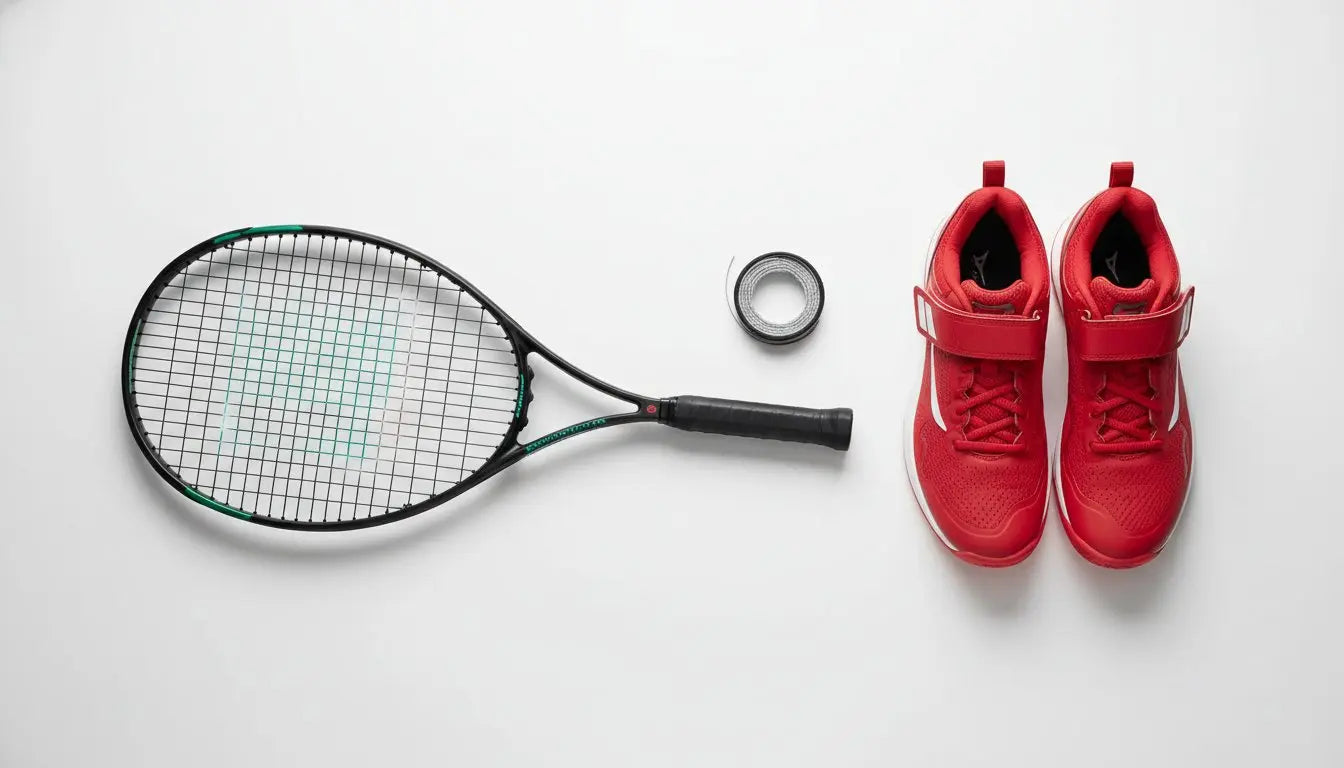
What if your racquet is actually working against you every time you hit a backhand? It's incredibly frustrating to finish a great set only to feel that familiar, dull ache creeping into your forearm. You love the game, but the fear of having to stop playing because of persistent pain is a constant worry. Learning how to prevent tennis elbow with right gear is the most effective way to protect your arm while staying competitive. It's a mechanical equation where your equipment must absorb the shock that your tendons currently handle.
We know that technical specs like swing weight, stiffness, and balance points can feel overwhelming when you're just looking for relief. That's why we've simplified the science for the 2026 season. You'll discover how specific arm-friendly tennis racquets and vibration-dampening tennis strings can drastically reduce impact. We'll also provide a clear checklist for your next purchase, covering everything from grip size to professional racquet stringing services, ensuring you achieve peak, pain-free performance every time you step onto the court.
Key Takeaways
- Discover why a racquet with a lower stiffness rating and a heavier frame can actually shield your arm from painful impact vibrations.
- Learn how to prevent tennis elbow with right gear by identifying the specific string materials that act as internal shock absorbers.
- Understand how the right tennis court shoes support your kinetic chain to reduce the risk of late, elbow-straining hits.
- Find out why a professional racquet stringing setup is the ultimate way to customize your equipment for long-term, pain-free performance.
Understanding Tennis Elbow: Why Your Gear is the First Line of Defence
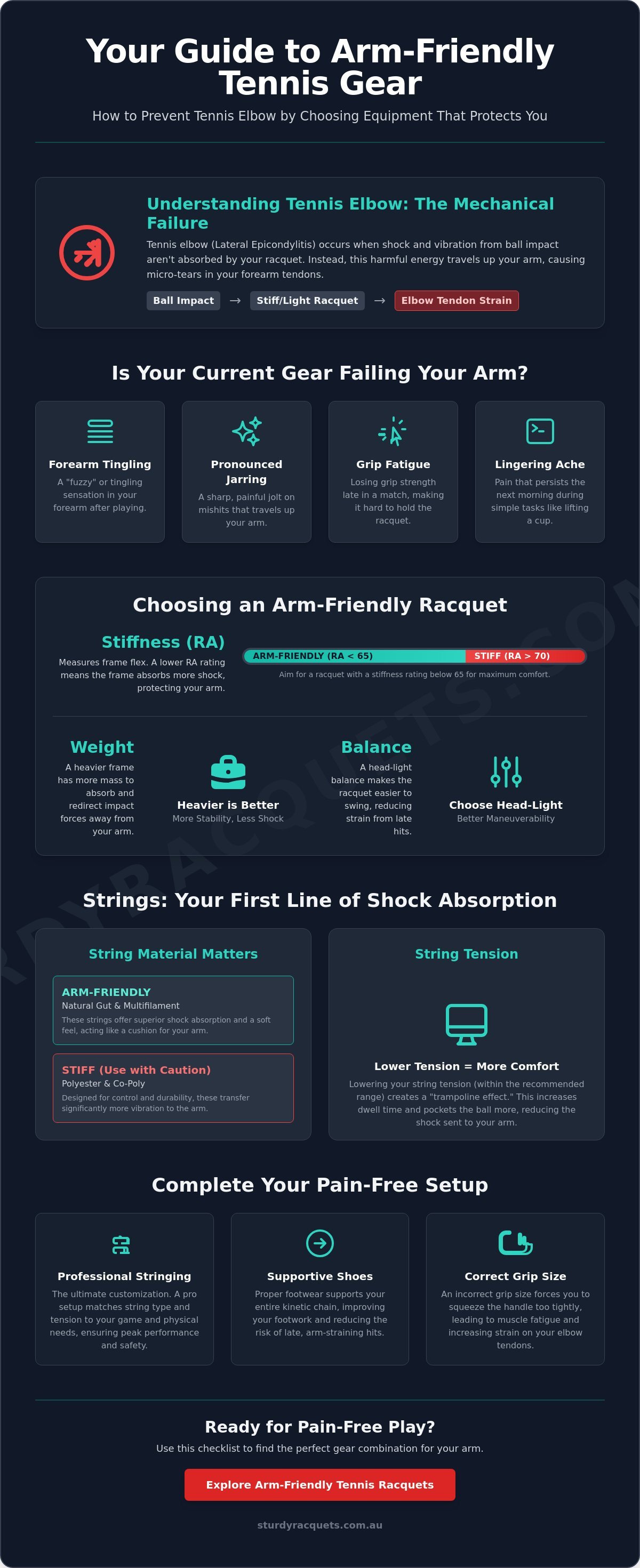
Tennis elbow isn't just a sports injury; it's a mechanical failure of the body's shock-absorption system. Known medically as lateral epicondylitis, it occurs when the extensor tendons in your forearm can't handle the repetitive stress placed on them. If you've been researching Understanding Tennis Elbow, you likely know the pain starts on the outside of the joint. This injury often occurs because your equipment isn't absorbing enough shock. Instead of the racquet frame taking the hit, the energy travels directly into your arm, causing micro-tears in the tendon over time.
Every time you strike the ball, a massive amount of energy transfers from the strings through the frame and into your hand. If you hit the sweet spot, most of that energy goes back into the ball. However, off-centre hits are the primary culprit for sudden tendon strain. These mishits cause the racquet to twist in your hand, sending a violent wave of vibration straight to your elbow. Learning how to prevent tennis elbow with right gear starts with choosing equipment that manages this energy transfer more efficiently, protecting your joints from those inevitable off-centre shots.
To better understand how your equipment and technique work together to protect your arm, watch this helpful video:
The Physics of the Impact
When a racquet strikes a ball, the frame actually deforms and vibrates. A key factor in arm health is "dwell time," which is the millisecond-long duration the ball stays on the strings. A frame with better dwell time spreads the impact over a longer period, which reduces the immediate peak shock to your tendons. Our comprehensive range of tennis racquets includes models specifically engineered with higher dwell times and advanced dampening materials. While high-stiffness frames offer more power, they also return more vibration to your arm. Finding the right balance is essential for long-term health on the court.
Signs Your Current Gear is Failing Your Arm
You don't always need a doctor to tell you that your setup is causing issues. Listen to your body during and after your matches. If you're wondering how to prevent tennis elbow with right gear, start by checking for these warning signs:
- Forearm Tingling: An increased tingling or "fuzzy" feeling in the forearm after long sessions or heavy hitting.
- Pronounced Jarring: A sharp, painful sensation on mishits that feels like it travels all the way to your shoulder.
- Grip Fatigue: A noticeable loss of grip strength during the third set, making it hard to hold the racquet firmly.
- Lingering Ache: Pain that persists the next morning when performing simple tasks like opening a jar or lifting a coffee mug.
If you're experiencing these symptoms, your current gear isn't doing its job as your first line of defence. It's time to look at the technical specs that can turn things around.
Choosing the Right Tennis Racquet to Minimise Arm Strain
Most players assume that a lighter racquet is easier on the arm, but the physics of the game tells a different story. If you're wondering how to prevent tennis elbow with right gear, the racquet frame is the most significant investment you'll make. A racquet that is too light or too stiff forces your tendons to do the work that the equipment should be doing. By selecting a frame with the right technical specifications, you can create a buffer between the ball's impact and your sensitive elbow joint.
Decoding Racquet Stiffness (RA)
The RA rating measures how much a racquet frame flexes during impact. A higher number, typically above 70, indicates a stiff frame that offers explosive power but sends significant vibration into the forearm. For those prone to injury, a lower RA rating, ideally under 65, is essential. These flexible frames "give" slightly upon impact, absorbing energy rather than reflecting it. Many intermediate tennis racquets are now designed with these comfort-focused ratings to help players stay on the court longer without pain.
Weight and Swing Weight Explained
The "weight paradox" is a common point of confusion for club players. While a heavy racquet feels harder to pick up, its mass actually resists the force of the ball more effectively. An ultra-light racquet gets pushed around upon impact, which causes the frame to vibrate violently. To protect your arm, look for a strung weight between 11 and 11.5 ounces. This additional mass acts as a shield. When combined with a head-light balance of 4 to 6 points, you get the benefit of shock absorption without losing the ability to swing through the ball quickly. Ensuring a proper equipment fit in terms of weight and balance is a recognized step in managing tendon health.
Sweet Spot and Head Size
Mishits are the enemy of a healthy elbow. When you strike the ball near the edge of the frame, the racquet twists, placing immense torque on your wrist and elbow. A larger head size, usually between 100 and 105 square inches, provides a more forgiving sweet spot. Modern performance tennis racquets often feature expanded sweet spots and internal dampening materials that kill vibrations before they reach the handle. This forgiveness is vital when you're tired in the final set and your footwork starts to lag. If you aren't sure which specs fit your swing style, you can always reach out for expert equipment advice to find your perfect match.
Choosing the right frame is the foundation of an arm-friendly setup. It's the first step in learning how to prevent tennis elbow with right gear, but it isn't the only factor. Once you have the right frame, the next layer of protection comes from what you put inside it: the strings.
The Role of String Tension and Material in Injury Prevention
If the racquet frame is the body of your equipment, the strings are the engine that drives every shot. While a flexible frame reduces vibration, the strings determine how much shock is generated at the moment of impact. Many players mistakenly believe that tighter strings lead to better control, but high string tension is one of the fastest ways to develop chronic forearm pain. When strings are pulled too tight, they lose their ability to stretch, turning your racquet face into a rigid wall that sends every ounce of impact directly into your tendons.
According to clinical research on the causes of lateral epicondylitis, using equipment that is properly suited for your physical capabilities is a critical preventative step. For most recreational players, this means moving away from harsh materials like polyester. Polyester strings are designed for professional athletes with elite strength; for the rest of us, dropping your tension from 55 lbs to 48 lbs can provide immediate relief. This change allows the string bed to act like a trampoline, catching the ball and slowing down the impact force before it reaches your arm.
Elasticity is your best friend when learning how to prevent tennis elbow with right gear. Over time, strings lose their "snap" and become dead, which stops them from absorbing energy and starts them transmitting pure shock. A good rule of thumb is to replace your strings every 40 to 50 hours of play, even if they haven't broken yet. Playing with old, notched strings is a recipe for injury because you'll instinctively swing harder to compensate for the lack of natural power and depth.
Multifilament vs. Polyester Strings
Multifilament strings are the ultimate shock absorbers for the tennis world. They are constructed from thousands of microfibres bundled together to mimic the soft feel of natural gut. Choosing high-quality tennis strings with a multifilament core is the most effective gear change you can make for immediate arm health.
| Feature | Multifilament | Polyester |
|---|---|---|
| Arm Comfort | Excellent (High Dampening) | Poor (High Vibration) |
| Power | High | Low |
| Control/Durability | Moderate | Excellent |
Grip Size and Overgrips
Your grip is your only physical connection to the racquet. If your grip is too small, you'll subconsciously squeeze the handle too hard to keep it from twisting on impact. This "death-grip" causes constant muscle tension in the forearm, leading to rapid fatigue and injury. You can check your size with the finger-width test: when holding the racquet, there should be enough space between your fingertips and the palm of your hand to fit the index finger of your other hand. Using tacky overgrips can also help you maintain a secure hold without excessive squeezing. For more technical details on how your setup affects your game, check out our guide to restringing tennis racquets.
Beyond the Racquet: Tennis Shoes and Accessories for Joint Protection
Most players don't realise that elbow pain often starts at the feet. The "kinetic chain" is a term experts use to describe how energy moves from the ground, through your legs and core, and finally out through your arm. If your shoes don't provide the grip needed for quick lateral adjustments, you'll find yourself reaching and hitting the ball behind your body. This late contact point is a primary cause of tendon strain. Learning how to prevent tennis elbow with right gear involves looking at your entire setup, ensuring every link in that chain is supported.
Footwear is the foundation of a healthy swing. Running shoes are designed for forward motion and lack the lateral stability required for the sudden stops and starts of tennis. Using them on a court increases the risk of sliding or rolling an ankle, which prevents you from setting a stable base for your shots. Without that base, your arm has to overcompensate for the lack of lower body power. This extra effort puts unnecessary load on the forearm muscles, leading to the very fatigue that triggers injury.
Selecting Tennis Shoes for Australian Courts
In cities like Sydney and Melbourne, hard courts are the standard. These surfaces are unforgiving. The vertical impact of every sprint and split-step travels straight up your legs and into your joints. We recommend specialised tennis shoes for hard courts that feature dense rubber outsoles and reinforced heel cushioning. These features are designed to absorb shock before it moves up the kinetic chain. For a deeper dive into choosing the right pair for your local surface, check out our guide to finding tennis shoes.
Vibration Dampeners and Lead Tape
There's a common myth that a small rubber vibration dampener will save your elbow. It's helpful to clarify that these accessories only change the "ping" sound and the feel of the string bed. They don't reduce the actual shock traveling through the frame. If you want to improve racquet stability, lead tape is a more effective tool. By strategically adding weight to the edges of the frame, you increase the racquet's resistance to twisting on off-centre hits. This added stability means less torque is transferred to your wrist and elbow.
Accessories like compression sleeves also play a role in your recovery. They help manage blood flow and reduce muscle oscillation during play. While they won't fix a racquet that's too stiff, they provide an extra layer of support for your tendons. If you're feeling overwhelmed by technical specs or weight distribution, you can speak with our expert team for a personalised gear assessment to ensure you're fully protected.
Customising Your Setup at Sturdy Racquets for Pain-Free Play
Buying a racquet from a big-box retailer is often a gamble. It might look right on the shelf, but it won't necessarily perform when you're deep in a third set and your arm starts to tire. We believe that learning how to prevent tennis elbow with right gear requires a highly personal touch. Every player has a unique swing path, strength level, and injury history. What works for a high-performance junior might be disastrous for a club veteran returning to the court after a long break. Our goal is to take the guesswork out of your equipment choices by performing a comprehensive arm-health audit on your current setup to see exactly where the stress is occurring.
Our team looks at much more than just the racquet frame. We examine the wear patterns on your strings and the condition of your overgrip to see where your muscles might be overcompensating. By matching gear to your specific biomechanics, we can identify if a head-light balance or a lower RA rating is the missing piece of your prevention puzzle. This professional approach ensures that your equipment works with your body, not against it. We want you to feel confident in every swing, knowing that your gear is absorbing the shock that your tendons used to handle.
Professional Stringing and Customisation
Our expert technicians take the time to understand your playing style before the racquet ever hits the stringing machine. Whether you need the soft touch of multifilament or a hybrid setup to manage tension loss, we tailor every job to your specific needs. This level of care is why local players across Melbourne and Sydney trust us to keep them on the court. We also stock a wide range of performance tennis equipment designed with modern ergonomics in mind. By adjusting your tension based on your injury history, we can turn a stiff racquet into a much more forgiving tool.
Visit Sturdy Racquets in Brooklyn
Stop by our Brooklyn, Victoria store for a hands-on assessment of your current equipment. We can verify your grip size and check if your racquet's weight is actually providing the shock absorption you need for your level of play. We are more than just a store; we are a community hub for people who love the game and want to stay active for years to come. Don't let a dull ache turn into a season-ending injury that keeps you on the sidelines. Book your racquet service or consultation today and get back to playing the game you love without the pain.
Protect Your Arm and Stay on the Court
You now have a clear blueprint for how to prevent tennis elbow with right gear by focusing on frame flexibility, multifilament strings, and supportive footwear. Your equipment should always act as your first line of defence, absorbing the impact energy that typically strains your tendons. Whether it's switching to a racquet with a lower RA rating or simply dropping your string tension, these technical adjustments are the key to longevity in the sport you love.
Our passionate team of racquet sport enthusiasts is ready to help you fine-tune your setup. We provide expert in-store stringing services in Brooklyn, Victoria, alongside a wide selection of flexible, arm-friendly frames specifically chosen for player comfort. We're committed to supporting our local community with the guidance needed to play at peak performance. If you're ready to leave the dull aches behind, get a professional racquet consultation to ensure your gear is perfectly matched to your biomechanics.
See you on the court for a pain-free season ahead!
Frequently Asked Questions
Can a vibration dampener actually prevent tennis elbow?
No, a vibration dampener cannot prevent tennis elbow because it only alters the sound and feel of the string bed. It doesn't reduce the actual shock traveling through the racquet frame to your arm. To truly manage impact, you should focus on how to prevent tennis elbow with right gear like flexible frames and soft multifilament strings. These choices address the energy transfer at the source rather than just changing the acoustics.
What is the best racquet stiffness (RA) rating for a sore arm?
A stiffness rating under 65 RA is ideal for players struggling with a sore arm. The RA scale measures frame flexibility; a lower number means the racquet will flex more upon impact with the ball. Stiff frames with ratings of 70 or higher might offer more power, but they return significantly more vibration to your elbow. Flexible frames act as a natural cushion for your tendons during play.
How often should I restring my racquet if I have elbow pain?
You should restring your racquet every 40 to 50 hours of play if you're managing elbow pain. Strings lose their elasticity over time, even if they don't break. Once a string goes dead, it stops absorbing energy and begins transmitting harsh vibrations directly into your forearm. Regular maintenance ensures your string bed remains soft and forgiving, which is essential for protecting your joints during every match.
Is a heavier or lighter tennis racquet better for preventing injury?
A heavier racquet is actually better for preventing injury because its mass absorbs more shock from the ball. While it sounds counterintuitive, ultra-light racquets get pushed around at impact, which causes the frame to vibrate violently. A strung weight of 11 to 11.5 ounces provides the stability needed to protect your joints, provided the frame has a head-light balance to keep the racquet maneuverable.
What string tension is recommended for tennis elbow sufferers in 2026?
For the 2026 season, experts recommend a string tension of less than 55 lbs for anyone suffering from tennis elbow. Many players find significant relief by dropping their tension into the 48 to 50 lb range. This lower tension allows the strings to stretch more, which increases the dwell time of the ball and reduces the peak force that reaches your arm tendons on every hit.
How do I know if my tennis racquet grip size is too small?
Your grip size is too small if you cannot fit the index finger of your other hand in the space between your fingertips and palm while holding the racquet. A small grip forces you to squeeze the handle too tightly to prevent the racquet from twisting. This constant muscle tension in your forearm is a major contributor to tendon strain and rapid muscle fatigue.
Do tennis shoes really affect elbow pain?
Yes, tennis shoes play a vital role in protecting your elbow by ensuring a stable base for your shots. Proper footwear allows for better court positioning, which helps you avoid hitting the ball late. Late hits are a primary cause of forearm strain. Learning how to prevent tennis elbow with right gear must include shoes that provide lateral support and heel cushioning specifically for hard court surfaces.
Share:
Best Tennis Shoes for Beginners Australia: What to Wear for Your First Lesson
Is My Racquet Causing My Shoulder Pain? A 2026 Guide to Shoulder-Safe Tennis