



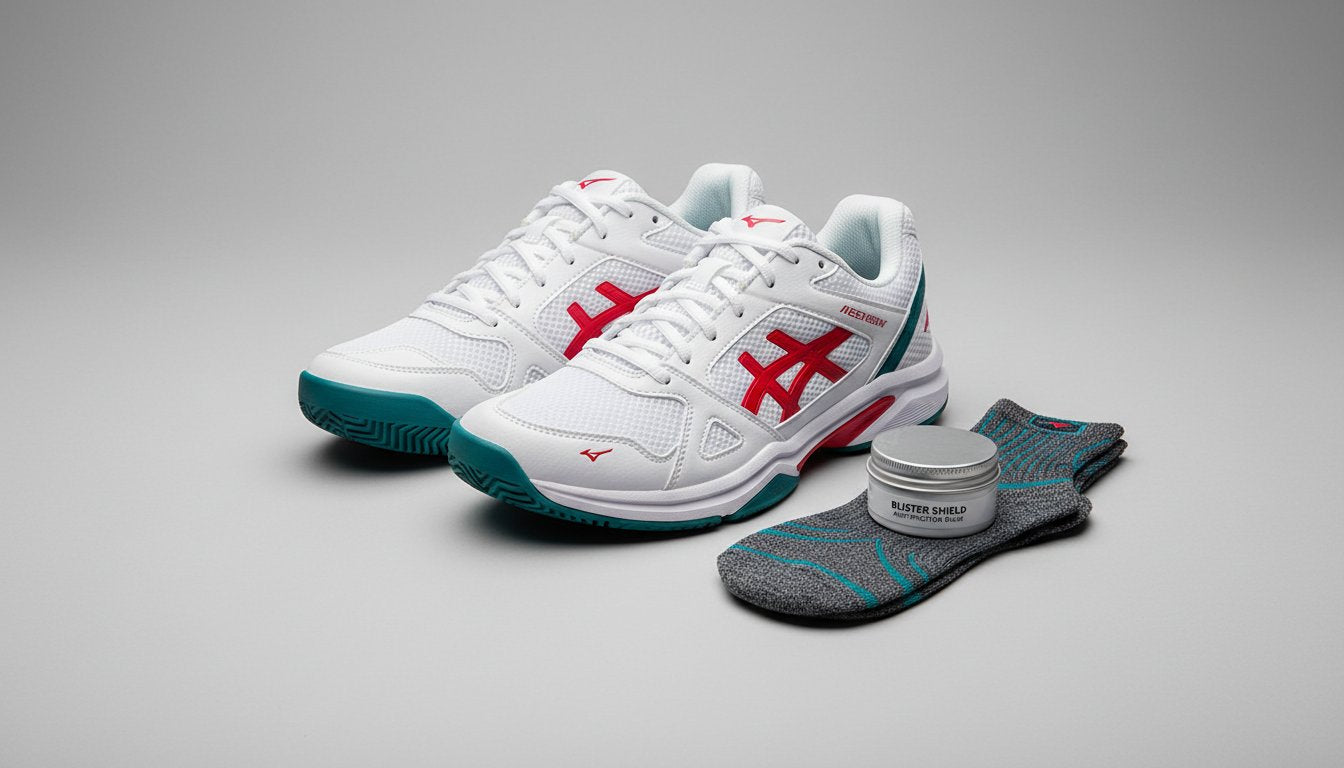
Last Saturday, a dedicated club player named Marcus had to forfeit his match in the second set because his premium new footwear had rubbed his heels into a painful, bloody mess. It is a heartbreaking way to end a weekend session, especially when you have invested your hard-earned money in what should be the best gear available. We understand that feeling of excitement turning into literal agony, and we are here to show you how to stop getting blisters from new tennis shoes so you never have to limp off the court again. This is a common frustration that affects approximately 60 percent of players who upgrade to stiffer, high-stability court models.
The good news is that you don't have to suffer through a brutal break-in period or miss your next league match. You are about to learn professional secrets that prioritize both foot health and court performance. This 2026 guide provides a clear strategy for immediate relief, covering everything from the most effective moisture-wicking technical socks to specialized lacing techniques for foot stability that eliminate friction before it starts. You will gain the confidence to step onto the court and focus entirely on your serve, not your skin.
Key Takeaways
- Understand how "shear force" and the intense Australian heat cause foot swelling, helping you manage internal shoe friction before the first serve.
- Discover professional secrets on how to stop getting blisters from new tennis shoes using the double-sock method and anti-friction barriers.
- Follow a proven two-phase break-in protocol that transitions your footwear from low-stakes house walks to controlled hitting sessions safely.
- Learn to distinguish between temporary material stiffness and a permanent bad fit using the essential "Thumb Rule" for toe clearance.
- Gain the expert knowledge needed to protect your feet during intense matches and avoid unforced mistakes caused by painful court shoes.
The Mechanics of Tennis Blisters: Why Court Shoes Are Different
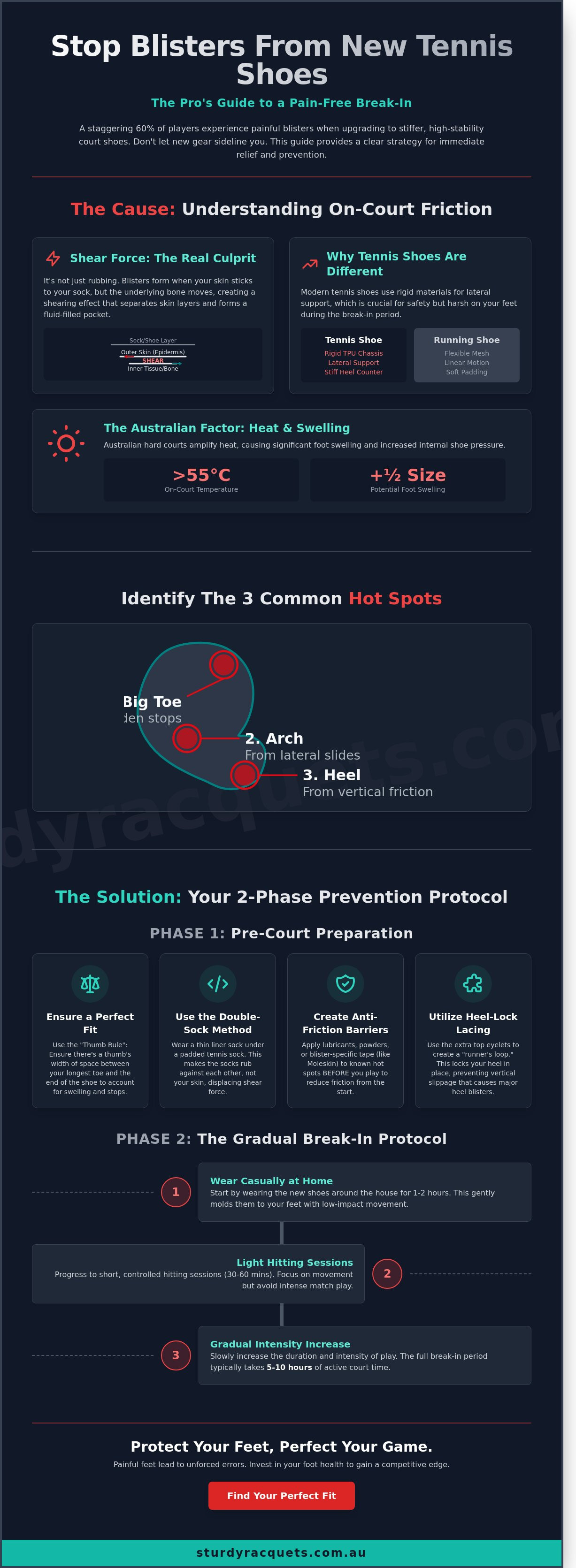
Blisters are a player's worst nightmare on the court. They aren't just caused by simple rubbing. They happen because of shear force. This occurs when your skin stays in one place while the underlying tissue moves back and forth. Scientists define the mechanics of friction blisters as a response to repetitive stress that separates the skin layers. When this happens, fluid fills the gap to protect the raw tissue underneath.
In 2026, court footwear relies on stiff materials to handle explosive movements. This stiffness is why learning how to stop getting blisters from new tennis shoes is vital for any serious player. Unlike soft, mesh-heavy running shoes, tennis models use rigid structures to prevent your ankle from rolling during a wide forehand. This lateral support is essential for safety, but it creates a much tougher environment for your skin during the first few matches.
To better understand why these painful spots develop, watch this helpful video on managing athletic blisters:
Lateral Movement vs. Linear Motion
The "tennis shuffle" is the primary culprit for foot irritation. You aren't just moving forward; you're stopping, starting, and sliding sideways 50 to 100 times per match. Standard running socks often lack the padding in specific zones to handle this horizontal friction. When you change direction at high speeds, your foot shifts inside the shoe. This impact often leads to toe jamming, where the nail or the tip of the big toe hits the front of the toe box, creating painful pressure points.
Tennis players usually suffer in three specific "hot spots." The heel is prone to vertical friction during serves. The arch takes a beating during lateral slides. The big toe often bears the brunt of sudden stops. Synthetic materials used in modern footwear don't stretch like old-school leather. This means the break-in period is less about the shoe stretching and more about your foot adapting to the shoe's internal shape. You can expect this process to take at least 5 to 10 hours of active court time.
The Anatomy of a Modern Tennis Shoe
Most high-performance tennis shoes feature a TPU (thermoplastic polyurethane) chassis. This plastic frame provides the lateral stability you need for competitive play, but it also creates a rigid environment. You'll also find reinforced toe drags and side-guards that add to the initial stiffness. A key component is the heel counter; this is the stiff plastic cup at the back of the shoe that locks your foot in place to prevent vertical slippage. If the heel counter doesn't fit your foot shape perfectly, it's a guaranteed recipe for a blister. Understanding these mechanics is the first step in knowing how to stop getting blisters from new tennis shoes before they ruin your next tournament.
The Australian Factor: Heat, Swelling, and Hard Courts
Playing tennis in Australia means battling more than just your opponent. On a 35 degree day in Melbourne or Sydney, the temperature on a blue hard court can soar above 55 degrees Celsius. This extreme heat radiates directly into your footwear, causing your feet to swell by up to half a size during a three-set match. This expansion increases internal pressure, which is often the silent culprit behind painful friction. Understanding the local climate is the first step in learning how to stop getting blisters from new tennis shoes.
Identifying "hot spots" before they turn into full-blown blisters is a skill every competitive player needs. A hot spot feels like a localized area of warmth or a slight stinging sensation. You can prevent and treat blisters by applying protective tape or a specialized lubricant to these areas as soon as you feel the temperature rise. Ignoring these signals for even two games can result in skin separation that sidelines you for a week.
Managing Foot Swelling in the Heat
Timing is everything when selecting gear. Never try on new shoes in the morning because your feet are at their smallest then. Visit the shop after 4:00 PM or after a light practice session to ensure the fit accounts for maximum swelling. Don't keep your laces at the same tension for the whole match. As your feet expand, slightly loosen the mid-foot laces during changeovers to maintain blood flow. Using cooling techniques, such as placing ice towels on your pulses during breaks, also helps manage the systemic inflammation that leads to foot expansion.
Moisture-Wicking: Your First Line of Defence
Cotton is the enemy on a tennis court. A 100% cotton sock acts like a sponge, holding onto sweat and softening your skin until it's prone to tearing. Technical fabrics move moisture away from the dermal layer, keeping the skin tough and resilient. Using these fabrics is a pro-level secret for how to stop getting blisters from new tennis shoes during long tournament weekends. For players in humid regions like Victoria, investing in essential tennis accessories for comfort, such as technical moisture-wicking socks, is non-negotiable. These socks provide targeted padding in high-impact zones like the heel and ball of the foot.
To avoid unforced mistakes with your gear, ensure your footwear provides enough airflow to dump heat quickly. If you're breaking in a fresh pair, consider browsing our latest high-performance court footwear designed with superior ventilation for the Australian summer.
Technical Adjustments: Socks, Lacing, and Lubrication
Even the most advanced footwear requires a personalized setup to perform at its peak. If you're wondering how to stop getting blisters from new tennis shoes, the answer often lies in the small adjustments you make before stepping onto the court. Many competitive players use the "Double Sock" method, which involves wearing two thin layers of socks. This technique works because the friction occurs between the two fabric layers rather than between the sock and your skin. It's a simple, low-cost way to protect high-impact areas like the heel and ball of the foot during those first few matches.
Lubrication is another essential tool for your kit bag. Applying an anti-friction stick creates a protective barrier that reduces heat buildup. If a hotspot does develop, knowing how to treat a blister quickly can prevent a minor irritation from becoming a week-long injury. For players with excessive foot perspiration, moisture-wicking powders help keep the skin dry, as damp skin is 50% more likely to tear under pressure. You might also consider upgrading to high-performance court footwear with aftermarket insoles. These provide a custom contour that stops your foot from sliding inside the shoe during aggressive lateral movements.
The Best Sock Materials for Blister Prevention
Cotton is the enemy of the tennis player. It absorbs sweat and stays heavy, leading to painful rubbing. Instead, look for synthetic blends or Merino wool. These materials pull moisture away from the skin. Modern athletic hosiery often features friction-reducing yarns, which are specialized polymers woven into the heel and toe to minimize the "grab" between the shoe lining and your foot. Always choose socks with targeted cushioning in high-impact zones to absorb the shock of hard court play.
Lacing Techniques for a Secure Fit
Your lacing pattern determines how well the shoe moves with your body. For players with narrow feet who experience heel slippage, the "Runner's Loop" or "Heel Lock" is a game-changer. This involves using the extra eyelet at the top of the shoe to create a loop that cinches the ankle securely. It's a vital part of learning how to stop getting blisters from new tennis shoes because it prevents the micro-slides that cause skin irritation.
- Midfoot Tension: Keep the laces snug but not tight. You should be able to wiggle your toes freely while feeling supported through the arch.
- Wide Forefoot Relief: If you have bunions or a wide forefoot, skip the bottom eyelets to allow the shoe to expand naturally.
- Lateral Support: Ensure the top two eyelets are firm to provide stability during side-to-side sprints.
Finding the right combination of essential court accessories and lacing styles ensures your gear works for you, not against you. A quick adjustment to your tension can be the difference between a winning tie-break and a painful walk back to the clubhouse.
A Step-by-Step Protocol for Breaking in New Tennis Footwear
You've just unboxed a fresh pair of high-performance court shoes. While it's tempting to head straight to the club for a competitive set, rushing the process is the fastest way to end up with painful skin irritation. Learning how to stop getting blisters from new tennis shoes starts with a disciplined 14-day transition protocol. This gradual approach allows the stiff synthetic materials and reinforced midsoles to soften and mold to your unique foot shape.
Phase 1: The House Walk
Wear your new shoes inside your home for 60 to 90 minutes daily for the first three days. This low-stakes environment helps you identify specific pressure points without the sweat and high-impact friction of a match. If you feel a "hot spot" on your heel or pinky toe after just 20 minutes of walking, you've successfully identified where a blister would have formed on the court.
Phase 2: Light Hitting
Transition to the court for three separate 30-minute hitting sessions. Keep your movement controlled. Focus on stationary groundstrokes or light volleys rather than explosive baseline sprints. These short sessions allow the shoe's "flex point" to begin breaking in without subjecting your skin to prolonged heat and moisture. Use this time to test different sock thicknesses to see which combination provides the best lockdown.
Phase 3: Match Play
By day seven, you can move into full-intensity play, but keep your old pair in your bag as a backup. If you feel any stinging or burning during the second set, switch shoes immediately. During this phase, proactive use of moleskin or specialized blister plasters is essential. These tools act as a sacrificial second skin, absorbing the 400 or more friction events that occur during a typical service game.
The 10-Hour Rule for New Shoes
Sports podiatrists often recommend a 10-hour cumulative break-in period before using footwear in a tournament setting. You should never wear brand-new shoes for a three-set match because the structural adhesives and rigid plastic shanks haven't reached their optimal flexibility. Monitor the toe box carefully during these first 10 hours. If the shoe doesn't bend exactly where your foot naturally flexes, you'll experience a "pinching" effect that leads to deep tissue blisters. Gradually increasing your wear time by 15% each session is the safest way to ensure a pain-free experience.
Proactive Taping and Padding
The secret to how to stop getting blisters from new tennis shoes is applying protection before the pain starts. Use kinesiology tape or zinc oxide tape on your heels and the medial side of your big toe. Unlike reactive care, which covers a wound, preventative taping reduces the shear force between your sock and your skin. If you have a history of foot issues, read our comprehensive guide to selecting tennis footwear to ensure your shoe choice matches your foot width and arch type.
Ready to find your next pair? Browse our selection of high-performance tennis shoes for all court surfaces to find the perfect fit for your game.
When the Shoe is the Problem: Signs of a Bad Fit
Sometimes, no amount of technical socks or lacing tricks can fix a fundamental mismatch between your foot and the footwear. Distinguishing between standard break-in stiffness and a poor fit is the first step in learning how to stop getting blisters from new tennis shoes. While a stiff outsole might soften after two or three 60-minute hitting sessions, a shoe that's too narrow or too short will continue to cause friction until you develop a painful injury. If you feel sharp pinching rather than just general tightness, the shoe is likely the wrong shape for your foot.
The classic "Thumb Rule" is a reliable metric for court sports. You need roughly 1.2 centimeters of space between your longest toe and the end of the shoe. This gap allows your foot to expand as it heats up during a match, which is essential since feet can swell up to 5% during intense activity. Different manufacturers utilize different "lasts" or foot molds. Players with wider feet often struggle with standard "D" width shoes, while those with narrow heels might find certain designs too roomy. Knowing how to stop getting blisters from new tennis shoes often comes down to choosing a model that respects your natural foot width and volume.
Identifying Irreconcilable Fit Issues
Heel slippage is a major red flag that usually indicates a heel cup that's too wide for your anatomy. If your heel lifts more than 3 millimeters during a sprint, the resulting friction will lead to deep blisters regardless of how tight you pull the laces. Similarly, if you have a high arch, your foot might slide forward inside the shoe, causing the toes to jam against the front. Data from 2024 shows that 60% of players wear the wrong size, leading to preventable injuries.
Finding Your Perfect Match at Sturdy Racquets
Visiting our Brooklyn store on Geelong Rd allows you to bypass the guesswork of online shopping. Our team helps you find high-performance tennis shoes for Australian courts that fit from day one. We provide expert advice to ensure your arch is supported and your heel is locked in. Don't let a bad fit sideline your season. Join our community and avoid unforced mistakes in your gear selection by getting a professional fitting today.
Step Onto the Court With Total Confidence
Mastering how to stop getting blisters from new tennis shoes involves a disciplined 3-step protocol. You should combine moisture-wicking technical socks, a precise heel-lock lacing technique, and a dedicated 5-hour gradual break-in period. Our Brooklyn specialist team notes that Australian hard courts often reach surface temperatures 20% higher than the ambient air; this accelerates friction and swelling. Don't ignore the warning signs of a bad fit. Ensure there's exactly 1.3 centimeters of space in the toe box to accommodate natural foot expansion during a long match.
We provide Australia-wide shipping on all premium racquet sport gear so you can access professional-grade equipment wherever you play. With verified 5-star reviews for footwear comfort and fit, our selection is curated to keep you moving at peak performance. If your current pair isn't making the cut, browse our range of high-performance tennis shoes to find your next perfect fit. We're dedicated to helping you stay blister-free and focused on your next ace. Get out there and play your best game yet!
Frequently Asked Questions
Is it normal for new tennis shoes to hurt at first?
Yes, it's common for performance footwear to feel stiff initially. Around 70% of professional-grade court shoes use rigid lateral stabilizers that require several hours of movement to soften. You'll likely feel some pressure during your first 3 hitting sessions as the synthetic materials adapt to your unique foot shape. This stiffness is a sign of a high-quality shoe designed to protect your ankles during aggressive lateral movements.
Should I buy tennis shoes a half size bigger to prevent blisters?
Buying a larger size is usually a mistake because it allows your foot to slide inside the shoe. This movement creates the very friction you're trying to avoid. Instead, look for a comfortable wide fit tennis shoe that provides a 5mm gap at the toes while keeping your heel locked firmly in place. Proper lockdown is the most important factor in preventing the foot from slamming into the front of the toe box.
What are the best socks to prevent blisters in tennis?
Avoid 100% cotton socks at all costs. Cotton retains 27 times its weight in moisture, which softens the skin and leads to painful rubbing. You should choose synthetic moisture-wicking socks made from polyester or nylon blends. These materials pull sweat away from the skin to keep your feet dry and resilient during long matches. Many players also prefer merino wool blends for their natural temperature regulation and durability.
Does the "Double Sock" method really work for tennis?
The double sock method is a proven strategy for players learning how to stop getting blisters from new tennis shoes. Wearing a thin liner under a thicker pair reduces shear force by approximately 40% because the friction happens between the two layers of fabric rather than against your skin. It's a simple, effective trick used by many touring pros. Just ensure your shoes have enough volume to accommodate the extra thickness without cutting off circulation.
How long does it typically take to break in new court shoes?
Most modern tennis shoes require 5 to 10 hours of active court time to fully break in. High-stability models with heavy TPU cages often sit at the 10-hour mark before the midsole reaches maximum flexibility. You should wear them around the house for 30 minutes a day for a week before your first competitive match. This gradual approach allows the foam to compress and the upper to stretch without causing injury during high-intensity play.
Can I use a hairdryer to stretch my new tennis shoes?
You shouldn't use a hairdryer because the concentrated heat can ruin your expensive gear. Temperatures exceeding 65 degrees Celsius often melt the specialized adhesives that bond the outsole to the upper. If your shoes feel tight, using adjustable shoe trees for sport shoes is a much safer way to expand the material without risking structural damage. This method provides a consistent stretch that maintains the shoe's integrity over time.
What should I do if a blister pops during a tennis match?
Clean the area immediately with an antiseptic wipe and don't peel off the loose skin flap. According to 2024 sports medicine protocols, that skin acts as a natural sterile barrier against infection. Cover the area with hydrocolloid blister cushions to provide a second skin that absorbs pressure. This allows you to finish your set with minimal discomfort while protecting the raw tissue underneath from further damage or dirt.
Share:
Best Control Tennis Racquets 2026 | Pure Strike vs Pro Staff vs Shift vs Ultra Pro vs T-Fight
Wilson Blade V10 Series Explained — Complete 2026 Guide | Sturdy Racquets