


Stepping into the world of pickleball is a blast, but choosing your first or next pickleball paddle can feel a bit overwhelming. With terms like 'polypropylene core' and 'carbon fiber face' being thrown around, and prices ranging from A$50 to over A$250, it's easy to feel lost. Are you worried about making the wrong choice and wasting your hard-earned cash on gear that doesn't suit your game? You're not alone, and we're here to help.
Think of us as your knowledgeable friend on the sidelines. This complete 2026 guide is designed specifically for Aussie players to cut through the confusion. We'll break down everything-from core materials and paddle weight to face textures and grip sizes. Our goal is simple: to give you the confidence to select the perfect paddle that matches your skill level, playing style, and budget. Let's find the gear that will help you play your best and have even more fun on the court!
Anatomy of a Pickleball Paddle: Understanding the Key Components
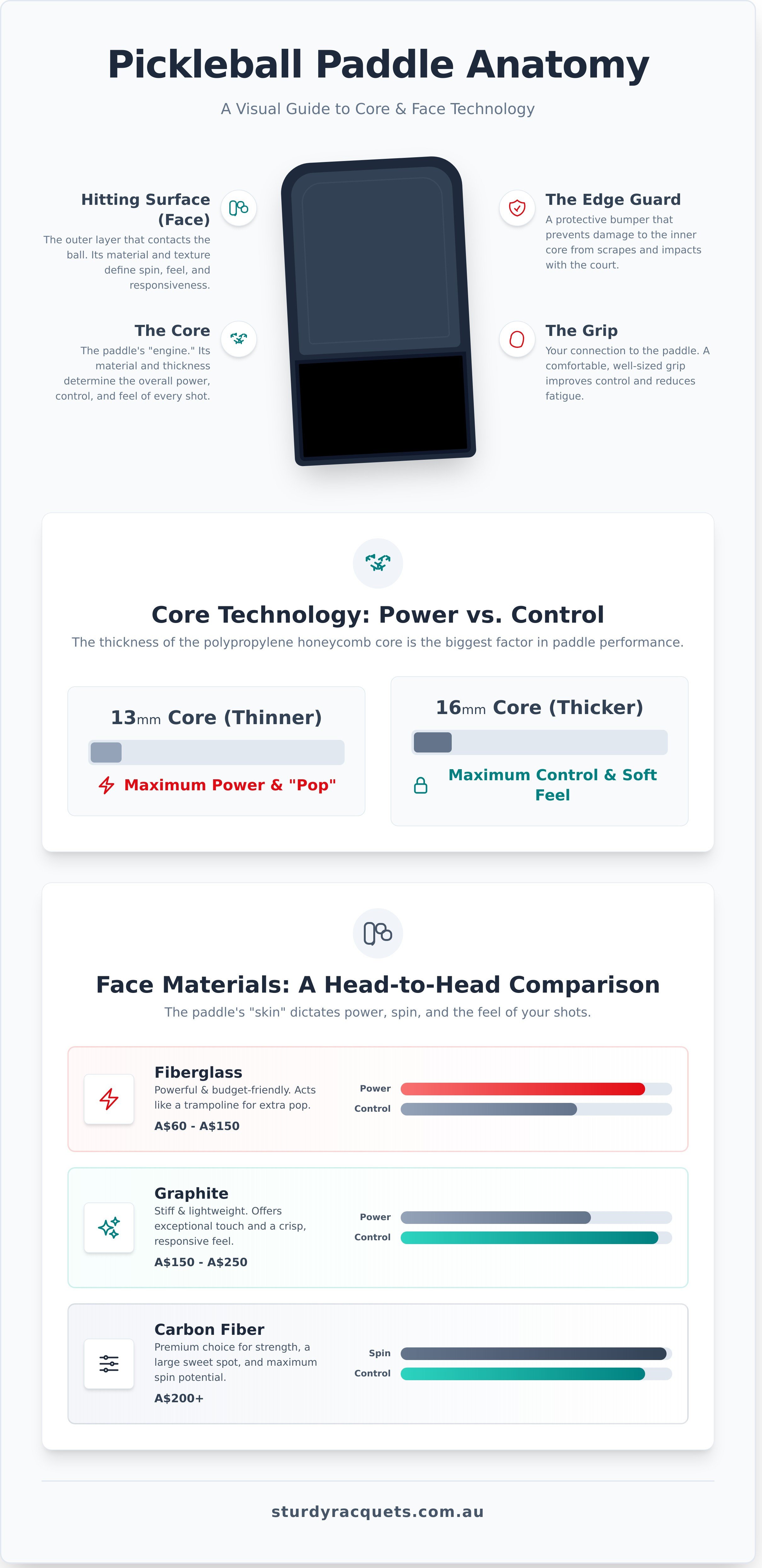
Ready to find your perfect match on the court? The first step is getting to know your equipment! While most paddles look similar at a glance, their inner workings make a huge difference to your game. Understanding the four main parts-the core, the face, the edge guard, and the grip-is essential for making a smart choice. Modern paddle technology has evolved so much from the simple wooden designs seen in the early history of pickleball, and knowing these components will give you a fantastic advantage.
To see these parts in action and how they influence performance, check out this helpful video overview:
The Core: The Engine of Your Paddle
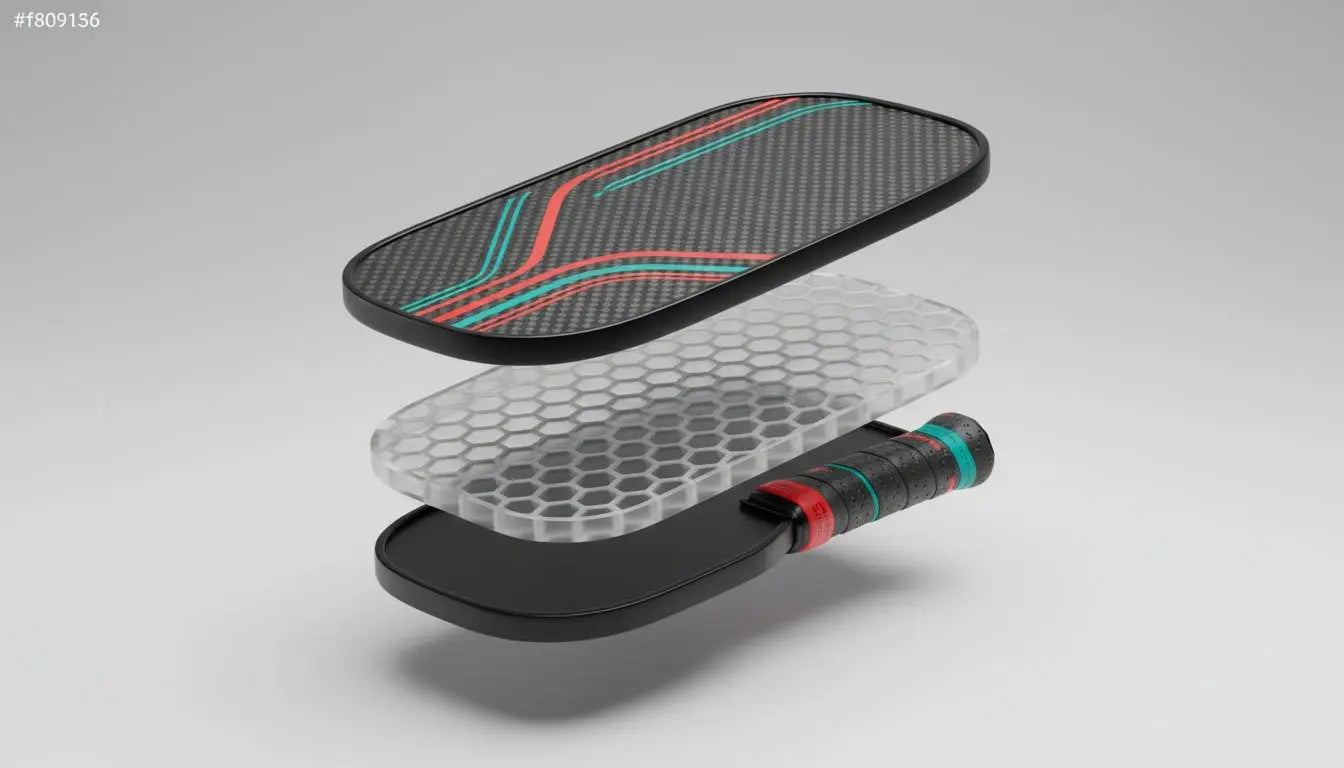
Think of the core as the engine. It?s the thickest layer inside the paddle and is the biggest factor in how a paddle feels and performs. The most popular material today is polypropylene honeycomb, loved for its balance of power, control, and quiet performance. While older materials like Nomex (loud and powerful) and aluminum (control-focused but less durable) still exist, polypropylene is the top choice. Core thickness is key: a thicker core (e.g., 16mm) absorbs more impact, offering greater control and a softer feel, while a thinner core (e.g., 13mm) provides more power and "pop."
The Hitting Surface (Face): Where Spin and Control are Born
The face is the thin outer layer that makes direct contact with the ball. Its job is to generate spin and provide a consistent, responsive feel on every shot. The material used for the face works in tandem with the core to define the paddle?s character. The three main types are:
- Fiberglass (Composite): A powerful and budget-friendly option that gives the ball extra pop.
- Graphite: A stiff and lightweight material that offers exceptional touch and control.
- Carbon Fibre: A premium choice known for its strength, large sweet spot, and maximum spin potential.
Finding the right combination of core and face is crucial to matching a pickleball paddle to your playing style.
The Edge Guard and Grip: Protection and Comfort
The edge guard is the protective bumper that runs along the outside of the paddle head. Its primary function is to protect the sensitive inner core from damage when you inevitably scrape the court chasing down a low shot. It adds durability and ensures your investment lasts longer.
Finally, the handle and grip are your direct connection to the paddle. A comfortable, well-sized grip gives you better control and prevents the paddle from twisting in your hand. Most paddles come with a factory grip, but many players add a thin overgrip on top for extra tackiness, sweat absorption, and a customised feel.
Paddle Materials Deep Dive: Core & Surface Technologies
Ever wonder what actually goes inside a pickleball paddle? It?s not just a slab of plastic! The core and surface materials are the heart and soul of your paddle, defining how it feels, sounds, and performs. Understanding this technology helps you cut through the marketing jargon and find a paddle that truly suits your style. Let's break it down.
Polypropylene Honeycomb: The Industry Standard Core
If you look at a cross-section of most modern paddles, you'll see a structure that looks like a beehive. This is the polypropylene honeycomb core, and it's the undisputed champion of paddle technology for a reason. This structure of interlocking polymer cells creates an incredible combination of strength and light weight.
- Soft Feel & Control: The honeycomb design absorbs impact energy, which reduces vibrations and gives you a softer, more controlled feel on dinks and drops.
- Durability: It?s tough and resilient, capable of withstanding thousands of impacts without breaking down.
- Great All-Rounder: You?ll find this core in paddles at every price point, from A$60 beginner models to A$300+ pro-level weapons. Manufacturers simply adjust the honeycomb cell size and core thickness to fine-tune a paddle's power and control.
Graphite vs. Carbon Fibre vs. Fibreglass Surfaces
The paddle's surface, or "skin," is what makes first contact with the ball. It dictates power, spin, and the overall feel of your shots. While manufacturers are always innovating, these three materials form the foundation of almost every pickleball paddle face on the market.
Fibreglass (Composite) is the most common surface for entry-level to mid-range paddles. It?s a flexible material that acts like a mini-trampoline, giving you fantastic power with less effort-perfect for players still developing their swing. Graphite is a much stiffer and lighter material, providing a crisp, responsive feel. This direct feedback gives players exceptional touch and precision for placing shots. Carbon Fibre is the premium choice, offering the highest stiffness-to-weight ratio. This results in maximum control, a massive sweet spot, and is often paired with a gritty texture to generate phenomenal spin. All these surface designs must adhere to the Official pickleball paddle regulations to ensure fair play.
| Surface Material | Power | Control | Feel | Price Guide (AUD) |
|---|---|---|---|---|
| Fibreglass | High | Good | Soft / Powerful | A$60 - A$150 |
| Graphite | Good | Excellent | Crisp / Responsive | A$150 - A$250 |
| Carbon Fibre | Great | Exceptional | Firm / Connected | A$250+ |
How to Choose Your Perfect Paddle: Weight, Grip, and Shape
Once you understand a paddle's core materials, it's time for the fun part: tailoring it to your body and playing style. Getting these three elements right-weight, grip, and shape-is the secret to finding a paddle that feels like a natural extension of your arm. Let's break down each one so you can make a fantastic choice.
Paddle Weight: The Power vs. Finesse Trade-Off
The weight of your pickleball paddle is the biggest factor in how it feels to swing. It directly influences your power, control, and hand speed. Most paddles fall into one of three categories:
- Lightweight (under 7.5 oz): Perfect for players who value quick hands at the net and precise shot placement. You'll get less power from the paddle, so you need to generate more of your own.
- Midweight (7.5 - 8.4 oz): The sweet spot for most players! This is the most popular range, offering a fantastic blend of power, control, and manoeuvrability for all-court play.
- Heavyweight (8.5 oz+): Ideal for players who want maximum power on their serves and drives. The extra mass provides stability but can be slower to move and may cause fatigue.
Our advice: If you're new to the game or unsure, a midweight paddle is a safe and exceptional starting point.
Finding Your Perfect Grip Size
A correct grip size isn't just about comfort; it's crucial for control and preventing injuries like tennis elbow. To find your size, try this simple finger test: hold the paddle with your dominant hand. You should be able to slide the index finger of your other hand between your palm and fingertips. If there's no room, the grip is too small. Too much room, and it's too big.
If you're between sizes, always choose the smaller one. It's easy to add an overgrip to build up the size, but you can't make a large grip smaller!
Paddle Shape: Standard vs. Elongated
Paddle faces come in various shapes, but they all must conform to the specifications outlined in the Official Pickleball Paddle Rules. The two most common shapes you'll find are:
- Standard Shape: This traditional, wide-body shape offers the largest sweet spot, making it very forgiving on off-centre hits. It?s a top-notch choice for beginners and doubles players who value consistency.
- Elongated Shape: A longer, narrower paddle that provides extra reach for shots at the baseline and more whip for generating power. It's a favourite among singles players and aggressive doubles players.
You might also see less common edgeless or 'blade' shapes, which are designed for maximum feel and control but are less forgiving for new players.
Matching a Paddle to Your Skill Level and Playing Style
You've learned about weight, materials, and shapes. Now, let's connect those technical details to the most important factor: you! The perfect pickleball paddle isn't the most expensive one; it's the one that complements your skills and enhances your style of play. Choosing the right gear is one of the fastest ways to improve your confidence and performance on the court.
Best Paddles for Beginners
When you're starting out, the goal is simple: get the ball over the net and have fun! Forget about generating massive power. Your focus should be on consistency and control. We recommend a midweight paddle (around 7.8 - 8.4 oz) with a standard, wide-body shape. This combination offers a large, forgiving sweet spot, making your shots feel solid even when you don't hit the ball perfectly in the center. A composite or fiberglass face provides a fantastic balance of feel and pop, helping you learn the game without a steep learning curve. Avoid the common mistake of buying a super-heavy, power-focused paddle that will be hard to control.
Ready to start your journey? Shop our curated collection of beginner-friendly paddles!
Upgrading to an Intermediate or Advanced Paddle
You'll know it's time to upgrade when you feel your current paddle is limiting your game. Perhaps you've developed more spin and want a paddle that enhances it, or you need more reach for aggressive volleys. Intermediate and advanced paddles often feature graphite or raw carbon fibre faces, which provide exceptional touch, spin, and feedback. You might also consider an elongated shape for more power and reach, though this comes with a smaller sweet spot. And for those looking to compete, ensure your paddle is USAPA-approved for tournament play.
Power Player vs. Control Player: What's Your Style?
As you play more, you'll discover your natural tendencies. Does your game revolve around powerful drives from the baseline or precise dinks at the net? Finding a pickleball paddle that suits your style is key to unlocking your potential.
- Power Players: If you love to drive the ball hard, look for a heavier paddle (8.5 oz or more). The extra mass will do a lot of the work for you. Elongated shapes can also add more leverage to your serves and smashes.
- Control/'Dink' Players: For those who thrive on the soft game, a lighter paddle (under 7.8 oz) with a carbon fibre face offers maximum feel and manoeuvrability for precise shot placement.
- All-Court Players: If you like to mix it up with a blend of power and control, a balanced, midweight paddle is your best bet. It provides the versatility to play any shot from any position on the court.
Essential Pickleball Paddle Care and Maintenance
Congratulations on choosing your first pickleball paddle! You've made a fantastic investment in your game, and with a little care, it will deliver top-notch performance for a long time. At Sturdy Racquets, we believe that looking after your gear is just as important as choosing it. These simple, practical tips will help you protect your paddle, ensuring it feels and plays like new every time you step onto the court.
How to Clean Your Paddle Surface
After a few great games, you'll notice scuff marks and plastic residue from the ball on your paddle's face. Keeping this surface clean is crucial for maintaining consistent spin and control. Luckily, it?s easy to do!
- Do: Gently wipe the surface with a microfiber cloth and a small amount of water or a dedicated paddle cleaner. This safely lifts away dirt without harming the texture.
- Don't: Use abrasive cleaners, solvents, or rough sponges. These can strip the gritty texture from your paddle face, reducing its ability to generate spin.
Replacing Your Grip for Better Performance
Your connection to your paddle is through its grip. Over time, sweat and friction will cause the grip to become smooth and slippery, affecting your control and comfort. A fresh grip is one of the easiest and most affordable ways to make your paddle feel brand new.
Many players use a thin overgrip on top of the paddle's original replacement grip. We recommend changing your overgrip every 10-15 hours of play to maintain a secure, tacky feel. If the base grip underneath is worn down, it's time for a full replacement. Find the perfect replacement grip or overgrip here.
Proper Storage and Protection
Where you store your pickleball paddle makes a huge difference to its lifespan. Extreme temperatures are the enemy, as they can weaken the composite materials and adhesives, leading to dead spots or damage. The number one rule is to never leave your paddle in a hot or cold car!
Using a paddle cover is another simple but effective way to protect it from accidental chips, scratches, and dings in your gear bag. Proper care doesn't just keep your paddle looking great-it ensures you get the consistent performance you expect, game after game.
Step Onto the Court with Confidence
You're now equipped with the expert knowledge to make a fantastic choice for your game. We've covered everything from core materials to surface textures, but the most important takeaway is simple: the best paddle is personal. Matching the weight, grip size, and shape to your unique playing style is the secret to unlocking more power, control, and fun. Choosing the right pickleball paddle isn?t just about specs; it?s about finding an extension of your arm that feels perfect every time you play.
Here at Sturdy Racquets, we live and breathe this sport. As Melbourne's trusted racquet sports specialist, our team of passionate players is always ready to offer top-notch, friendly advice to help you navigate our huge range. We're committed to helping you find the one that elevates your game.
Ready to find your perfect match? Explore our huge range of pickleball paddles!
With our fast, free shipping Australia-wide, your perfect paddle will be in your hands in no time. We'll see you on the court!
Frequently Asked Questions
What is the difference between a pickleball paddle and a tennis racquet?
A pickleball paddle has a solid, flat face, often made of composite materials like graphite or fibreglass, and is much shorter than a tennis racquet. In contrast, a tennis racquet has a larger head with a woven string bed designed to launch the ball with significant spin and power. The paddle?s solid surface provides more control and a different feel, perfect for the smaller pickleball court and the unique demands of the game.
How much should I spend on my first pickleball paddle in Australia?
For your first pickleball paddle in Australia, a fantastic starting point is in the A$80 to A$150 range. This price bracket gets you a high-quality composite paddle with modern technology that offers a great balance of power and control. While cheaper options exist, investing a little more ensures you get a durable paddle that will help you develop your skills and enjoy the game right from the start. It?s a great investment for a top-notch experience.
Are expensive pickleball paddles (A$250+) really worth the money?
For most beginners, an expensive paddle over A$250 isn't necessary. These high-end paddles feature advanced materials like raw carbon fibre faces and specialised cores that benefit experienced players who can feel subtle differences in spin and touch. It's much better to start with a quality mid-range paddle to learn the fundamentals. As your skills progress, you can upgrade to a premium model that complements your specific playing style and takes your game to the next level.
What does 'USAPA Approved' mean and do I need it for social play?
'USAPA Approved' means a paddle has been tested and certified by USA Pickleball, the sport's governing body, to meet official tournament specifications for size, materials, and performance. For social or club play, you absolutely do not need an approved paddle. However, choosing one guarantees it?s built to a high standard and will be legal if you ever decide to enter a competitive tournament. It?s a great mark of quality to look for.
How long does a typical pickleball paddle last before it needs replacing?
A typical pickleball paddle lasts between 1 to 3 years, depending heavily on how often you play. Frequent, competitive players might replace theirs annually, while casual players can get several years of use. Key signs you need a replacement include a loss of 'pop' from a worn-out core, a smooth surface that no longer grips the ball for spin, or visible damage like cracks or edge guard separation. Listen to your paddle - you?ll feel when it?s losing its punch!
What are the most popular pickleball paddle brands?
The pickleball world is full of fantastic brands, and some of the most popular and trusted names you'll find in Australia include Selkirk, JOOLA, Paddletek, and Engage. These brands are highly recommended for their innovation, quality, and a wide range of paddles that cater to every player, from absolute beginners to seasoned pros. You can?t go wrong starting your search with any of these top-notch manufacturers to find the perfect paddle for your game.
Can I add weight to my pickleball paddle?
Absolutely! You can easily add weight to your paddle using specialised lead or tungsten tape. This is a great way to customise its feel and performance. Adding tape to the sides (at 3 and 9 o'clock) increases stability and expands the sweet spot, while adding it to the top edge can give you more power and plough-through on your shots. It?s a simple, effective trick used by players at all levels to fine-tune their gear.
Share:
Tennis Australia: Your Complete Guide to the Heart of Aussie Tennis
Pickleball Brisbane: The Ultimate Guide to Courts, Clubs & Gear