


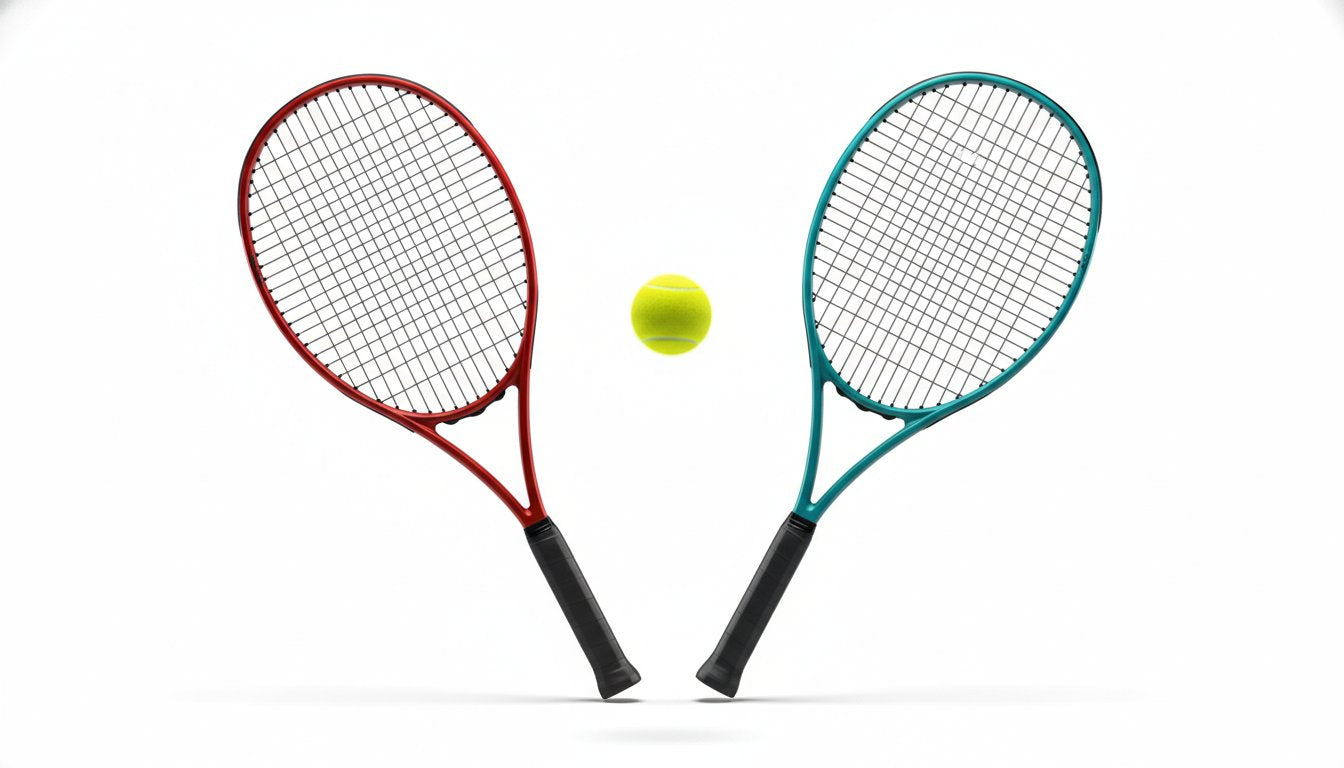
Ever unleash a monster forehand, only to watch it sail frustratingly past the baseline? Or perhaps you're fighting to get that heavy, dipping topspin, but your shots keep floating flat and inviting. It?s a common struggle on courts all across Australia, and finding the solution often starts with the great tennis racquet for spin vs power debate.
Choosing the wrong frame for your game isn't just confusing; it can be a costly mistake, setting you back hundreds of dollars for a racquet that works against your natural style. The world of head sizes, string patterns, and stiffness ratings can feel overwhelming, leaving many players unsure of where to even begin.
That's where we come in! This guide is here to give you the friendly, expert advice you need. We'll break down exactly what makes a racquet a spin machine versus a power cannon, helping you analyse your own game and confidently choose the perfect frame to dominate the court. Let's find the gear that truly elevates your strengths!
Key Takeaways
- Learn to decode racquet specs like head size, weight, and string pattern to predict how a frame will perform on the court.
- The choice of a tennis racquet for spin vs power comes down to a trade-off in engineering-understanding this helps you make a smarter decision.
- The best racquet is one that complements your unique playing style; an honest self-assessment is more important than brand or price.
- Discover how strings and tension are just as crucial as the frame itself for fine-tuning your racquet's feel and performance.
The Core Conflict: Understanding What Creates Power vs. Spin
When you're searching for the perfect frame, the first big question is always the same: do you want a weapon for raw power or a tool for generating wicked spin? It's the central trade-off in racquet design. While some racquets offer a fantastic blend, most are engineered to excel at one over the other. Understanding this difference is the first step in choosing the right tennis racquet for spin vs power for your game.
To see this difference in action, check out this brilliant breakdown from the experts at Tennisnerd:
Now, let's dive deeper into the science. While the racquet provides the tools, remember that your swing style is the final, crucial ingredient. A great racquet enhances what you already do well. The best choice ultimately comes down to how these engineering principles complement your game on the court.
The Physics of a Power Racquet
Power racquets are all about maximising energy transfer from your swing to the ball. They're designed to act like a cannon, launching the ball with incredible speed and depth. They achieve this through a few key principles:
- Energy Return: Stiffer frames, often built with advanced graphite composites, deform less on impact. This means more of your swing's energy is returned directly to the ball for explosive pace. To understand the materials and engineering involved, the Wikipedia page on Tennis Racquet Components and Design is a great resource.
- Trampoline Effect: Racquets with larger head sizes (typically 100 sq. in. and above) have a bigger sweet spot. This creates a powerful "trampoline" effect across more of the stringbed, giving you more 'free' power, even on off-centre hits.
- Mass & Swingweight: A heavier racquet carries more momentum, allowing it to plow through the ball with fantastic stability and generate deep, heavy shots with less effort from you.
The Science Behind a Spin-Friendly Racquet
Spin racquets work differently. Instead of pure energy return, they are engineered to help the strings grip the ball and generate massive rotation. This allows you to hit with high net clearance and have the ball dip aggressively into the court.
- String Snap-Back: This is the magic behind modern topspin. The main strings move sideways upon impact, grip the ball, and then violently snap back into place, launching the ball forward with heavy rotation.
- Grip and Friction: Open string patterns (like 16x19) have more space between the strings. This allows the stringbed to "bite" into the ball's felt more effectively, enhancing the snap-back effect.
- Aerodynamics: Spin requires fast racquet head speed. Spin-friendly frames often feature thinner, shaped beams that cut through the air with less resistance, helping you whip the racquet through the contact zone faster.
Decoding Racquet Specs: The Numbers Behind Power and Spin
Ever felt lost staring at a racquet's spec sheet? All those numbers and terms can seem intimidating, but they're actually the DNA of the racquet's performance. Learning to read them is your secret weapon in the search for the perfect tennis racquet for spin vs power. Understanding these key figures helps you build a shortlist of fantastic contenders before you even step on the court to demo. Let's break down what really matters.
Key Specifications for Power
If you want to hit heavy, penetrating shots that push your opponent back, look for frames with these power-friendly traits. They're designed to do a lot of the work for you, turning your swing into pure pace.
- Head Size: A larger head size (100 sq. in. and up) creates a bigger sweet spot. This means more forgiveness on off-centre hits and a trampoline-like effect that generates easy power. For a deeper dive into the science, the University of Sydney offers a great breakdown on The Physics of the Sweet Spot.
- Stiffness (RA Rating): A higher RA rating (68+) means the frame is stiffer and flexes less on impact. This returns more energy directly to the ball, resulting in powerful, crisp shots.
- Beam Width: Thicker beams (24mm or more) provide greater stability and resist twisting on impact. This rock-solid stability translates directly into more power.
- Balance: A head-heavy balance puts more of the racquet's mass in the hoop, helping you plough through the ball with serious authority.
Key Specifications for Spin
For players who love to shape their shots with heavy topspin and high-bouncing kick serves, the focus shifts from raw power to racquet head speed and string movement. Here?s what to look for in a modern spin machine.
- String Pattern: An open string pattern (like 16x19) has more space between the strings. This allows them to move more freely, bite into the ball, and snap back into place to create massive spin.
- Beam: Thinner, more aerodynamic beams are designed to cut through the air faster. This allows you to generate the high-speed "whip" needed for a modern, topspin-heavy game.
- Balance: A head-light balance makes the racquet feel more manoeuvrable and easier to swing fast. This makes it easier to accelerate the racquet head up and over the ball-the core motion for generating spin.
- Swingweight: While related to balance, a manageable swingweight makes a racquet feel faster and easier to swing, further boosting your spin potential on every shot.
What's Your Style? Matching a Racquet to Your Game
The most expensive racquet on the wall isn't always the best one for you. The perfect frame is an extension of your body, a tool that amplifies your strengths and supports your weaknesses. Finding the right tennis racquet for spin vs power starts with an honest look at your game. Are you an aggressive baseliner who loves to dictate points, or a crafty counter-puncher who outsmarts opponents? Let's identify your player profile to find your ideal match.
Signs You're a Power Player (And Need a Power Racquet)
If your game is built on overwhelming your opponent with pace, a power-oriented racquet will feel like a natural fit. These frames typically have larger head sizes and stiffer beams, helping you generate easy depth and blistering speed even with a more compact swing.
- You have a shorter, more classical swing and need the racquet to provide the pace.
- You love hitting flat, driving shots that penetrate through the court.
- You're a doubles specialist who needs easy power on serves and put-away volleys.
- Your opponents often describe your game as aggressive and fast-paced.
Signs You're a Spin Player (And Need a Spin Racquet)
Modern tennis is often dominated by heavy topspin. If you use long, fast, "whipping" strokes to generate spin, a racquet designed for this style will be your best friend. These frames help the strings grip the ball, creating the high-arcing shots that kick up off the court and push opponents back. Understanding the physics of a tennis shot reveals just how much rotation a spin-friendly racquet can add to your game.
- You generate your own pace with long, fast, loopy swings.
- You rely on heavy topspin to control points and create high margins for error.
- You want your shots to dip sharply and land safely inside the baseline.
- You value control, consistency, and shot variety over pure, flat pace.
The 'Tweener' Racquet: The Best of Both Worlds?
What if you don't fit perfectly into either box? You're not alone! The vast majority of club and tournament players today use 'tweener' racquets. These fantastic frames offer a blend of characteristics, providing a versatile mix of power, control, and spin potential. They solve the classic tennis racquet for spin vs power debate by offering a middle ground, making them the perfect platform for an all-court game.
Feeling unsure? That's what we're here for. Our experts can help you find your perfect match!
Top Racquet Recommendations for Every Style
Theory is great, but let's look at some real-world examples you can find right here in our store. We've handpicked some of the most iconic and beloved racquet families, each engineered for a specific playing style. This gives you a fantastic starting point for your demoing process, making the choice of a tennis racquet for spin vs power much clearer.
Classic Power Frames: The Rocket Launchers
If you want to hit heavy, deep shots that push your opponent off the baseline, these frames are for you. They are designed to do the hard work for you, generating easy power and a crisp, explosive feel on contact. Perfect for players with compact swings who want to add some serious pace to their game.
- Babolat Pure Drive Series: The absolute benchmark for the modern power racquet. It delivers effortless depth with a satisfyingly crisp response that players have loved for decades.
- Head Boom Series: With its innovative Auxetic construction, the Boom delivers a uniquely plush feel and easy access to power, allowing you to hit deep, heavy balls effortlessly.
- Yonex EZONE Series: Famous for its plush, comfortable feel and massive sweet spot, the EZONE provides impressive power without the harsh feedback of some other frames.
Spin Machines: For Heavy Topspin Hitters
For players who love to paint the lines with heavy, dipping topspin, these racquets are your best friends. They often feature aerodynamic beams and open string patterns that allow the racquet to whip through the air, grip the ball, and send it back with vicious rotation.
- Babolat Pure Aero Series: The undisputed king of spin. Famously used by Rafael Nadal, this racquet is engineered from the ground up to maximise topspin potential.
- Yonex VCORE Series: With its aerodynamic frame and spin-friendly tech, the VCORE helps you generate incredible racquet head speed for devastating spin.
- Head Extreme Series: Endorsed by top pros, the Extreme series offers a unique and potent combination of massive spin and easy power.
Balanced 'Tweener' Racquets: The All-Court Weapons
Can't decide if you need more spin or more power? These versatile 'tweener' racquets offer the best of both worlds. They provide a fantastic blend of feel, control, and access to both power and spin, making them a top choice for a huge range of players looking for an all-court advantage.
- Head Radical Series: A versatile choice for the modern all-court player, the Radical offers a fantastic blend of control, feel, and controllable power, making it highly adaptable.
- Head Speed Series: Offering a fast feel through the air, the Speed series delivers a fantastic mix of controllable power and precise handling.
- Tecnifibre TF-X1 Series: Designed for explosive power and comfort, this series provides a stable and arm-friendly feel, allowing for powerful hitting without compromise.
Ready to find your perfect match? Explore our full range of racquets and get expert advice from our friendly team!
Beyond the Frame: How Strings and Tension Fine-Tune Performance
You?ve chosen your frame, but the journey to peak performance is only halfway complete. Think of your racquet as the car and the strings as its engine. The right string setup is the secret weapon that unlocks your racquet's full potential, amplifying its best qualities and customising the feel to perfectly match your game.
A powerful frame can be tamed for better control with a firm string, while a spin-friendly racquet can get a welcome power boost. This level of customisation is where you truly find your winning edge.
String Material: The Heart of Your Racquet's Feel
The material of your string dramatically impacts power, control, comfort, and spin. Each type offers a unique blend of characteristics, making it crucial to find your perfect match.
- Polyester Strings: The top choice for aggressive players and frequent string-breakers. These stiff, durable strings excel at gripping the ball, generating massive spin. They offer fantastic control but are less powerful and can be harsh on the arm.
- Multifilament Strings: Designed for comfort and power. Made from hundreds of microfibers, these strings are exceptionally arm-friendly and provide a plush, powerful response, mimicking the feel of natural gut.
- Hybrid Stringing: The best of both worlds! A hybrid setup combines two different strings, typically a durable polyester in the mains (for spin and control) and a softer multifilament in the crosses (for feel and power).
String Tension: The Ultimate Customisation Tool
String tension is the final, crucial adjustment that dictates how the ball leaves your stringbed. It's all about the "trampoline effect"-how much the strings stretch and snap back on impact.
- Lower Tension (below 52 lbs): This creates a greater trampoline effect, launching the ball with more power and providing a softer, more forgiving feel. The sweet spot feels larger.
- Higher Tension (above 54 lbs): This reduces the trampoline effect, "pocketing" the ball for a shorter time. The result is exceptional control and a firm, connected feel, ideal for players who swing fast and generate their own pace.
Ultimately, the debate over the best tennis racquet for spin vs power is settled when you combine the right frame with the perfect string and tension. Finding your ideal setup is a process of experimentation, but the payoff is incredible. Ready to feel the difference? Get the perfect setup with our professional racquet stringing service today.
Your Perfect Frame is Waiting
Choosing the right racquet is one of the most exciting steps in developing your game. Remember, the debate over a tennis racquet for spin vs power isn't about finding a single "best" frame, but the one that best complements your unique style. By understanding how specs like head size and string pattern influence performance, and knowing that strings and tension can fine-tune your feel, you're already on the path to making a smarter choice.
Feeling ready to find your match? At Sturdy Racquets, our passionate team of players is here to offer expert advice to guide you through Australia's Biggest Racquets Range. Once you've chosen your weapon, our Professional In-Store Stringing Service will ensure it's perfectly dialled in for you. Don't leave your performance to chance.
Explore our huge range of tennis racquets and find your perfect frame today! We can't wait to help you unleash your full potential on the court.
Frequently Asked Questions
Can a beginner use a power-focused tennis racquet?
Absolutely, but we usually advise a bit of caution. Power-focused racquets, with their larger head sizes and lighter frames, can feel fantastic at first. However, they can sometimes encourage poor technique because the racquet does so much of the work. For beginners, we often recommend starting with a more balanced or control-oriented racquet. This helps you develop a full, controlled swing from the ground up, giving you a much stronger foundation for your game down the track.
Do tennis strings matter more than the racquet for generating spin?
That's a great question! Think of them as a team. Your racquet's open string pattern (like 16x19) creates the potential for spin, but the strings do the gripping. Textured or shaped polyester strings are spin-generating champions because they bite into the ball and snap back into place, adding massive rotation. While the racquet is crucial, pairing it with the right spin-friendly string is how you truly unlock your spin potential. It?s the perfect one-two punch for a heavy ball.
How can I tell if my current racquet is designed for power or spin?
You can learn a lot by checking a few key specs, often printed on the inside of the frame. Power racquets typically have a larger head size (over 100 sq. inches), are lighter, and feel 'head-heavy'. Spin racquets usually have a slightly smaller head (98-100 sq. inches) and a more open string pattern, like 16x19, which allows the strings to move more. When choosing a tennis racquet for spin vs power, these details make all the difference.
Will a heavier racquet automatically give me more power?
Not necessarily! A heavier racquet provides more mass, which translates to better stability and "plow-through" on your shots-meaning it won't get pushed around by the ball. This can lead to more powerful shots, but only if you can generate the necessary racquet head speed. For players with shorter, slower swings, a lighter racquet can actually be easier to whip through the contact zone, creating more power. It?s all about finding the perfect match for your personal swing style.
Is it possible to get both high power and high spin from one racquet?
Yes, definitely! This is the sweet spot where most modern player racquets live. Frames like the Babolat Pure Aero or Yonex EZONE are brilliant examples. They blend a generous head size (around 100 sq. inches) with an open string pattern and a medium weight. This combination offers a fantastic balance, giving you enough pop to hit powerful winners while providing the spin potential to make the ball dip inside the lines. It?s the best of both worlds for the modern aggressive player.
What type of racquet is best for preventing tennis elbow?
To help prevent tennis elbow, you'll want an "arm-friendly" racquet. Look for frames with a lower stiffness rating (often listed as 'RA')-anything below 65 is a great start. These racquets are more flexible and absorb more shock on impact. A slightly heavier, head-light racquet can also be more stable and comfortable. Paired with softer strings like a multifilament at a lower tension, the right racquet can make a huge difference in keeping your arm happy and healthy on the court.
Share:
The Best Tennis Racquets for Advanced Players: A 2026 Guide
Head-Heavy vs. Head-Light Racquets: Which is Right for Your Game?