



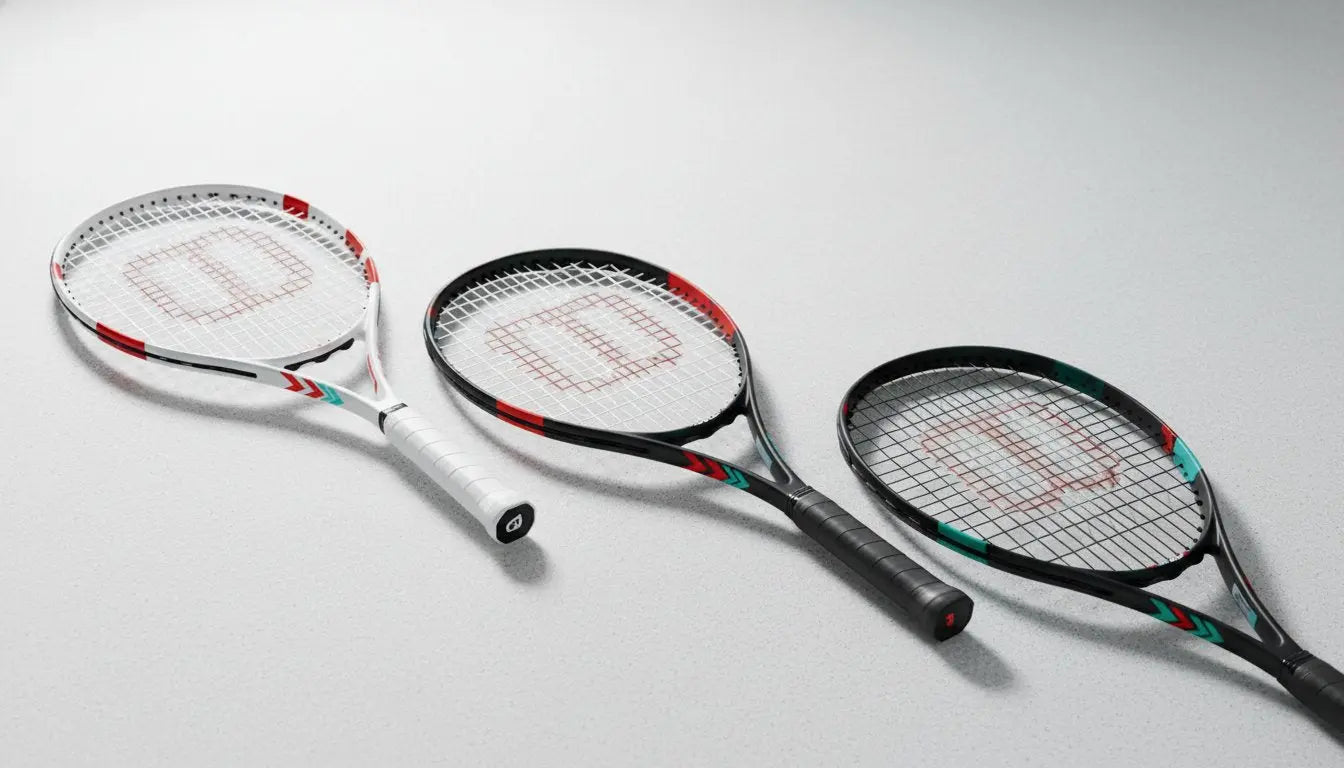
The most expensive professional-grade racquet on the shelf is often the worst possible choice for your actual game. It's a common mistake to assume that what works for a grand slam champion will work for a local club player, but elite frames are often too punishing for most enthusiasts. We know how overwhelming it feels to stare at a wall of gear while trying to decode technical jargon like swingweight, stiffness, and balance points. It's frustrating to worry about wasting money on a "pro" model that ends up being too difficult to swing by the third set.
We believe your equipment should support your progress, not hinder it. In this guide, we will help you find tennis racquets for all playing levels by matching technical specs to your specific swing style. You'll gain the confidence to choose a racquet that improves your performance and offers genuine value for your investment. We are going to break down the essential 2026 racquet technologies, explain which head sizes suit different skill sets, and show you how to find a reliable Australian specialist for your long-term equipment needs.
Key Takeaways
- Learn how technical specs like head size and stiffness ratings directly impact your comfort and hitting power on the court.
- Discover why choosing the right [tennis racquets for all playing levels](https://g8qyxn-mc.myshopify.com/collections/tennis-racquets-for-all-playing-levels) means you won't deal with avoidable injuries or stalled technical progress.
- Understand the vital difference between static weight and swingweight to find a frame that feels light yet stable during long rallies.
- Identify your unique playing style to select a racquet built for aggressive baseline power, all-court versatility, or surgical precision.
- Unlock your new equipment's full potential by pairing it with [professional racquet stringing](https://sturdyracquets.com.au/blogs/guide/restring-tennis-racquet-the-ultimate-guide-to-power-control-feel) tailored to your specific performance goals.
Understanding Your Game: Why the Right Tennis Racquet Matters
Whether you're stepping onto the court for the first time or returning after a decade away, your racquet is more than just a piece of graphite; it's the primary tool that dictates your physical output. Choosing a frame that doesn't align with your physical strength or swing mechanics is a recipe for frustration and physical pain. A mismatched racquet often forces you to overcompensate with your wrist or elbow, which is how common injuries like tennis elbow start. We see it all the time at Australian clubs; players struggle with frames designed for the pro tour when they'd be having much more fun with a forgiving, modern model. In 2026, the trend is moving toward versatile frames that offer a blend of stability and ease of use, making it easier than ever to find tennis racquets for all playing levels.
To see how much a racquet can actually handle, check out this fun clip:
Identifying Your Current Playing Level
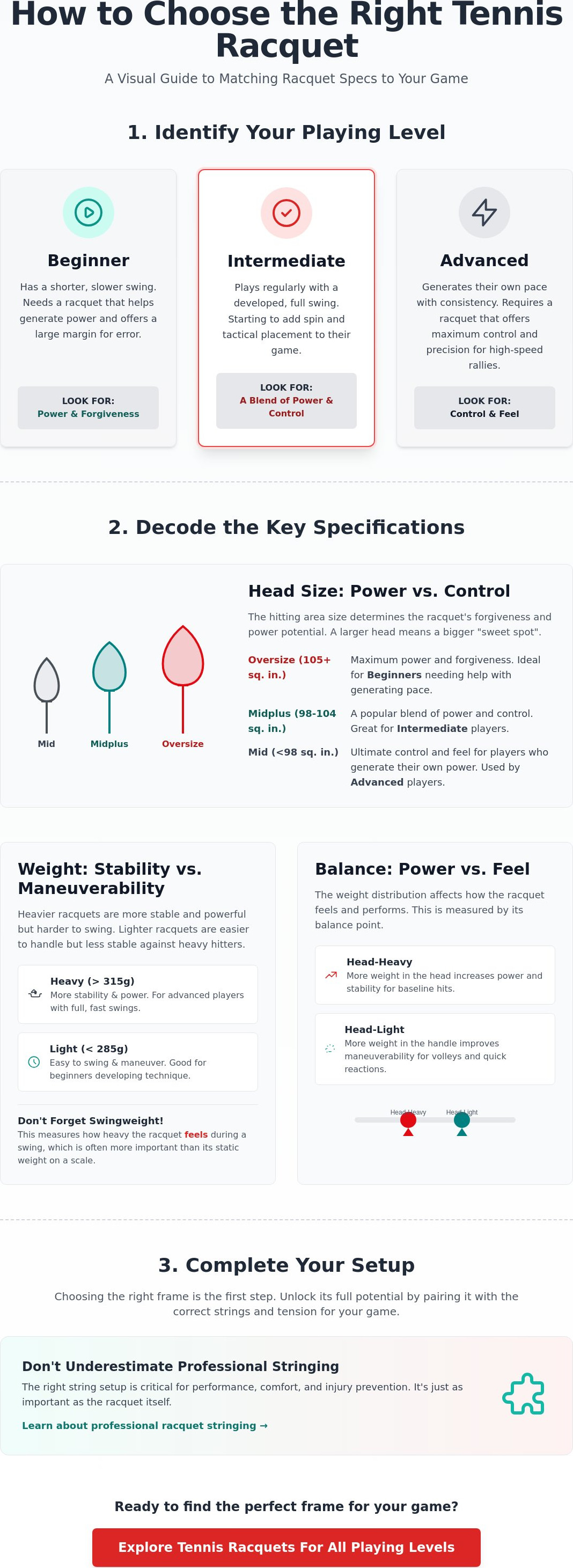
Defining your level in plain English makes the selection process much simpler. Beginners typically have shorter, slower swings and need a racquet that helps generate power. Intermediate players usually play once or twice a week, have a full swing, and are starting to experiment with spin and placement. Advanced players are those who generate their own pace and require a racquet that offers maximum control and precision. Don't fall into the trap of "buying into" a heavy pro-level racquet too early. These frames usually weigh over 315g and have small sweet spots. Using one before you're ready can actually stall your progress because you'll likely shorten your swing just to cope with the weight, preventing you from developing proper technique.
The Impact of Equipment on Player Development
Technical specs like balance points significantly affect how your arm feels after two sets. A head-heavy racquet provides more stability and power for baseline hitters but can feel sluggish at the net. Conversely, head-light frames are easier to maneuver but require more physical strength to drive the ball deep. Looking back at the History of tennis racquet technology, we've moved from heavy wood to stiff carbon and now to highly dampened materials. The 2026 generation of racquets focuses on "forgiveness," using advanced layups that expand the sweet spot and reduce vibrations. This protection is vital for long-term health. If you feel stuck between categories, seeking expert guidance for all skill levels ensures you find a frame that grows with you rather than holding you back.
Decoding Technical Specifications: Weight, Head Size, and Balance
Choosing between nearly 180 different frames on the market requires looking past the paint job and into the numbers. Technical specifications act as the blueprint for how a racquet will perform in your hands. When we talk about tennis racquets for all playing levels, we are really talking about how these specs balance power, control, and comfort to match a player's physical capabilities. It's about finding the "goldilocks" zone where the equipment feels like an extension of your arm.
Head Size and the Sweet Spot
Head size refers to the total surface area of the hitting strings. Most modern frames fall into three categories: Mid (under 98 square inches), Midplus (98 to 104), and Oversize (105+). The sweet spot is the specific area on the string bed where energy transfer from the racquet to the ball is most efficient. Beginners should generally prioritize entry-level tennis racquets with larger head sizes. These provide a bigger margin for error and more "free" power, while smaller heads offer the precision that advanced players crave for high-speed rallies.
Static Weight vs. Swingweight
Static weight is the number you see on the scale, but it only tells half the story. Swingweight describes how heavy the racquet feels when you're actually moving it through the air. A common unstrung weight of 300g is a popular benchmark for many adult club players because it offers a stable feel without being too cumbersome. You can generally follow this guide:
- Light (<285g): Great for juniors or players with shorter swings.
- Medium (285g to 310g): The sweet spot for most intermediate club enthusiasts.
- Heavy (>310g): Best for advanced players with full, fast swings who can handle the extra mass.
Balance and string patterns round out the technical profile. Head Light (HL) racquets have more mass in the handle, making them easy to flick at the net. Head Heavy (HH) frames put the weight in the hoop to help drive the ball deep from the baseline. You'll also need to consider the string pattern. A 16x19 "open" pattern is ideal for generating topspin, while an 18x20 "dense" pattern provides more control and better string durability. For a deeper dive into how these factors interact, you can consult Mouratoglou Academy's complete guide to equipment selection. If you're still unsure which combination fits your game, exploring a comprehensive range of tennis equipment with expert advice can help clear up the confusion. Finding the right balance of these specs is the secret to discovering tennis racquets for all playing levels that actually help you win more points.
Matching Racquet Categories to Your Skill Level
Many international guides rely on complex numeric systems like NTRP or UTR to rank players. While these have their place in competitive tournaments, they often feel alienating to the average Australian social player. We prefer a more straightforward approach that focuses on your actual experience on the court. Our Sturdy Racquets collection is structured around how you play on the weekend. Whether you're a beginner, an intermediate all-rounder, or an advanced competitor, there's a specific category of frame built for your needs. Major brands like Wilson and Babolat offer excellent options across the board, but the secret is matching the technical category to your current physical consistency.
Forgiving Frames for Beginners
If you're just starting out, you need a racquet that does most of the hard work for you. These frames are usually lightweight and feature oversized heads to maximize the sweet spot. They help you get the ball over the net even when your timing isn't perfect. Most racquets for new players come pre-strung, so you can head straight from the shop to the court. This category is all about building confidence and making sure your first few months in the sport are filled with successful rallies rather than arm fatigue.
Balanced Performance for Intermediate Players
Intermediate players make up the heart of the Australian tennis community. You've likely developed a consistent full swing and play at least once a week. You need what the industry calls a "tweener" racquet. These frames provide a 50/50 split between power and control. They're heavy enough to feel stable against a fast serve but light enough to swing for two hours without hitting a wall. Exploring mid-range tennis racquets is the best way to bridge the gap between learning the basics and mastering advanced tactics like heavy topspin.
Precision Tools for Advanced Competitors
Advanced frames are precision instruments designed for players who generate their own massive pace. These racquets usually have smaller head sizes, thinner beams, and a heavier static weight. They don't offer much "free" power, but they reward a fast, technically sound swing with incredible accuracy. If you're a high-level club player or tournament regular, high-performance tennis racquets give you the feedback you need to place the ball on a dime. They're built for players who don't need the racquet to help with depth but want it to help with placement.
It's also worth considering the transition from junior racquets to adult frames. Young players often outgrow their equipment's length and weight before they're ready for a full performance model. Choosing a lightweight adult frame in the beginner or intermediate category is often the smartest move for a teenager moving up to a 27-inch racquet. This ensures they don't develop bad habits or injuries while their strength is still developing. Providing tennis racquets for all playing levels means ensuring every age group has a safe path to improvement.
Tailoring Your Choice to Your Unique Playing Style
Finding the right frame involves more than just matching your skill set; it requires an honest look at your personality on the court. While we've discussed how technical specs define tennis racquets for all playing levels, your specific playing style is what narrows the field from a dozen options to the perfect one. Are you a baseline power hitter who wants to blow opponents off the court, or a precision specialist who wins points with placement? Understanding these archetypes helps you choose a tool that complements your strengths rather than fighting against them.
One technical detail often overlooked by club players is the RA rating, which measures racquet stiffness. A stiffer frame (RA 68 or higher) returns more energy to the ball, providing effortless power. However, this often comes at the cost of arm comfort. Flexible frames (RA 63 or lower) offer a "plush" feel and better control because the ball stays on the strings a fraction of a second longer. For competitive players, finding a racquet with high "plow-through" is essential. This refers to the racquet's ability to resist twisting when hitting a heavy ball, allowing you to maintain depth even on defensive shots.
Generating Easy Power and Spin
If your goal is to dominate from the back of the court with heavy topspin and pace, look for racquets with thicker beams and open 16x19 string patterns. Thicker beams provide a more stable platform for power, while wider string spacing allows the strings to "snap back" and bite the ball. Specific families like the Babolat Pure Aero or Wilson Burn are legendary for this explosive profile. To get the most out of these frames, we recommend pairing them with premium tennis strings that are designed to maximize spin potential without losing tension too quickly.
Maximizing Control and Precision
Players who prioritize all-court versatility or net play often prefer the surgical feel of a thinner beam and a dense 18x20 string pattern. These racquets offer a more predictable response, which is vital when you're aiming for lines. A head-light balance is a major benefit here, as it makes the racquet feel more maneuverable during quick volleys at the net. Brands like Dunlop and Tecnifibre have built their reputations on these stable, control-oriented designs. If you're ready to upgrade your setup, you can browse our expert tennis equipment to find a frame that fits your tactical approach.
Use this quick checklist to match your goals to the right specifications:
- Need more spin? Look for a 16x19 pattern and a beam width over 23mm.
- Struggling with depth? Choose a stiffer frame with a head-heavy or even balance.
- Suffering from arm pain? Prioritize a flexible frame (lower RA) and a slightly heavier static weight to absorb shock.
- Want better volleys? Opt for a head-light balance to increase racquet head speed at the net.
By focusing on these specific traits, you ensure that you aren't just buying a popular model, but a performance tool tailored to your game. Finding tennis racquets for all playing levels means recognizing that every player has a different path to victory.
Completing Your Setup with Professional Customisation
Selecting the perfect frame is a massive win, but it's only half the battle. Think of the racquet frame as the body of a car and the strings as its engine. You wouldn't put a lawnmower engine in a high-performance sports car; however, many players hit the court with generic factory strings that limit their potential. Customisation is what transforms a standard piece of equipment into a personalized performance tool. When searching for tennis racquets for all playing levels, it's vital to consider how you'll finish the setup to match your specific swing speed and physical needs.
Many competitors focus solely on the frame and ignore the importance of the initial stringing. We believe that the right string setup is what makes a racquet truly playable. Small adjustments in tension or material can completely change the way a ball leaves the string bed. This level of detail is what separates a frustrating afternoon of unforced errors from a session where you feel completely in control of every shot.
The Importance of Custom Stringing Services
Many racquets come with factory strings. These are designed to be durable and sit on a retail shelf for months, not to provide an elite feel. They often feel "dead" or overly stiff. Opting for professional racquet stringing at the point of purchase ensures your new gear performs exactly as intended from day one. Tension is your primary lever for adjustment. Lower tensions provide more "trampoline effect" for easy depth. Higher tensions offer a crisp feel for better placement. We've made expert stringing and customisation a core part of our service because we know how much it impacts player satisfaction.
Essential Accessories for Every Player
Once your strings are sorted, small adjustments to the handle and frame can fine-tune the experience. Overgrips are a cheap but essential way to manage moisture and slightly increase handle size for a more secure fit. Vibration dampeners can also help remove that high-pitched "ping" sound, which some players find distracting. Beyond the racquet itself, you need to protect your investment. Using protective tennis bags prevents extreme temperature changes from ruining your string tension or warping the frame. Don't forget that your movement is just as important as your swing. Pairing your gear with high-traction tennis shoes will keep you stable during those intense 2026 summer rallies.
Your journey to better tennis starts with the right equipment and ends with the right support. Browse the full collection of tennis racquets for all levels and find your perfect match today. Our team is always here to help you dial in the specs that will make your time on the court more rewarding. Finding tennis racquets for all playing levels is easy when you have a specialist who understands the engine behind the swing.
Elevate Your Performance on the Court
You're now equipped with the knowledge to look past technical jargon and find a frame that truly works for your game. We've seen how matching head size and weight to your skill level prevents injury and speeds up your progress. Whether you're a baseline power hitter or a precision specialist, your equipment should feel like a natural extension of your arm. Don't forget that custom stringing is the engine that brings your new frame to life, providing the perfect balance of power and control.
As expert Australian racquet specialists, we're dedicated to helping you dial in these specifications. Our goal is to make finding tennis racquets for all playing levels a simple and rewarding process. With fast national shipping across Australia and professional in-store customisation, you'll have everything you need to hit your best shots in 2026. It's time to stop struggling with mismatched gear and start playing with total confidence.
This focus on expert selection isn't unique to tennis; elite retailers like Avalanche Pro Shop provide the same level of specialized knowledge for action sports enthusiasts, proving that the right gear makes all the difference regardless of the arena.
Explore our range of premium tennis equipment today and feel the difference of a perfectly matched setup. We'll see you on the court!
Frequently Asked Questions
What is the best tennis racquet for a beginner to buy in 2026?
The Yonex EZONE 100 is a standout choice for beginners in 2026 because it offers a large sweet spot and excellent vibration dampening. It's designed to help you generate easy power even if your timing isn't perfect yet. We generally recommend that new players look for frames with a head size of at least 100 square inches and a weight under 285g to ensure the racquet remains easy to swing throughout a full match.
How do I know if I need a light or heavy tennis racquet?
Your choice depends on your physical strength and the length of your swing. Light racquets, typically under 285g, are easier to flick and maneuver, which helps beginners and juniors develop faster racquet head speed. Heavy racquets, over 310g, provide more stability and "plow-through" against fast incoming balls. If you find your arm getting tired by the second set, it's a clear sign you should move to a lighter frame.
Should I buy a pre-strung racquet or get it custom strung?
Custom stringing is almost always the better choice for your performance, even though pre-strung racquets are convenient for starters. Factory strings are often basic synthetic guts that lose tension quickly, which can make the racquet feel "dead" after just a few hits. Choosing custom strings allows you to select a tension that balances power and control, which is a vital part of finding tennis racquets for all playing levels that actually suit your game.
What head size is best for an intermediate tennis player?
A head size of 98 to 100 square inches is the ideal range for most intermediate players. This size provides enough of a sweet spot to be forgiving on off-center hits while still offering the precision you need as your swing becomes more consistent. The 100-square-inch head is the most popular choice for Australian club players because it offers a reliable blend of power and control for both baseline rallies and net play.
How often should I replace my tennis racquet?
Most active club players should look at replacing their racquets every two to three years. Even if the frame looks perfect on the outside, the internal graphite fibers eventually fatigue and lose their stiffness from the thousands of impacts and high-tension restrings. You'll notice the racquet feels less "crisp" or powerful over time. If you play more than three times a week, you might feel this performance drop even sooner.
Can a junior player use an adult tennis racquet?
Junior players can transition to a full-length adult racquet once they are physically tall and strong enough to handle a 27-inch frame. This usually occurs around age 12 or 13. To avoid injury, they shouldn't jump straight into a heavy pro model. It's much safer to start with a "lite" or "ultra-lite" adult version that weighs between 255g and 270g, allowing them to maintain proper technique as they grow. For those looking to excel on the international stage, specialized junior tennis tournament training Houston provides the high-level coaching necessary to complement these equipment transitions.
What is the difference between a power racquet and a control racquet?
Power racquets have thicker, stiffer beams that return more energy to the ball, while control racquets have thinner, more flexible beams for a better "feel." Power models are perfect for players with shorter swings who need help getting the ball deep into the court. Control models are for players with long, fast swings who generate plenty of their own pace and need the racquet to help with accuracy and placement.
Do expensive tennis racquets actually make you play better?
A premium racquet won't replace good technique, but it certainly provides a more stable and comfortable platform for your game. High-end tennis racquets for all playing levels use advanced materials that reduce harsh vibrations and offer a more consistent response across the string bed. This consistency helps you build confidence in your shots, whereas a low-quality, "big box" store racquet can actually hinder your progress with unpredictable bounces and arm strain.
Share:
Tennis Shop Western Suburbs Melbourne: Your 2026 Local Player’s Guide
Best Tennis Strings for Tennis Elbow: A 2026 Guide to Pain-Free Play