




That familiar, frustrating twinge in your elbow after a few sets-it's more than just an annoyance. For many players across Australia, it?s a genuine threat to the game they love. If you're worried that elbow pain means hanging up your racquet for good, we have fantastic news: the solution could be right in your hands. Finding the best tennis racquet to prevent tennis elbow is a complete game-changer, but we know that navigating the world of RA ratings, swingweights, and head sizes can feel overwhelming and lead to a costly mistake.
That's where we come in. Think of us as your knowledgeable friend on the sidelines, ready with top-notch advice. In this expert guide, we?ll break down the key features of an arm-friendly frame, reveal our picks for the most comfortable racquets on the market, and explain the crucial string setups that protect your arm. Our goal is simple: to give you the confidence to make a perfect investment in your health and get you back on the court to play the sport you love, completely pain-free.
Key Takeaways
- Tennis elbow often starts with technique, but the right equipment is your best defence against the harmful shock and vibration that cause pain.
- Learn how to decode key racquet specs like a low RA rating (flex), heavier weight, and larger head size to easily identify an arm-friendly frame.
- Finding the best tennis racquet to prevent tennis elbow is easier with expert advice; we reveal our top 5 comfort-focused models available in Australia.
- Your racquet is only part of the puzzle. Discover why the right strings, lower tension, and a correct grip size are essential for playing pain-free.
Understanding Tennis Elbow: Why Your Arm Hurts and How Equipment Helps
That nagging ache on the outside of your elbow after a great match? You?re not alone. While a chat with a coach about your swing is always a top idea, the gear in your hand plays a massive role. Tennis elbow is an overuse injury caused by repeated stress on the forearm tendons. To get a deeper perspective, it's helpful to understand What is Tennis Elbow? in more detail. In simple terms, every time you hit the ball, shock and vibrations travel from the strings, through the frame, and right up your arm. The right equipment can be a game-changer by absorbing that impact before it reaches you.
To see how the right gear can help, check out this fantastic video from our friends at Tennisnerd:
Think of it this way: the pain is the symptom, but the cause is that repeated, jarring force. Your racquet?s job is to manage that force. Stiff, unforgiving frames transfer a huge amount of shock directly to your joints, especially on shots you don't hit perfectly in the sweet spot. The search for the best tennis racquet to prevent tennis elbow is really about finding a frame that dampens these harmful vibrations, giving your arm a much-needed break.
It's Not Always Your Fault: How Racquet Tech Plays a Role
An off-centre hit with a stiff, unforgiving racquet creates a nasty torque that your arm has to fight. It?s a recipe for strain. Thankfully, modern racquets are packed with incredible technology-from special grommet systems to unique carbon fibre layups-all designed to absorb shock and increase the racquet's sweet spot. The right tech means the racquet does more of the work, so your arm doesn't have to.
The Vicious Cycle of Pain and Poor Technique
Here's the trap many players fall into: your elbow hurts, so you subconsciously change your swing to avoid the pain. This often leads to tentative shots, more framing, and even more jarring off-centre hits. This, of course, creates more strain and pain. Breaking this cycle is key. By choosing a more forgiving, arm-friendly racquet, you reduce the initial impact, allowing you to swing with confidence and proper form again.
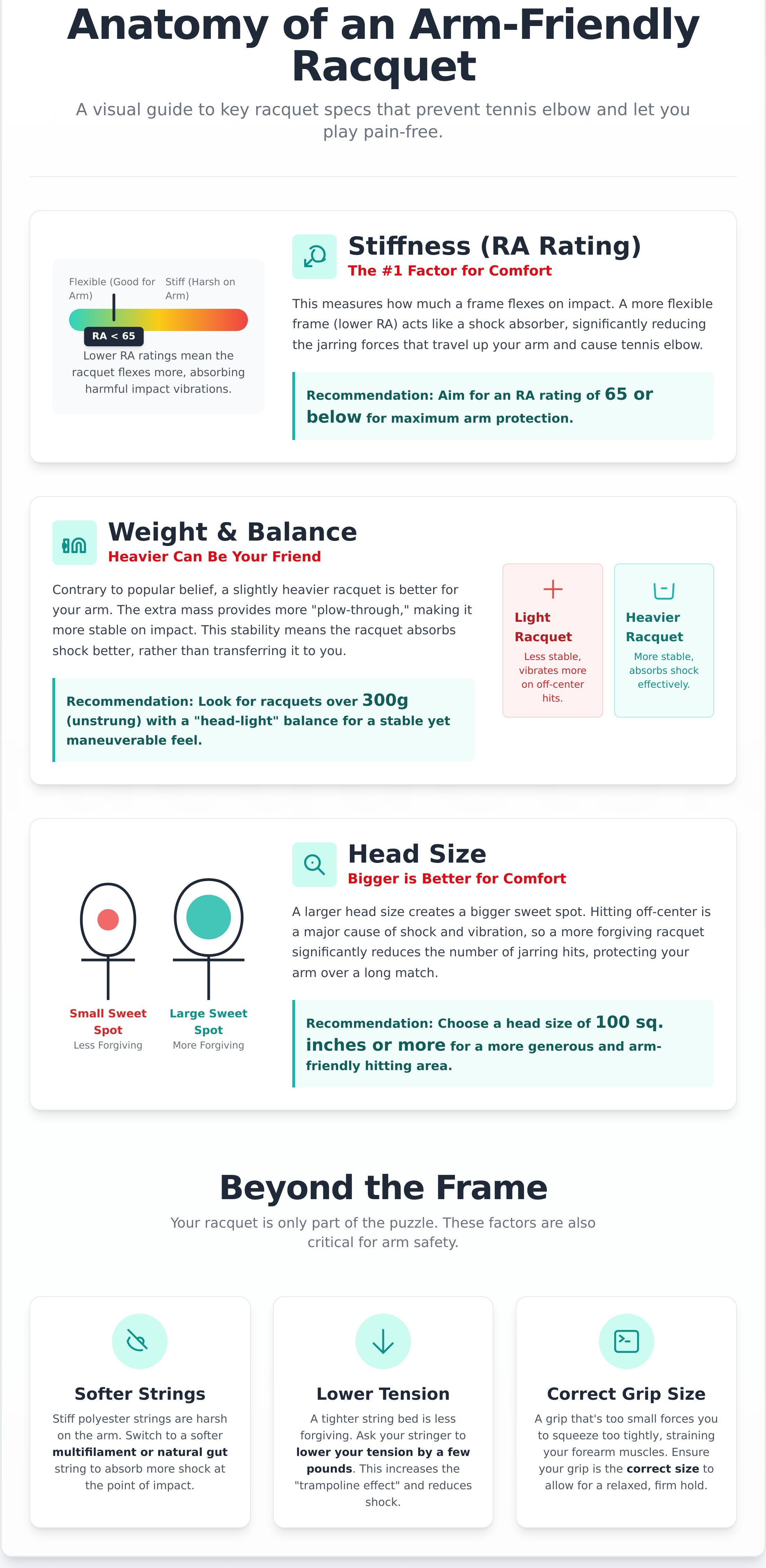
Anatomy of an Arm-Friendly Racquet: Key Specs Explained
Choosing the right racquet can feel overwhelming with all the technical jargon out there. But don't worry, we're here to translate the numbers into what really matters: on-court comfort. Finding the best tennis racquet to prevent tennis elbow isn't about one magic number; it's about finding the perfect combination of specifications that work together to protect your arm.
Let's break down the key specs that make a racquet a dream to play with, not a pain in the arm.
Stiffness (RA Rating): The #1 Factor for Comfort
The RA rating, or "Racquet Aided" stiffness rating, is the most critical spec for arm comfort. It measures how much a racquet frame flexes when it strikes the ball. A lower RA rating (think 65 or below) means the frame is more flexible. This flex allows the racquet to absorb more of the impact shock, so less of that jarring vibration travels up your arm. This constant shock is a primary contributor to the condition, and you can find expert medical insights on tennis elbow that explain this process in detail. While a super-flexible frame might offer slightly less raw power, the trade-off for arm safety is well worth it.
Weight and Balance: Heavier Can Be Better
It?s a common myth that a lighter racquet is always easier on the arm. In reality, a bit more mass can be your best friend! A heavier racquet (generally over 300g unstrung) has more "plow-through," meaning its own weight helps it absorb and deflect impact shock more effectively. Think of it like a bowling ball hitting the pins-its mass does the work. Lighter racquets, while easy to swing, are less stable and can vibrate more on off-centre hits. Balance is also key: a "head-light" balance makes a heavier frame feel quick and maneuverable in your hand, offering a fantastic blend of stability and speed.
Head Size and Beam Width
A larger head size (100 sq. inches or more) creates a bigger sweet spot. This is fantastic for arm comfort because it makes the racquet more forgiving. When you hit the ball off-centre on a smaller frame, the racquet twists and sends a nasty shock to your arm. A larger, more generous sweet spot reduces the frequency of these jarring mishits. Paired with this, a thinner beam (the thickness of the frame's cross-section) typically allows for more flex, complementing a lower RA rating and further dampening vibrations.
At a Glance: Stiff vs. Arm-Friendly Racquets
| Specification | Stiff / Power-Oriented | Arm-Friendly / Comfort-Oriented |
|---|---|---|
| Stiffness (RA) | High (68+) | Low (Under 65) |
| Weight (Unstrung) | Often Lighter (<300g) | Often Heavier (>300g) |
| Head Size | Smaller (<100 sq. in.) | Larger (100+ sq. in.) |
| Beam Width | Thick & Rigid | Thinner & Flexible |
Top 5 Arm-Friendly Tennis Racquets for Australian Players
Finding the right gear is a game-changer, especially when you're looking for the best tennis racquet to prevent tennis elbow. The right frame can absorb harmful vibrations and reduce stress on your arm, letting you focus on your shots, not the pain. While a racquet is a key part of your strategy, it's also wise to follow expert advice on technique and conditioning. In fact, Australian health guidelines emphasize proper equipment as a crucial preventative measure. We've handpicked five fantastic options available here in Australia that are renowned for their comfort and arm-friendly performance.
The Ultra-Flexible Frame: A Comfort Revolution
Some frames stand out for their revolutionary flexibility. Utilizing advanced carbon mapping technologies, these racquets are engineered to bend dynamically, complementing the modern tennis swing. This design creates an exceptional connected-to-the-ball feel, delivering comfort without the harsh feedback often associated with stiffer frames. They are an excellent choice for players of all levels seeking top-tier comfort without compromising on control.
- Key Specs (Example): Head Size: 100 sq. in. / Unstrung Weight: 295g / RA Rating: ~57
- Why it's arm-friendly: An exceptionally low stiffness (RA) rating allows the frame to absorb a significant amount of shock upon impact, providing superior arm protection.
The Advanced Dampening Frame: Shock Absorption Specialist
Certain racquets are specifically engineered with arm protection at their core. These frames often incorporate advanced internal dampening systems, such as micro-mass elements or specialized inserts, designed to actively absorb shock and dampen harmful vibrations. This technology has been shown to significantly reduce the risk of tennis elbow, making such racquets a premier choice for players prioritizing pain-free performance.
- Key Specs (Example): Head Size: 100 sq. in. / Unstrung Weight: 295g / RA Rating: ~67
- Why it's arm-friendly: Its advanced dampening system is among the most effective on the market for filtering out unwanted vibrations, directly addressing the root cause of arm discomfort.
The Large Sweet Spot Frame: Forgiving Power and Soft Feel
Comfort can also be achieved through intelligent design, particularly with racquets featuring an expanded sweet spot. Some frames boast a unique head shape that significantly enlarges the sweet spot, often positioned higher on the string bed where many players naturally make contact. This design, combined with innovative material construction, offers a clean, flexible feel that is exceptionally forgiving on off-centre hits. These are often ideal for intermediate to advanced players seeking a comfortable yet powerful option.
- Key Specs (Example): Head Size: 100 sq. in. / Unstrung Weight: 295g / RA Rating: ~62
- Why it's arm-friendly: A generously sized sweet spot minimizes jarring vibrations from mishits, while the frame's flexible composition ensures a soft, comfortable response on every shot.
The Plush Feel Frame: Classic Comfort and Control
For players who appreciate a classic, plush feel, certain racquets offer an ideal blend of comfort and control. These frames are characterized by incredibly low RA ratings and thin, highly flexible beams that deliver buttery-smooth feedback on every shot. They represent the best tennis racquet to prevent tennis elbow for those who generate their own power and prioritize maximum feel and arm-friendly comfort.
- Key Specs (Example): Head Size: 100 sq. in. / Unstrung Weight: 305g / RA Rating: ~58
- Why it's arm-friendly: The synergy of a super-thin beam and one of the lowest available stiffness ratings results in an ultra-plush, highly responsive feel that is exceptionally easy on the arm.
The Power & Comfort Hybrid: Easy Depth with Arm Protection
Some racquets masterfully combine easy power with exceptional comfort. These frames often feature a distinct head shape that significantly expands the sweet spot compared to conventional designs, making them incredibly forgiving. Furthermore, many integrate advanced vibration-dampening materials within the handle or frame, ensuring that you can generate effortless depth and pace without experiencing harsh vibrations or discomfort.
- Key Specs (Example): Head Size: 100 sq. in. / Unstrung Weight: 300g / RA Rating: ~67
- Why it's arm-friendly: The combination of a larger, more forgiving sweet spot and integrated handle or frame dampening effectively filters out unwanted shock before it can impact your arm.
Beyond the Frame: Why Strings, Tension, and Grips Are Critical
You've chosen a fantastic, arm-friendly frame-that's a huge step! But even the best tennis racquet to prevent tennis elbow can be let down by the wrong setup. Think of your racquet like a high-performance car: the frame is the chassis, but the strings and grip are the suspension system. They are what ultimately absorb the shock and make the ride smooth.
At Sturdy Racquets, our expert stringers see it all the time: a great racquet paired with arm-killing strings. Getting these details right is non-negotiable for playing pain-free. Let's dial in your setup.
Choosing Arm-Friendly Strings
Your strings are the first point of contact with the ball, making them the most important factor in shock absorption. For maximum comfort, you need strings that pocket the ball, absorbing impact instead of transferring it to your arm. We highly recommend:
- Natural Gut: The undisputed king of comfort and feel. It offers exceptional shock dampening, protecting your arm like nothing else.
- Multifilament: A brilliant and more affordable alternative to natural gut. These strings are constructed from hundreds of microfibers to mimic the soft, forgiving feel of gut.
A quick word of warning: stay away from stiff polyester strings. While popular on the pro tour, they are extremely harsh on the arm and are a common cause of tennis elbow for club players.
String Tension: Lower is Better
Here?s a simple rule for arm-friendly comfort: lower string tension equals a softer feel. Dropping the tension creates a more pronounced "trampoline effect," which increases power and, most importantly, dampens vibrations. While you sacrifice a small amount of control, the comfort gains are immense. We suggest starting at the lowest recommended tension for your frame and adjusting in small increments (2-3 lbs) until you find your sweet spot.
Grip Size and Cushioning
An often-overlooked cause of tennis elbow is a grip that is too small. This forces you to squeeze the handle tightly to maintain control, creating constant tension in your forearm muscles. This "death grip" is a direct path to strain and injury. Ensure your grip size is correct, and consider adding a cushioned replacement grip or a soft overgrip. This simple change can significantly reduce the tension required to hold the racquet, giving your arm much-needed relief.
Putting these pieces together is the secret to a truly comfortable setup. If you need personalised advice, our team of knowledgeable stringers is always here to help you build the perfect combination for your game.
Your Action Plan: A Checklist for Playing Pain-Free
Tennis elbow doesn't have to be a permanent penalty. By making smart, informed choices about your gear and your game, you can get back to enjoying every serve and volley. We've covered a lot of ground, so here is your final, actionable checklist to put it all together. Think of this as your roadmap back to the court, stronger and pain-free.
Equipment Checklist
Your racquet is your most important tool, and dialling in the right setup is the first step. A well-chosen frame and string combination absorbs harmful vibrations before they reach your arm. Here?s what to look for:
- Flexible Frame: Choose a racquet with an RA stiffness rating of 65 or below. Softer frames flex more on impact, reducing shock.
- Softer Strings: Switch to arm-friendly strings like multifilament or natural gut. They offer fantastic feel and comfort.
- Lower Tension: Ask your stringer to lower your tension into the 48-52 lbs range. This creates a softer, more forgiving stringbed.
- Perfect Grip: Ensure your grip size is correct. A grip that's too small forces you to squeeze too hard. Add a cushioned overgrip for extra shock absorption.
On-Court Checklist
Even with the perfect racquet, on-court habits are crucial for long-term health. Protecting your arm is about playing smarter, not just harder. Make these actions part of your routine:
- Always Warm Up: Never step on court cold. A proper warm-up prepares your muscles and tendons for the demands of the game.
- Focus on Technique: Clean, efficient strokes put less strain on your arm. Pay special attention to your backhand and serve, as poor form here is a common culprit.
- Get a Form Check: A single session with a qualified coach can identify technical flaws you might not notice, providing invaluable feedback.
- Listen to Your Body: Learn to distinguish between muscle fatigue and sharp, "bad" pain. Never play through sharp pain-it's your body's warning signal.
Recovery is just as crucial as your on-court habits. Giving your body a comfortable place to rest and recuperate after a match can make a significant difference. For those looking to create a perfect post-game relaxation spot in their garden, UK specialists like Rengard offer great examples of high-quality, weather-resistant outdoor furniture.
Get Expert Help
Finding the perfect combination of frame, strings, and tension that makes up the best tennis racquet to prevent tennis elbow for your specific game can feel overwhelming. That's where we come in. Our team lives and breathes tennis and is here to provide the knowledgeable, friendly advice you need.
Don't guess with your gear. Let us help you build the perfect setup so you can focus on what matters most: playing the sport you love. Chat with our racquet specialists today!
Your Next Step to Pain-Free Tennis
Remember, beating tennis elbow isn't about finding one 'magic' frame. It?s about creating a complete arm-friendly setup. As you've learned, this means choosing a racquet with the right specs-like a lower stiffness rating and a generous sweet spot-and pairing it with the ideal strings, tension, and grip for your unique style. This holistic approach is your best defence against the harmful vibrations that lead to pain and keep you off the court.
Finding the best tennis racquet to prevent tennis elbow is a crucial step, but you don?t have to take it alone. At Sturdy Racquets, we're a team of passionate players dedicated to helping you play your best. We believe the right advice is just as important as the right equipment, and we?re here to provide both.
With our professional in-store stringing service, expert guidance, and Australia-wide shipping from our local Melbourne store, you can feel confident in your choice. Ready to serve up some comfort? Find your perfect arm-friendly racquet in our collection! Here's to many more powerful, pain-free sets ahead.
Frequently Asked Questions
Can a heavier tennis racquet actually be better for tennis elbow?
Yes, it certainly can! While it might sound counterintuitive, a heavier racquet provides more stability upon impact with the ball. This means the frame absorbs more of the shock and vibration instead of your arm. The key is to choose a racquet with a "head-light" balance, which ensures it remains manoeuvrable while still offering that crucial plow-through. This combination is fantastic for reducing stress on your arm's tendons.
Do vibration dampeners really work to prevent tennis elbow?
Vibration dampeners are great for reducing the high-frequency "ping" sound from your strings, which makes for a more solid and comfortable feel. However, they do very little to absorb the low-frequency shock that actually contributes to tennis elbow. While we highly recommend using one for improved feel, it?s not a solution on its own. Think of it as a small, helpful accessory, not a primary prevention tool.
What is the best string tension to use if I have arm pain?
If you're dealing with arm pain, lowering your string tension is one of the most effective adjustments you can make. We suggest dropping your tension to the lower end of your racquet's recommended range, often around 50-55 lbs or even slightly below. A looser string bed pockets the ball more, absorbing impact and reducing the shock sent to your arm. It also creates a larger sweet spot, making the racquet more forgiving on off-centre hits.
How do I know if my tennis racquet grip size is wrong?
Using the wrong grip size is a common cause of tennis elbow. If your grip is too small, you'll squeeze it too tightly to maintain control, which overworks your forearm muscles. A simple way to check is the "finger test." Hold your racquet normally and try to slide the index finger of your non-hitting hand into the gap between your palm and fingertips. If there's a snug fit, you're good. If there's too much or too little space, it's time for a change.
Should I switch to a completely different brand of racquet?
Not necessarily. All the top brands like Wilson, Head, and Babolat offer fantastic arm-friendly racquets. It?s more important to focus on the racquet's specifications rather than the brand name on the frame. Finding the best tennis racquet to prevent tennis elbow involves looking for a flexible frame, a head-size of 100 sq. inches or more, and a head-light balance. Our knowledgeable team loves helping players compare models to find the perfect fit!
How often should I restring my racquet to keep it arm-friendly?
A simple rule to follow is to restring your racquet as many times per year as you play per week. For example, if you play twice a week, you should get a restring twice a year. Over time, strings lose their tension and elasticity, becoming "dead." When this happens, they no longer absorb shock effectively, passing that harsh impact directly to your arm. Fresh strings, especially a soft multifilament, make a massive difference in comfort.
Share:
Head-Heavy vs. Head-Light Racquets: Which is Right for Your Game?
The Best Tennis Racquets for Senior Players in Australia: A Complete Guide