



Choosing the right tennis racquet for your child can feel more complicated than a five-set tiebreak. Is it too big? Too heavy? Will the wrong size hurt their development or, worse, cause an injury? These are common questions every tennis parent asks, and finding the right answer is crucial for your little champion's safety and enjoyment on the court. We want to take the stress and guesswork out of the process so you can feel confident in your choice.
As fellow tennis lovers, we?re here to help. This ultimate junior tennis racquet sizing guide is packed with the friendly, expert advice you need. Inside, you?ll find simple, easy-to-follow charts and a couple of fantastic at-home tests you can do in minutes to find the perfect fit. We?ll help you understand the differences between sizes and know exactly when it?s time to upgrade. Let?s get your young player set up with the perfect gear to build their skills and have a fantastic time on the court!
Key Takeaways
- The right-sized racquet is essential for your child's safety, skill development, and overall enjoyment on the court.
- Confidently find the perfect fit by using our two simple methods: a quick check based on your child's height and an easy at-home measurement test.
- Our junior tennis racquet sizing guide provides clear charts to take all the guesswork out of matching your child to the correct racquet length.
- Learn the key signs that show your junior player is ready to move up to a full-size adult racquet, ensuring a smooth and successful transition.
Why the Right Racquet Size is a Game-Changer for Kids
Choosing your child's first tennis racquet is an exciting step! But it's also where many parents make a common mistake: grabbing a racquet that's too big, thinking their child will "grow into it." A junior racquet isn't just a shrunken adult model; it's specifically engineered for a child?s strength, height, and developing swing. Modern Tennis racquet technology ensures these frames are lighter, shorter, and more forgiving to help young players succeed. Following a proper junior tennis racquet sizing guide is the key to setting them up for a fantastic start in the sport.
To see just how critical the right fit is, check out this helpful video from the experts at Dunlop:
Injury Prevention: Protecting Growing Arms
A racquet that's too heavy or long can be a recipe for trouble. It forces a child to use improper technique, often "muscling" the ball with their arm instead of their whole body. This puts unnecessary strain on their developing wrists, elbows, and shoulders. The perfect-sized racquet promotes a natural, fluid swing, making the game safer and much more comfortable for growing bodies.
Faster Skill Development
Imagine trying to write with a giant pen-it would be clumsy and frustrating! The same goes for tennis. The right racquet gives a child immediate control, making it easier to aim and hit the ball cleanly. They?ll find the "sweet spot" more often, which feels amazing and builds confidence with every successful shot. This positive feedback loop is crucial for keeping them engaged and eager to improve.
The Fun Factor: Keeping Them on the Court
Ultimately, tennis should be fun! A poorly sized racquet makes the game feel like hard work. Every swing is a struggle, and the ball rarely goes where it's supposed to. When a racquet feels like a natural extension of their arm, kids have more success, hit better shots, and have a brilliant time on the court. This positive experience is what sparks a genuine, lifelong love for the game.
How to Find the Perfect Junior Racquet Size: 2 Simple Methods
Finding the right racquet for your child doesn't have to be complicated! Getting the size right is crucial for developing good habits, preventing injury, and making sure they have fun on the court. We'll walk you through two simple, effective methods to find the perfect fit. For the most accurate result, we recommend using both methods together to confirm your choice. This approach ensures you have a comprehensive junior tennis racquet sizing guide at your fingertips.
Remember, while age is a helpful starting point, a child's height is a far more reliable indicator of the right racquet length.
Method 1: Sizing by Age and Height (The Chart)
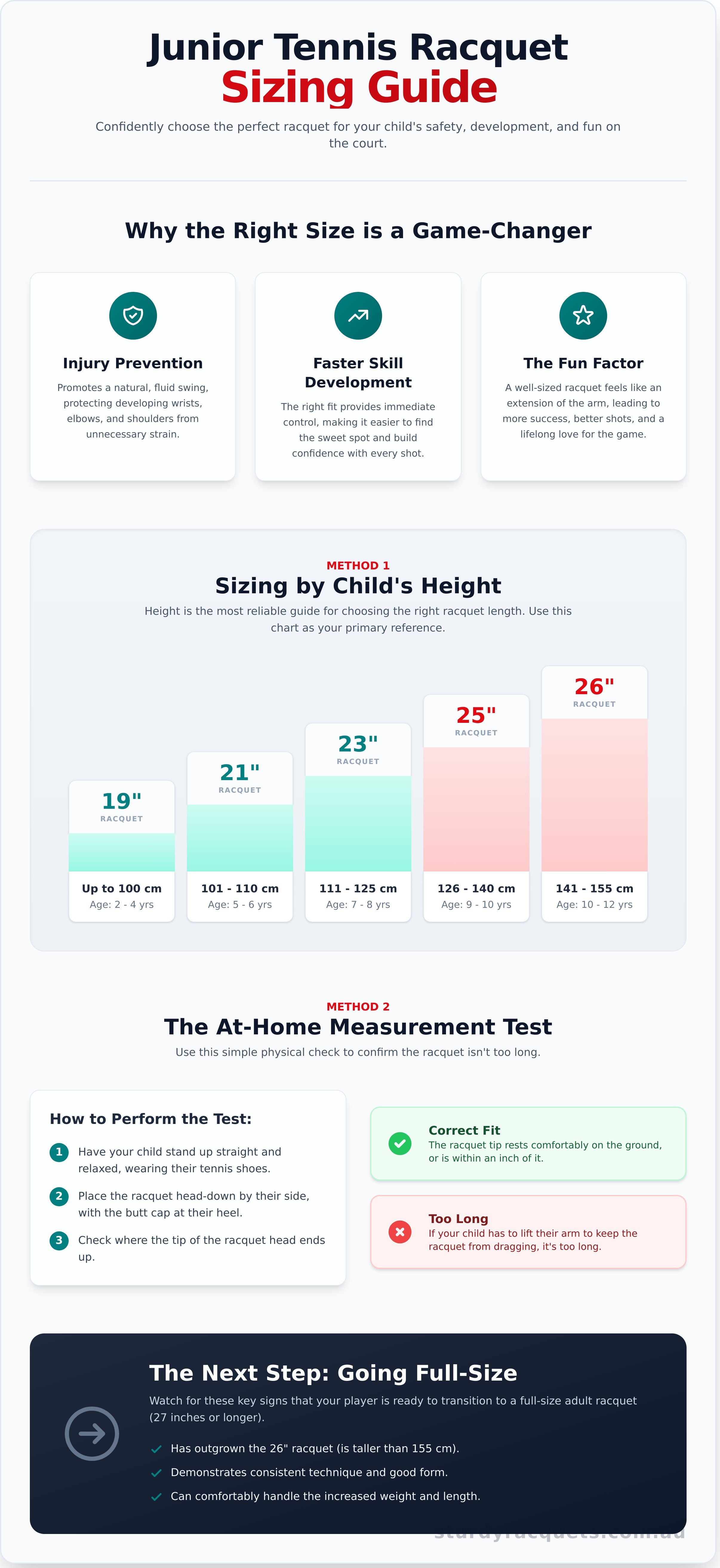
This chart is the best place to start. It matches racquet lengths to a child's height and typical age, providing a fantastic initial recommendation. This approach is widely supported by top tennis organisations, including the official USTA racquet sizing guide. Once you've found a potential match, use Method 2 to confirm it's the perfect one.
| Racquet Length | Child's Height (cm) | Typical Age Range |
|---|---|---|
| 19 inch | Up to 100 cm | 2 - 4 years |
| 21 inch | 101 cm - 110 cm | 5 - 6 years |
| 23 inch | 111 cm - 125 cm | 7 - 8 years |
| 25 inch | 126 cm - 140 cm | 9 - 10 years |
| 26 inch | 141 cm - 155 cm | 10 - 12 years |
Good to know: All junior racquets come pre-strung and ready for action right out of the box!
Method 2: The At-Home Measurement Test
This quick physical test is the ultimate confirmation. It ensures the racquet isn't too long, which could hinder swing development, or too short, which can cause them to overreach. Here?s how to do it:
- Have your child stand up straight and tall, relaxed, with their arms hanging naturally at their sides.
- Place the head of the tennis racquet on the ground next to their foot, with the handle (butt cap) pointing up towards the sky.
- Ask your child to place their palm flat against the butt cap at the very end of the handle.
The racquet is the right size if the end of the handle rests comfortably in the centre of their palm. If their fingertips can't reach the butt cap, the racquet is too long. If the butt cap is well below their wrist, it's likely too short.
A Quick Note on Junior Grip Sizes
Don't worry too much about grip size! Most junior racquets are designed with a standard, one-size-fits-all grip that suits smaller hands. For older kids moving into a 25" or 26" racquet, you can do a quick "finger test" to check the fit. Have them grip the handle; there should be about a finger's width of space between their fingertips and the base of their palm. If the grip feels a bit small, adding a simple overgrip is an easy and affordable way to build it up for a perfect feel.
Beyond Length: What Else to Consider in a Junior Racquet
You've measured your child's height and used our chart to find the perfect length-fantastic! That's the most important step in any junior tennis racquet sizing guide. For young children just starting out, getting the length right is 90% of the battle. However, as they grow and their skills develop, you'll notice different models available in the same size. This is where factors like material and brand come into play, helping you fine-tune their equipment for better performance and enjoyment. It's also worth noting that other details, such as grip size, become more important as a player develops, a topic covered well in the official ITF guide to tennis rackets.
Racquet Material: Aluminium vs. Graphite Composite
When comparing racquets of the same length, the biggest difference you'll find is the material. This choice directly impacts how the racquet feels and performs on the court.
- Aluminium Frames (19" - 23"): These are the perfect starting point. Aluminium racquets are lightweight, incredibly durable (they can handle a few bumps and scrapes!), and very affordable. They provide a great platform for learning the basics without a big investment.
- Graphite Composite Frames (25" - 26"): As a junior player starts hitting with more consistency and power, it's worth considering a graphite composite frame. These racquets offer more feel, stability, and power. The graphite also helps absorb more vibration, making them more comfortable on the arm for kids who are playing longer and hitting harder.
The upgrade to graphite is a great idea when your child is moving from casual hitting to playing more structured games or coaching sessions.
As kids get more involved in structured tennis, creating a sense of team identity becomes part of the fun. For those organizing teams or events, custom gear can be a great way to build spirit. To explore options for promotional products like custom towels, you can visit Rally Towels.
Choosing a Brand for Your Junior Player
Walking into a tennis shop, you'll see familiar names like Babolat and Head, among others. The great news is that these trusted brands produce fantastic junior racquets. Many of their junior models are designed as takedown versions of the racquets used by professional heroes like Carlos Alcaraz or Iga ?wi?tek.
This is a huge source of excitement for kids! Being able to use a racquet that looks just like their favourite player's can be a powerful motivator to get out on the court and practise. While the brand isn't as critical as the right size, choosing one that your child is excited about can make a world of difference to their passion for the game. Ready to find one they'll love? Explore our range of junior racquets from top brands!
The Next Step: When to Transition to an Adult Racquet
One of the most common questions we hear from parents is, "When is my child ready for a full-size adult racquet?" It?s an exciting milestone, but it's a major step that shouldn't be rushed. Transitioning too early can hinder a player's development, affect their technique, and even lead to injuries from using a frame that's too heavy or long for them. As the final step in our junior tennis racquet sizing guide, let's look at the clear signs that show your young player is prepared for the big league.
3 Key Signs Your Child is Ready to Move Up
Watching your child's game progress is fantastic! Before you make the leap to a 27-inch adult frame, look for these three key indicators to ensure the timing is perfect:
- Height: The most straightforward sign. Once a junior player is over 150cm (or 5 feet) tall, they generally have the leverage needed to handle a full-length racquet.
- Strength: Can they comfortably and consistently swing their 26-inch racquet? Look for fluid, controlled strokes without signs of struggle. If their current racquet feels light and easy to manoeuvre, it's a great sign they have the physical strength for the next step.
- Skill: A player who is on the court regularly, developing proper technique, and generating their own pace is a prime candidate. Their commitment to the game shows they have the foundation to adapt to a more demanding frame.
Choosing Their First Adult Racquet (27-inch)
Not all adult racquets are created equal. Giving a junior a heavy, advanced player's frame is a recipe for frustration. To make the transition smooth and successful, we recommend starting with a lightweight adult racquet, specifically one that weighs under 285 grams. Pair this with a larger headsize of 100 square inches or more. This combination provides a bigger sweet spot, making it more forgiving on off-centre hits and easier to swing, which helps build confidence right away.
Common Mistakes to Avoid When Transitioning
Getting this final step right is crucial for a junior's long-term enjoyment and performance. Avoid these common pitfalls:
- Don't give them your old racquet. While it might seem economical, an older adult racquet is often much heavier, stiffer, and has the wrong grip size, increasing the risk of arm and wrist injuries.
- Don't choose advanced specs. Racquets with small headsizes (under 100 sq. in.) and heavy weights are designed for experienced players who generate their own power and have precise technique. They are not suitable for a transitioning junior.
- Don't guess if you're unsure. Getting expert advice ensures your child gets the perfect frame to match their size, strength, and playing style.
Making the right choice sets your young player up for success on the court. Our experts can help find the perfect first adult racquet. Contact us!
Serving Up the Perfect Fit for Your Future Star
Choosing the right racquet is a game-changer for your child's tennis journey. It builds confidence, prevents injury, and fosters a true love for the sport. As you've learned, finding the right length is simple using the height or arm-length methods, and considering factors like weight is just as crucial. Following this comprehensive junior tennis racquet sizing guide ensures you're setting your young player up for success from their very first swing.
Now you're equipped with the knowledge, it's time to find that perfect racquet. At Sturdy Racquets, our passionate and knowledgeable team is here to help. We stock all the trusted brands your kids love, like Wilson and Babolat, and ship Australia-wide direct from our Melbourne store. Get the expert advice you need and the gear they'll love.
Find the perfect fit! Shop our complete collection of junior tennis racquets.
Give your young champion the best possible start on the court. Happy hitting!
Your Junior Tennis Racquet Sizing Guide: FAQs
What happens if my child's tennis racquet is too big or too heavy?
Using a racquet that's too big or heavy can unfortunately lead to a few problems. It often forces a child to use incorrect technique, swinging with just their arm instead of their whole body, which hinders proper development. More importantly, it significantly increases the risk of strain on their wrist and elbow. The goal is for them to have fun and build skills safely, and the right-sized racquet is absolutely key to making that happen.
How often do I need to buy a new, bigger racquet for my child?
There's no set schedule; it all depends on your child's growth! A good rule of thumb is to check their racquet fit at the start of each tennis season or after a noticeable growth spurt. For most kids, this means you might need a new one every 12 to 18 months. The most important thing is to refer back to our junior tennis racquet sizing guide to ensure their current frame still offers the best control and comfort for their height.
Does an expensive junior racquet really make a difference for a beginner?
Honestly, for a young player just starting out, an expensive racquet isn't necessary. The most critical factors are the correct size and weight. Most entry-level junior racquets, often around A$40-A$70, are made from durable aluminium and are perfect for learning the basics. More expensive graphite models offer extra power and feel, but these benefits are best appreciated by more experienced players who have already developed their strokes. Focus on the perfect fit first!
Should I buy a used junior tennis racquet?
Buying a used racquet can be a fantastic way to save money, especially since kids grow so quickly! Just be sure to inspect it carefully before you buy. Check the frame for any cracks or significant damage, as this can affect performance and safety. The grip might also be worn out, but that's an easy and affordable fix, usually around A$10-A$15 for a new one. As long as it's structurally sound and the right size, a pre-loved racquet is a great choice.
What's the real difference between a 25-inch and a 26-inch racquet?
That one inch makes a bigger difference than you might think! It's all about matching the racquet's length to the player's height for the right leverage. A 25-inch racquet is typically perfect for kids aged 9-10, while a 26-inch model is the final step before an adult frame, suited for kids 10-12. The extra length on the 26-inch racquet provides more power, but only if the child is tall enough to control it comfortably without compromising their swing.
Do I need to get my child's junior racquet restrung?
For the vast majority of young players, restringing a junior racquet isn't something you need to worry about. The factory strings are designed to be durable and last for the entire time your child uses the frame. Kids typically don't generate enough power to break strings or to benefit from the subtle performance gains of a fresh restring. Your child will almost certainly outgrow the racquet long before the strings need replacing, saving you time and money!
Share:
The Best Tennis Racquets for Senior Players in Australia: A Complete Guide
The Best Women's Lightweight Tennis Racquets in Australia (2026 Guide)