



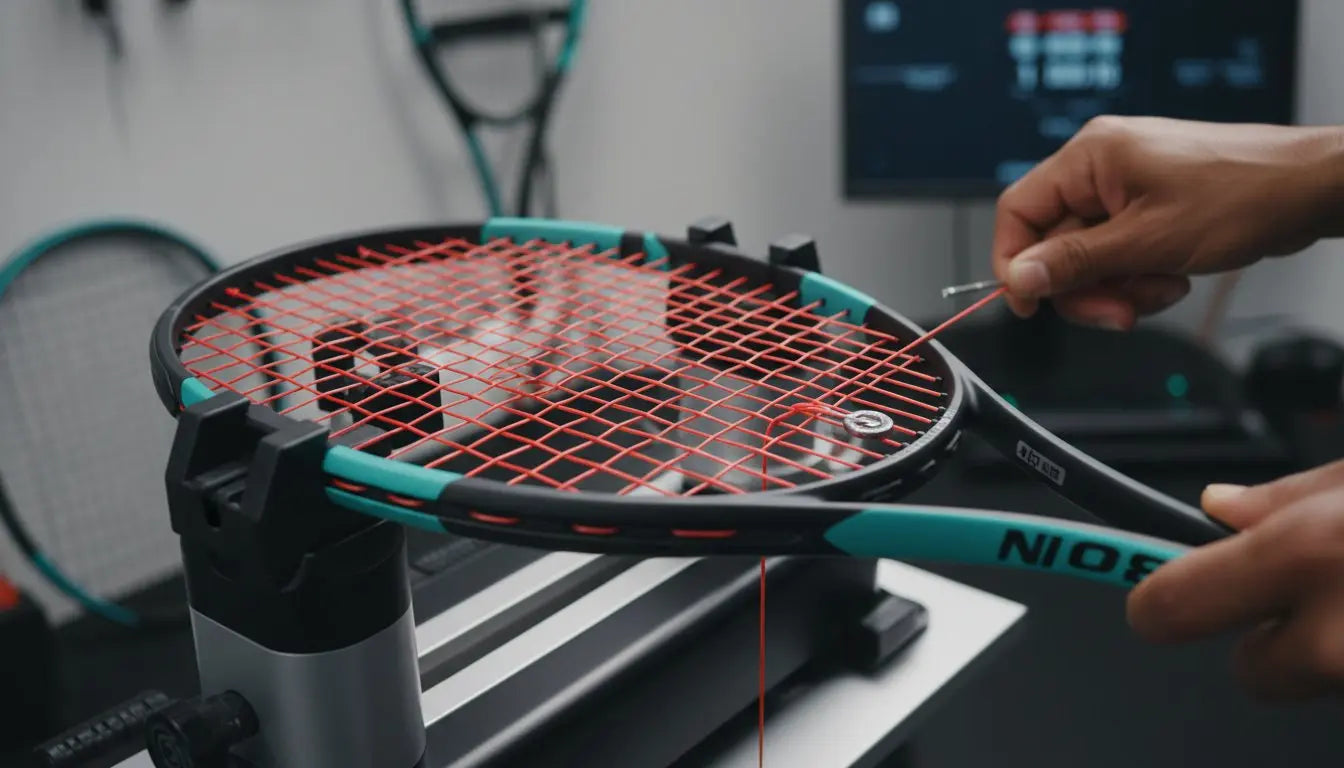
Stepping up to a wall of tennis strings can feel more confusing than facing a tricky slice serve. Polyester, multifilament, gauge, tension-the jargon alone is enough to make your head spin. For players focused on tennis only, the racquet is just half the equation; the strings are the engine that powers your game. Choosing incorrectly can mean wasting money on a string that doesn't suit you, struggling with control, or even risking the dreaded tennis elbow. It?s a classic unforced error before you even step on the court.
But it doesn't have to be that complicated! We're here to be your knowledgeable friend and cut through the noise. This guide demystifies the world of tennis strings, breaking down everything from material types to the perfect tension for your style. You'll learn the crucial trade-offs between power, control, comfort, and durability. By the end, you'll have the confidence to choose the perfect string for your racquet and walk up to your stringer knowing exactly what to ask for to unlock your best game yet.
Key Takeaways
- Understand why your strings are the 'engine' of your racquet and how they directly impact every shot you make on the court.
- Discover the four main types of tennis strings to find the perfect match for your power, control, or comfort needs.
- Decode string specs like 'gauge' and 'tension' with ease. This crucial knowledge isn't for pro-level tennis only; it's essential for every beginner.
- Learn how to choose the right strings based on your personal playing style and what to ask a professional stringer to get fantastic results.
Why Your Strings are the Most Important Part of Your Racquet
Think of your racquet's frame as the chassis of a high-performance car. It's crucial, but the strings? They're the engine. They are the only part of your equipment that actually makes contact with the ball, and getting them right can completely transform your game. The perfect set of strings can unlock exceptional power, pinpoint control, and a fantastic feel, turning good shots into great ones.
Conversely, playing with the wrong strings-or old, dead ones-can hold you back, reduce your confidence, and even lead to injuries like tennis elbow. Understanding the fundamentals is the first step to making a smarter choice. For a deep dive into the technical details, this guide on Tennis String Basics is a top-notch resource.
To see these concepts in action, check out this brilliant explanation of string types:How Strings Influence Your Game
Choosing the right string isn't just a minor tweak; it's a game-changer. Different strings are engineered to enhance specific parts of your performance. Here?s a quick breakdown of what to look for:
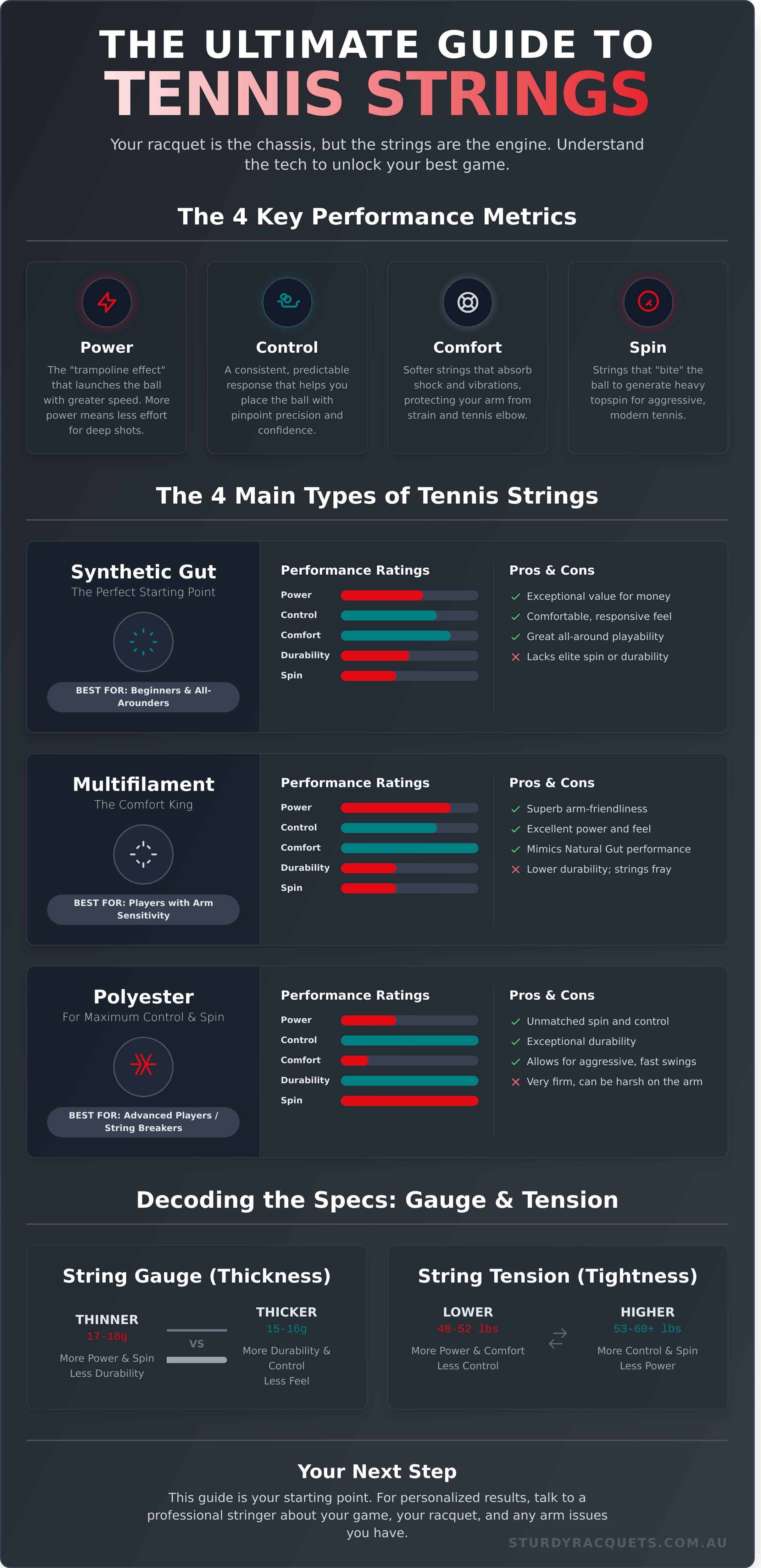
- Power: The right strings create a lively 'trampoline effect' on impact, launching the ball off the string bed with greater speed.
- Control: A suitable string provides a consistent and predictable response, helping you place the ball with much more precision.
- Comfort: Softer strings, like multifilament or natural gut, are fantastic at absorbing shock and vibrations, which helps protect your arm from the strain that can lead to tennis elbow.
- Spin: Modern polyester strings often come with a shaped or textured profile that 'bites' into the ball, generating massive spin for dipping passing shots and heavy serves.
It's Not Just for Pros: Why Beginners Benefit Most
While advanced players obsess over fine-tuning their setup, it's often beginners who see the biggest improvement from a great set of strings. A forgiving, comfort-oriented string helps make off-centre hits feel less jarring and protects developing arms and joints from unnecessary strain. When your focus is on learning the fundamentals of tennis only, the right string makes the process more enjoyable and helps build a solid technical foundation from the start.
The 4 Main Types of Tennis Strings: A Simple Breakdown
Choosing the right tennis strings can feel complicated, but it doesn't have to be! Think of strings like car tires-you wouldn't put rugged off-road tires on a racetrack car. Each type is designed for a specific purpose. Getting the right match for your racquet and playing style can make a fantastic difference in your power, control, and comfort on the court. For players focused on tennis only, understanding these basics is a game-changer.
Let's break down the four main categories to help you find your perfect fit.
Synthetic Gut: The Perfect Starting Point
This is the workhorse of tennis strings and the perfect starting point for most beginners and casual players. It's a single, solid core string that offers a fantastic blend of playability and affordability, making it a reliable all-around performer.
- Pros: Exceptional value for money, provides a comfortable and responsive feel, and is a great 'jack of all trades' for developing your game.
- Cons: It doesn't excel in any single category like extreme spin or durability compared to more specialised strings.
Multifilament: The Comfort King
Constructed from hundreds or thousands of microfibers twisted together, multifilament strings are engineered to replicate the premium feel and power of Natural Gut. They are the top choice for players who prioritise comfort above all else.
- Pros: Incredibly arm-friendly, making it a superb choice for players with a history of tennis elbow. It also offers great power and feel.
- Cons: Generally less durable than other types and can be more expensive than synthetic gut.
Polyester (Poly): For Control & Spin (with a Warning)
Walk onto any professional court, and this is what you'll find in most racquets. Polyester is a firm, durable string designed for advanced players who swing fast and generate their own power. It allows you to take huge cuts at the ball with maximum control and spin.
- Pros: Unmatched spin potential, exceptional control, and top-tier durability. It rarely moves out of place.
- Cons: Can be very stiff and harsh on the arm. We strongly advise against polyester for beginners or players with sensitive arms.
Natural Gut: The Premium Standard
The original high-performance string, Natural Gut is made from a part of cow intestine. For over a century, it has been the benchmark for playability, offering a sublime combination of feel, power, and comfort that many believe is still unmatched.
- Pros: The ultimate in feel, power, and tension maintenance. It provides an exceptional pocketing sensation on impact.
- Cons: Extremely expensive (often A$80+ for a restring) and has poor durability, especially in humid Australian conditions.
Quick Comparison Guide
| String Type | Best For | Key Benefit | Price Guide (Strung) |
|---|---|---|---|
| Synthetic Gut | Beginners / All-Around | Value & Playability | A$30 - A$45 |
| Multifilament | Players with arm issues | Comfort & Power | A$40 - A$60 |
| Polyester | Advanced string-breakers | Spin & Control | A$45 - A$65 |
| Natural Gut | Players seeking the best | Ultimate Feel & Power | A$80+ |
Decoding the Specs: Gauge and Tension Explained
Ever looked at a packet of tennis strings and felt a bit lost? Those numbers for 'gauge' and 'tension' are the secret code to unlocking your racquet's true potential. Don't worry, it's much simpler than it looks! Getting these two specs right is a game-changer, and we're here to give you the clear, straightforward advice you need to play your best.
Understanding these details helps you move from a generic setup to one that's perfectly tailored for your game. For players focused on tennis only, mastering these basics is a huge step towards more confident and powerful play.
What is String Gauge?
In simple terms, gauge is the thickness of the string. Here?s the one slightly tricky part to remember: the higher the gauge number, the thinner the string. So, a 17 gauge string is thinner than a 16 gauge. This small difference has a big impact on feel and performance.
- Thinner Strings (17g, 18g): These offer more 'bite' on the ball for extra spin, more power, and a much better feel. The main trade-off is that they are less durable and can break more quickly.
- Thicker Strings (16g, 15Lg): These provide fantastic durability and more control, making them a top choice for powerful players or those who frequently break strings.
Our Advice for Beginners: Start with a 16 or 17 gauge string. It?s the perfect middle ground, offering a great blend of power, control, and durability to support your developing game.
How Does Tension Affect Performance?
Tension is simply how tightly the strings are pulled in your racquet, measured in pounds (lbs) or kilograms (kg). The easiest way to understand its effect is to think of your string bed as a trampoline.
- Lower Tension (e.g., 50 lbs / 22.5 kg): Creates a bigger 'trampoline effect.' The ball sinks into the strings and gets catapulted out with more free power. This is also much more comfortable and easier on your arm.
- Higher Tension (e.g., 58 lbs / 26 kg): Creates a firmer, more controlled response. The trampoline effect is reduced, meaning you supply the power while the strings provide pinpoint precision.
Our Advice for Beginners: Check the side of your racquet frame for the manufacturer's recommended tension range. A fantastic starting point is right in the middle. If the range is 50-60 lbs, ask your stringer for 55 lbs and see how it feels on the court!
Matching Strings to Your Needs as a Beginner
Choosing your first set of tennis strings can feel overwhelming, but it doesn't have to be. We're here to make it simple! Think of this section as your personal cheat sheet for finding the perfect match. By identifying your main goal on the court, you can confidently select a string that will help you play better and have more fun.
This straightforward 'if-then' guide is designed for new players focused on tennis only, helping you make a smart, informed decision without getting lost in the technical jargon.
If You Want Maximum Comfort (or Have a Sore Arm)
Your top priority is finding a string that absorbs impact and is easy on your arm. A softer string will make every hit feel smoother and reduce uncomfortable vibrations, which is crucial for preventing injuries like tennis elbow.
- Best Choice: A multifilament string. These are engineered with hundreds of tiny fibres to deliver an exceptionally comfortable and forgiving feel.
- Pro Tip: Ask your stringer for a lower tension, around 50-53 lbs, to maximise the shock-absorbing benefits.
If You Want a Bit More Power
If you're looking for a little extra 'pop' on your shots without having to swing harder, you need a string that generates more energy for you. This is often called the "trampoline effect," where the string bed pockets the ball and shoots it back out with more pace.
- Best Choice: A high-quality synthetic gut or a responsive multifilament string.
- Pro Tip: Opt for a thinner gauge (17g) and a slightly lower tension. This allows the string to flex more on impact and catapult the ball off the racquet.
If You Need a Durable, All-Around String
Playing a few times a month and just want a reliable string that offers fantastic value? You need a workhorse string that balances solid playability with good durability, so you're not visiting your stringer constantly.
- Best Choice: A synthetic gut string is the undisputed champion in this category. It's the perfect, cost-effective middle-ground for recreational players.
- Pro Tip: Stick with a standard 16 gauge and a mid-range tension (e.g., 54-56 lbs) for a great blend of feel, power, and lifespan.
Still not sure? Our experts in Melbourne can help you choose! We're always here to offer friendly, knowledgeable advice to our tennis community.
Your Next Steps: How to Talk to a Professional Stringer
You've done the research, and now it's time to take action! Walking into a pro shop can feel intimidating, but a great stringer is your partner in performance. Speaking their language is the fastest way to get the perfect setup for your game. At Sturdy Racquets, our friendly experts are here to make that conversation easy and effective, helping you bridge the gap between online guides and on-court results.
What to Tell Your Stringer
To get fantastic advice, you need to provide the right information. A professional stringer will use these details to customise your racquet setup perfectly. Be ready to share a few key points about your game:
- How often you play: Are you on the court once a week or a few times a month? Your frequency impacts string durability and tension recommendations.
- Your playing style: Don't worry about technical terms. Simply say, "I'm a beginner who likes to hit from the baseline" or "I'm just starting out and learning the basics."
- Any arm pain: Be sure to mention any history of tennis elbow or general discomfort. This is crucial for selecting arm-friendly strings and tensions.
- What you want more of: Are you looking for more power on your serve? Better control on your volleys? Or just a more comfortable, forgiving feel?
Our Top String Recommendations for Beginners
While a personalised consultation is always best, here are a few top-notch strings we consistently recommend for players starting their journey. These are fantastic starting points for anyone focused on tennis only and looking for immediate playability.
- Comfort: Tecnifibre X-One Biphase. This multifilament string is exceptionally easy on the arm, mimicking the premium feel of natural gut.
- All-Around Value: Prince Synthetic Gut with Duraflex. A legendary string that offers a fantastic blend of playability, feel, and durability for its price.
- Power & Feel: Head Velocity MLT. This string provides a lively and powerful response, helping you generate extra pop without sacrificing comfort.
Ready to explore your options? Shop our full range of beginner-friendly tennis strings.
Getting your racquet professionally strung is one of the most impactful and affordable ways to improve your game. Our team at Sturdy Racquets is passionate about helping you find that perfect feel, so pop in and let's talk tennis.
Stringing It All Together: Your Path to a Better Game
Choosing the right strings might seem complex, but you now have the fundamentals down. Remember, your strings are the engine of your racquet, and understanding the basics of type and tension is your first step towards unlocking more control and power. For a game of tennis only, getting this part of your setup right is a true game-changer, giving you more confidence with every shot you make on the court.
You're now equipped to have a fantastic conversation with a professional stringer. At Sturdy Racquets, our team of passionate players is here to offer that expert advice. If you're in Melbourne, drop by for our professional in-store stringing service. For players across the country, we offer fast Australia-wide shipping on all the top brands you love.
Ready to feel the difference? Find the perfect strings for your game. Shop our collection now!
Taking control of your strings is a huge step in your development as a player. Now get out there and enjoy your next hit!
Frequently Asked Questions
How often should a beginner restring their tennis racquet?
A great rule of thumb for beginners is to restring your racquet as many times per year as you play per week. For example, if you hit the court twice a week, aim for a restring twice a year. Even if you play less frequently, we recommend restringing at least once annually. Strings lose their tension and playability over time, not just with use. A fresh set of strings makes a fantastic difference to your control and feel on the court!
What's the difference between an overgrip and a replacement grip?
Think of the replacement grip as the foundation-it's the main cushioned layer that comes standard on your racquet's handle. An overgrip is a much thinner grip that you wrap over the top of the replacement grip. It?s designed to provide extra tackiness, absorb sweat, and can be replaced frequently (every few weeks) to keep your handle feeling fresh and secure. Most competitive players use an overgrip for optimal performance and feel.
How do I know when my tennis strings are 'dead'?
Your strings are likely 'dead' when you notice a significant drop in performance. Key signs include a loss of power (you have to swing much harder), reduced ball control, and a dull, trampoline-like feel on impact. Visually, you might see deep notches where the strings cross or significant fraying on multifilament strings. If your racquet starts to feel unpredictable and lacks the crisp 'pop' it once had, it's definitely time for a fresh restring.
What is a hybrid string setup and should I try it?
A hybrid setup involves using two different types of string for your mains (vertical) and crosses (horizontal). This allows you to blend the characteristics of each string. A popular combination is a durable polyester string in the mains for control and spin, with a softer synthetic gut or multifilament in the crosses for feel and comfort. It's a fantastic option for intermediate to advanced players looking to customise their racquet's performance and feel.
Does the colour of the tennis string make a difference?
For the vast majority of players, the colour of a tennis string makes no performance difference-it?s purely for style! While the dyes and additives used can technically create minuscule changes in the string's composition, these are not noticeable on the court. So feel free to pick the colour that best matches your racquet or your personality. Choosing your gear should be fun, and this is one area where you can focus on aesthetics for your tennis only setup.
Can I use polyester strings if I'm a strong beginner who breaks strings?
While polyester strings offer exceptional durability, we advise caution for beginners, even strong ones. Polys are very stiff and can be harsh on the arm, potentially leading to tennis elbow if your technique isn't fully developed. A better starting point might be a thicker gauge, more durable synthetic gut string. If you are set on trying poly for your tennis only game, ask your stringer for a softer co-polyester string at a lower tension to better protect your arm.
Share:
What is Paddle Ball? Your Guide to Padel in Australia (2026)
How to Choose The Perfect Tennis Shoes: An Australian Buyer's Guide