


?? Shop Pickleball Paddles ? �|� Browse All Pickleball Gear ?
Ever heard your mates talking about a new court sport and found yourself wondering, "Is it Padel? Pickleball? Or just plain old paddle ball?" You're not alone! This fantastic, fast-growing sport taking Australia by storm is most likely Padel, and it's an exceptionally fun and social game that's easier to get into than you might think. It combines the best elements of tennis and squash into one action-packed experience, perfect for players of all ages and skill levels.
As your local racquet sports specialists, we're here to clear up the confusion and give you the ultimate beginner's guide for 2026. We'll break down the simple rules so you can play your first game with confidence, show you exactly what gear you need to get started, and help you find the best Padel courts right here in Australia. Consider this your friendly, expert advice for joining the biggest new racquet craze. Let's get you ready to play!
Key Takeaways
- Understand why the term "paddle ball" is often used for Padel, an exciting sport that combines the best elements of tennis and squash.
- Learn the basic rules, including how to serve and use the glass walls, to get you ready for your first match with confidence.
- Find out how to get started without a big investment, as most Australian clubs offer rental paddles and balls for new players.
- Discover why Padel is a fantastic social workout that's fun, easy on the joints, and perfect for all fitness levels.
Paddle Ball vs. Padel vs. Pickleball: Clearing Up the Confusion
Ever typed ?paddle ball? into a search bar and been surprised by the results? You're not alone! While the term might bring to mind a simple beach game, in Australia, it's increasingly used to describe one of the world's fastest-growing sports: Padel. With Pickleball also exploding in popularity, it's easy to get them mixed up. Let's clear up the confusion and help you find your perfect game.
To see what all the excitement is about, check out this fantastic introduction to Padel:
What is Padel? The Social Sport in a Glass Box
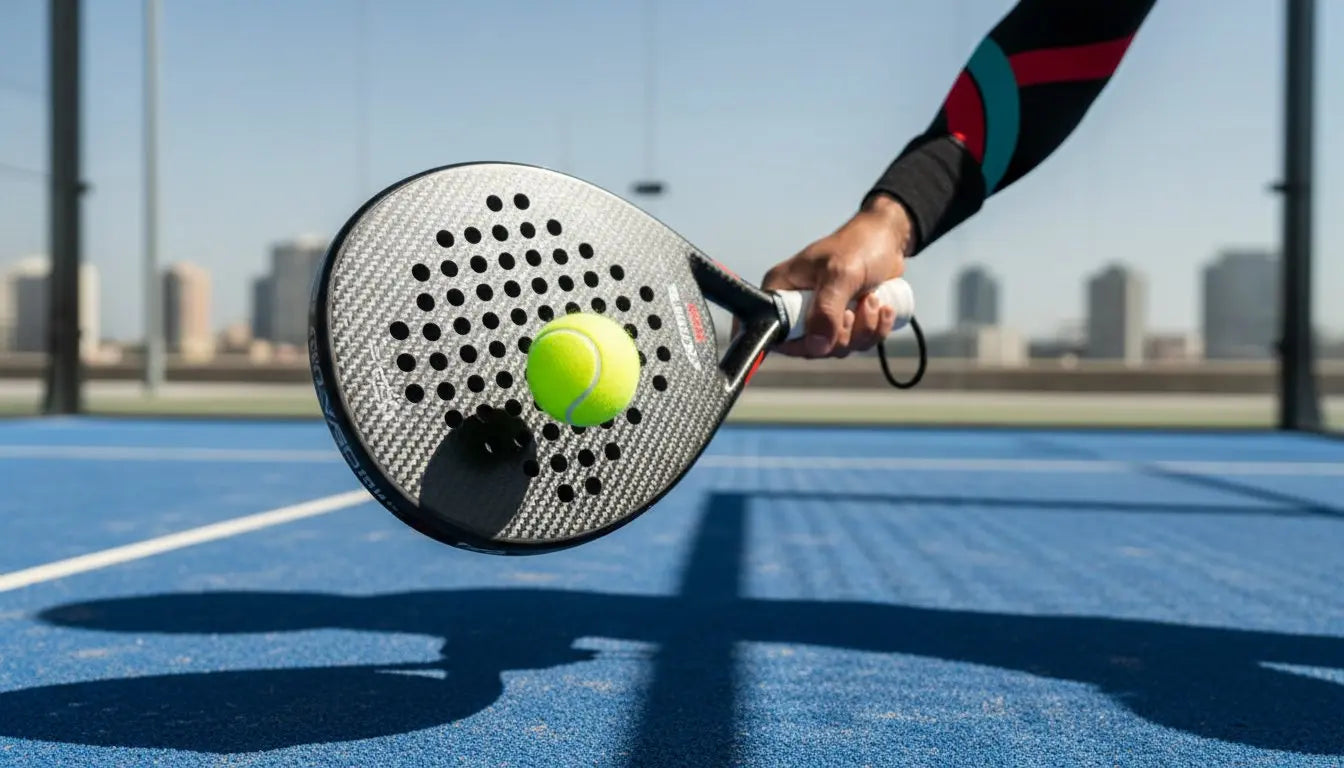
So, what is padel exactly? Originating in Mexico, Padel is an exciting hybrid of tennis and squash. It's almost always played in doubles on an enclosed court with glass and mesh walls. A key feature is that you can play the ball after it has bounced off these walls, leading to longer, more dynamic rallies. The game uses solid, stringless paddles with perforations and a low-compression tennis ball, making it accessible for beginners but with a high skill ceiling for competitive players.
How is Padel Different from Pickleball?
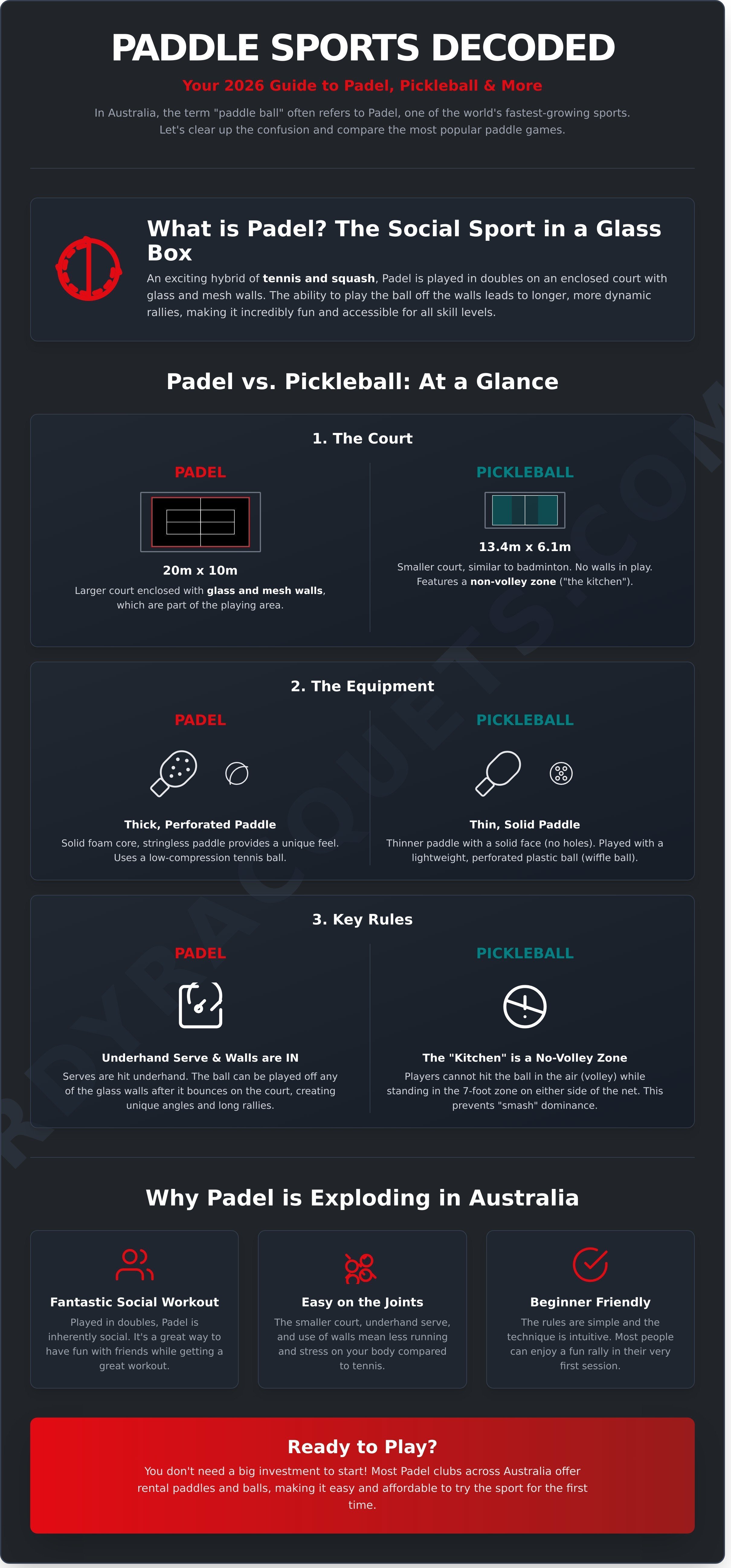
While both are fun and social, Padel and Pickleball are distinct sports. The court, equipment, and rules are all unique. We've broken down the key differences to make it easy to see which one might be right for you. This quick comparison highlights everything you need to know at a glance.
| Feature | Padel | Pickleball |
|---|---|---|
| Court | Larger (20m x 10m), enclosed with glass/mesh walls. | Smaller (13.4m x 6.1m), similar to a badminton court. |
| Ball | Low-compression tennis ball. | Lightweight, perforated plastic ball (like a wiffle ball). |
| Paddle | Thicker, solid foam core, stringless, perforated. | Thinner, solid face (composite or wood), no perforations. |
| Key Rules | Underhand serve, ball can be played off walls. | Has a non-volley zone ("the kitchen") near the net. |
And What About Traditional Paddleball?
To avoid any lingering confusion, the classic paddle ball game most of us grew up with is different altogether. This is typically a solo game involving a wooden paddle with a rubber ball attached by an elastic string. While it?s a fun way to test your coordination, it?s a world away from the court sports of Padel and Pickleball. Here in Australia, if you hear someone talking about their new favourite paddle sport, they're almost certainly talking about Padel!
How to Play Padel: A Beginner's Guide to the Rules
Welcome to the fastest-growing racquet sport in Australia! Padel is a fantastic, social game that?s easy to learn but offers plenty of depth. The main objective is simple: work with your partner to hit the ball over the net and into your opponents' court so they can't return it. The court is smaller than a tennis court and enclosed by glass and mesh walls, which are very much in play!
To get you on the court and having fun right away, we've broken down the three most important rules every beginner needs to know. While these basics will cover your first few games, you can always explore the complete official rules of padel as you progress. Let's dive in!
The Serve: Starting a Point
The Padel serve is much simpler and easier on the shoulder than a tennis serve. It?s always hit underhand, making it very beginner-friendly. Just remember these key points:
- The serve must be hit at or below your waist level.
- You must bounce the ball once on the ground behind the service line before hitting it.
- Your serve must travel cross-court and land in the diagonal service box.
- After the bounce, the ball cannot hit the wire mesh fence, though hitting the glass wall is allowed.
Scoring: Just Like Tennis
Here?s some great news for tennis players: if you know how to score a game of tennis, you already know how to score Padel! The points follow the exact same sequence: 15, 30, 40, and then game. The concepts of 'deuce' (40-40) and 'advantage' are also the same. Matches are typically played as the best of three sets, with each set won by the first pair to win six games.
Using the Walls: The Fun Part!
This is where Padel really shines and what makes this form of paddle ball so unique and strategic! Unlike in squash, the ball must always bounce on the ground on your opponent's side before it hits any of the walls. After that first bounce, players can let the ball rebound off one or more walls and then hit it back. You can even use your own back glass wall to return a difficult shot, hitting the ball into it so it bounces back over the net. It adds a whole new dimension of angles and tactics to the game!
Essential Gear for Your First Padel Match
Padel is exploding in popularity across Australia, and for good reason! It's social, fun, and incredibly easy to pick up. Even the country's top tennis body is getting behind it, with Tennis Australia's investment in padel confirming its status as one of the world's fastest-growing sports. The best part? You don't need a bag full of expensive gear to get started.
Most local clubs offer rental equipment, which is a fantastic way to try the game. When you're ready to get your own kit, you only need to focus on three core items: a paddle, the right balls, and proper shoes.
Choosing Your First Padel Paddle
Your paddle is your most important tool, and for beginners, the goal is control and comfort. Padel paddles come in three main shapes:
- Round: The perfect choice for new players. It has a large, central sweet spot, making it very forgiving and easy to control.
- Teardrop: A versatile hybrid shape that offers a good balance of power and control for intermediate players.
- Diamond: A top-heavy shape designed for advanced players who want to maximise power.
We highly recommend starting with a round paddle made from fibreglass. It?s a softer, more flexible material that gives you a great feel for the ball and is easier on your arm. Ready to find your perfect match? Browse our range of beginner-friendly paddles.
Padel Balls and What Makes Them Different
While they look almost identical to tennis balls, padel balls have lower internal pressure. This is a crucial difference, as it makes them less bouncy and slower. This design is intentional, giving you more time to set up for shots and making it easier to control the ball during long rallies. For the best experience and to get a true feel for this unique paddle ball sport, always make sure you're playing with balls made specifically for padel.
The Right Shoes for the Court
Using the wrong footwear is the quickest way to get injured. Please avoid wearing running shoes, as their grip is designed for forward motion and can cause you to roll an ankle during the sharp, lateral movements in padel. You need court shoes. A good pair of tennis or padel-specific shoes with a herringbone tread pattern is essential. This sole provides the perfect grip for the artificial turf and sand, allowing you to pivot, slide, and change direction safely and confidently.
Why Padel is Exploding in Australia (And Where to Play)
While we've been deep-diving into tennis strings, another racquet sport has been quietly taking Australia by storm: Padel. A thrilling hybrid of tennis and squash, Padel is played on a smaller, enclosed court, and its popularity is skyrocketing for a few fantastic reasons. It's energetic, incredibly fun, and remarkably easy to pick up.
Beyond the social buzz, Padel delivers exceptional health benefits. It?s a full-body cardio workout that improves agility and reflexes without the high-impact stress on your joints that can come from larger courts. This makes it a sustainable and enjoyable way to stay active for people of all fitness levels.
A Social Sport for Everyone
At its heart, Padel is a community game. The smaller court and doubles-only format mean you're always close to the action and your teammates, making for constant interaction and a lively atmosphere. It's the perfect activity for:
- Families looking for a fun weekend activity.
- Groups of friends wanting a social workout.
- Corporate team-building events that get everyone moving.
Laughter and high-fives are just as common as great shots in this friendly version of paddle ball.
Finding a Padel Court Near You
The Padel craze has led to a surge in new courts across the country, especially in major hubs like Melbourne, Sydney, Perth, and the Gold Coast. The best way to find a game is by using the official Padel Australia court finder. We also recommend keeping an eye on your local community sports centres and tennis clubs, as many are now adding dedicated Padel facilities to meet the growing demand.
Ready to Try Another Paddle Sport?
If the social, easy-to-learn nature of Padel has caught your attention, then you'll absolutely love pickleball! As another fast-growing paddle ball sport, pickleball is even more accessible, with a smaller court, simpler rules, and thousands of available courts across Australia. It?s the perfect next step for anyone who enjoys a fun, fast-paced rally with friends. Ready to give it a go? Check out our complete Pickleball starter sets!
Join Australia's Padel Revolution
As you've discovered, Padel is a thrilling and social sport that's rapidly winning over Aussies. It's a unique game with its own rules and courts, distinct from its cousins in the paddle ball family. The best part? It's incredibly easy for beginners to learn the basics and get rallying straight away, which is a huge reason for its explosive growth from Sydney to Perth.
The only thing left to do is grab your gear and find a court! As Australia's trusted racquet sports specialist, we're here to help. Our team of passionate players offers expert advice to make sure you get the perfect paddle for your game. Ready to hit the court? Explore our huge range of Pickleball and Padel gear!
With fast, free shipping across the country, you'll be serving up a storm in no time. Welcome to the community - we can't wait to see you out there!
Frequently Asked Questions
Is Padel easier to learn than tennis?
Many players find Padel much easier to pick up than tennis. The smaller court, solid paddle, and underhand serve make it less technically demanding from the start. Plus, using the walls keeps the ball in play longer, leading to fantastic rallies right away! This quick learning curve makes it an incredibly social and rewarding sport for absolute beginners. It's a great way to get into racquet sports with immediate fun and action.
Can I use my tennis racquet to play Padel?
That's a great question, but you'll need to leave your tennis racquet in your bag for this one! Padel is played with a specific stringless paddle, which is solid and features perforated holes. It's much shorter and thicker than a tennis racquet. Using the correct Padel paddle is essential for control, power, and playing by the rules. Our knowledgeable team can help you find the perfect one to get you started on the court.
How much does it cost to play a game of Padel in Australia?
In Australia, you can expect to pay between A$40 and A$60 to hire a Padel court for one hour. The cost can vary based on the club's location and whether you're playing at peak or off-peak times. Since Padel is typically played in doubles, you can split this cost between four players, making it a very affordable and social activity. We always recommend checking with your local Padel club for their exact rates.
Do I need special Padel shoes, or can I wear my runners?
While you can wear regular runners for your very first try, we highly recommend getting proper court shoes as soon as possible. Padel involves a lot of quick, lateral movements and pivots that runners aren't designed for, increasing your risk of injury. Padel-specific or clay-court tennis shoes offer the best grip on the artificial turf and the lateral support you need for top-notch stability. It's a smart investment in your safety and your game!
What is the main difference between a Padel paddle and a Pickleball paddle?
While both are part of the exciting world of paddle ball sports, there are key differences. Padel paddles are thicker (around 38mm), have a foam or EVA core, and are perforated with holes to reduce air resistance. Pickleball paddles are much thinner, have a solid surface (no holes), and typically use a honeycomb polymer core. Each is specifically designed for the weight and bounce of its respective ball, directly impacting control and power during play.
How long does a typical Padel match last?
A typical Padel match, played as the best of three sets, usually lasts between 60 to 90 minutes. The scoring system is the same as in tennis, so the exact duration depends on how close the sets are. This makes it a perfect sport to fit into a busy schedule, offering a fantastic workout and plenty of social court time without taking up your entire day. You'll be ready for another game in no time!
Explore Pickleball at Sturdy Racquets
Australia's fastest-growing racquet sport ? and we've got everything you need to get started.
Shop Paddles Shop Pickleball Sets Browse All Pickleball Gear
Share:
Pickleball Adelaide: Your Ultimate Guide to Courts, Clubs & Gear
A Beginner's Guide to Choosing Tennis Strings