



Did you know that tennis elbow affects 40% to 50% of recreational players? If you've felt that sharp, stinging pain during an off-center hit, you know how quickly it can ruin a fantastic match. While a small accessory isn't a total cure, finding the best vibration dampeners for tennis elbow can drastically reduce that annoying high-pitched ping and the lingering string buzz that irritates your arm. We're here to help you get back to the game you love with total confidence and comfort.
It's completely normal to feel frustrated when gear issues or the fear of injury hold you back from the court. This guide will help you discover which dampeners actually improve comfort and explain the expert gear adjustments you need to manage tennis elbow effectively. We'll preview the top-rated dampening options for 2026 and discuss how softest tennis strings for arm relief and professional tension adjustments create a safer hitting experience. You'll learn how to build a total racquet setup that prioritizes your arm health so you can stay active and competitive for years to come.
Key Takeaways
- Understand the difference between high-frequency string noise and the frame shock that actually impacts your arm health.
- Compare button and "worm" style designs to see which configuration offers the best comfort for your specific racquet.
- Find out which specific models rank as the best vibration dampeners for tennis elbow to help you eliminate annoying string buzz.
- Discover why switching to arm friendly tennis strings and lowering your tension provides more relief than any accessory alone.
- Learn how a professional consultation can help you create a custom setup that protects your joints while improving your performance.
Do Vibration Dampeners Really Help with Tennis Elbow?
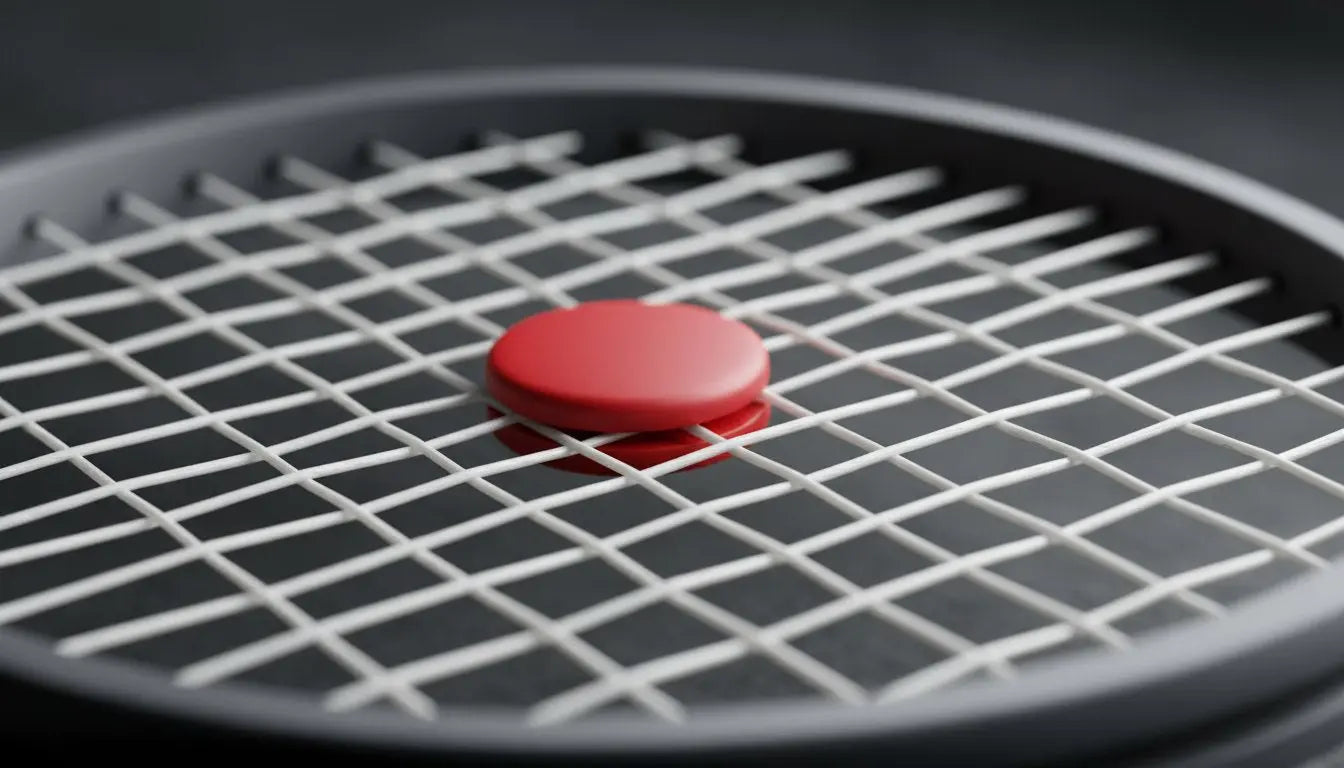
Many players reach for the best vibration dampeners for tennis elbow hoping for a miracle cure for their aching arm. A vibration dampener is a small accessory, usually made of silicone or rubber, that sits between your main strings. Its primary function is to eliminate the high-pitched "ping" sound that occurs during ball contact. While these tools make your racquet feel much smoother, it's vital to understand that they aren't a medical treatment for Tennis Elbow (Lateral Epicondylitis). They change the acoustics and the "buzz" you feel, but they don't stop the heavy impact of the racquet frame itself.
To better understand how these accessories impact your game and your health, watch this helpful video:
Understanding String Vibration vs. Frame Shock
When you hit a tennis ball, two different types of energy travel through the handle to your hand. It's helpful to distinguish between them for your long-term arm health:
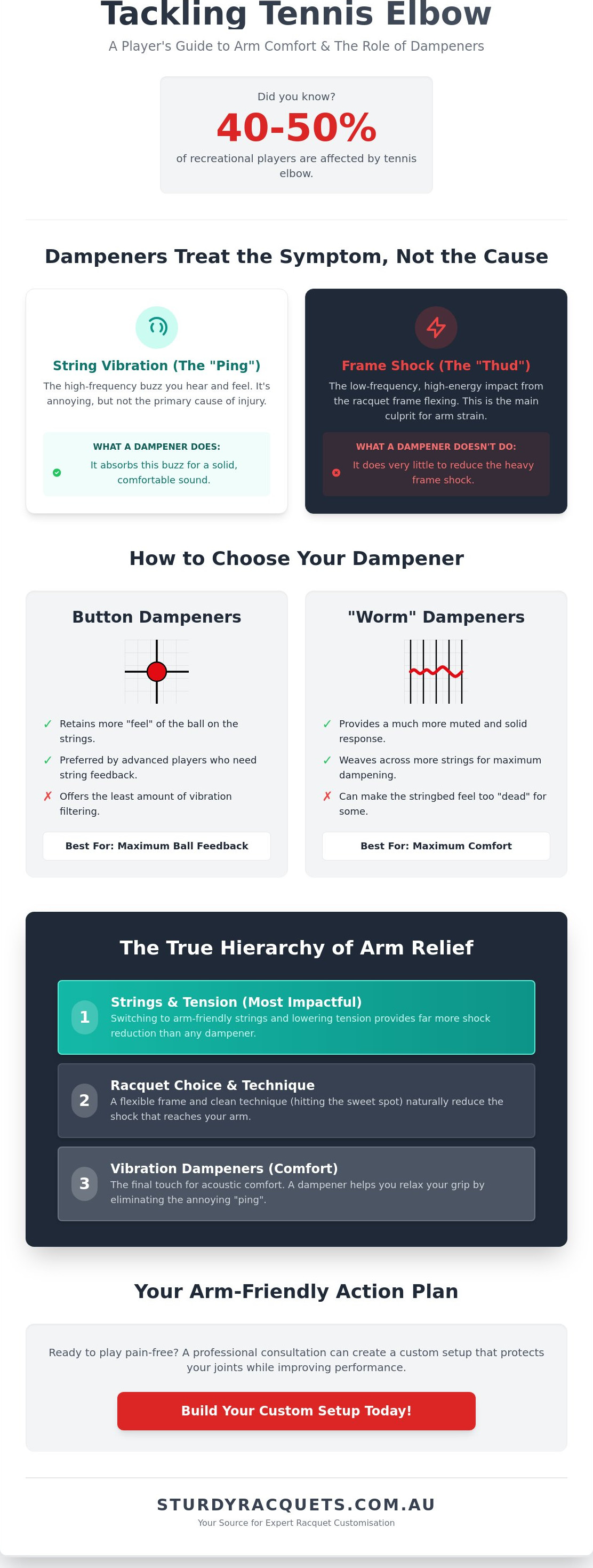
- String Vibration: This is a high-frequency "buzz" that players often find annoying. It's what the dampener is designed to stop.
- Frame Shock: This is a low-frequency, high-energy impact that happens when the racquet frame flexes. This shock is the primary culprit for tendon strain and injury.
Scientific research indicates that string dampening is a tool for comfort rather than a medical cure. It filters out the high-frequency noise but does very little to reduce the heavy frame shock that reaches your elbow. However, reducing that string buzz is still a fantastic way to improve your overall experience on the court.
The Role of Acoustic Comfort in Tennis Elbow
Even though they don't stop frame shock, dampeners still play a huge role in how your arm feels. The sharp "ping" sound of an undampened racquet can actually cause you to subconsciously tighten your grip. This increased muscle tension in the forearm makes you more susceptible to pain and fatigue. By using a dampener to create a muted, solid "thud," you're more likely to maintain a relaxed grip during contact.
This reduction in perceived stress is why many players consider them essential tennis accessories for comfort. When your racquet sounds better, you feel more confident and less tense. Choosing the best vibration dampeners for tennis elbow is a smart move for your mental game and physical relaxation, even if they aren't a standalone solution for injury prevention.
How to Choose the Best Tennis Dampener for Arm Comfort
Selecting the right gear involves more than just picking a cool design or a bright color. While we've established that these accessories don't cure injuries, choosing the best vibration dampeners for tennis elbow can significantly reduce the "buzz" that irritates your tendons. You want a tool that stays put and matches your specific playing style. The goal is to find a balance between a clean feel and the comfort your arm needs to stay on the court.
Button vs. Worm Dampeners: Which Absorbs More?
Button dampeners are the most common style you'll see at the local club. They usually clip between the two central main strings. While they're great for players who still want to "feel" the ball, they offer the least amount of frequency filtering. Advanced players often stick with these because they don't want to lose the feedback of where the ball hit the string bed.
Worm dampeners, or long dampeners, are often the top choice for those with sensitive arms. These stretch across six or eight main strings, providing a much more muted and solid response. Because they cover more surface area, they're much more efficient at killing string vibration before it reaches your hand. If you use an open 16x19 string pattern, a wider worm dampener is often more effective than a small button. However, if you have a dense 18x20 pattern, a long dampener might make the racquet feel too "dead" or unresponsive.
Weight and Material Considerations
Material density plays a huge role in how well a dampener performs. High-density silicone is generally superior to basic rubber for filtering out harsh frequencies. This is because silicone has better energy-dissipation properties. When studying the biomechanics of tennis elbow, we see that repetitive strain is the enemy. A softer, high-quality material helps dull the repetitive sting of the strings during a long match.
You should also consider how the weight of the dampener affects your racquet. Adding a heavy dampener to the bottom of your racquet hoop actually increases the swingweight slightly. While it's only a few grams, it can make a racquet feel more head-heavy. For smaller players using junior tennis racquets, it's best to stick with lightweight button options to avoid making the frame too difficult to maneuver.
Nothing is more frustrating than your dampener flying off during a crucial tie-break. Look for designs with locking mechanisms or deep grooves to ensure a secure fit. This prevents mid-match distractions and keeps your focus on your technique. If you aren't sure which style fits your current frame, you can always speak with our expert racquet specialists for a personalized recommendation.
Top-Rated Vibration Dampeners for Players with Arm Pain
Finding the right accessory can make a world of difference when you're managing discomfort on the court. In 2026, the market for the best vibration dampeners for tennis elbow has evolved to include advanced materials that filter out harsh frequencies more effectively than ever. At Sturdy Racquets, we test every product in our range to ensure it meets the high standards our community expects. Whether you prefer a total mute or just a bit of sound filtering, there's a specialized option designed to keep your arm happy during long sets.
Maximum Absorption: The Best Long-Form Dampeners
Long-form or "worm" dampeners are the gold standard for players in post-injury recovery. These models, such as the VibraKill 2.0 ($10.00) or the Smartsorb ($7.99 - $8.99), weave through six to eight main strings. This extensive contact area provides total "buzz" elimination. To install these for maximum effectiveness, weave them as close to the bottom cross string as possible without touching it. This setup kills string noise across the entire hitting surface, making it the most comfortable choice for sensitive tendons.
Minimalist Comfort: Top Button-Style Options
If you still want to feel the ball but hate the high-pitched ping, high-density button options are your best bet. The Custom Damp ($12.00) is a popular choice because it allows you to adjust the level of dampening with an optional insert. For players using a specific green-themed frame, the Pro Feel Blade 2026 ($7.50 for a 2-pack) offers a sleek, secure fit that rarely flies off. These button styles use dual-density materials to provide a solid "thud" while maintaining the feedback advanced players need for touch shots.
Some of the most exciting innovations in 2026 involve active dampening technologies. The ShockSorb V3 ($22.00) uses specialized "UltraSoft" materials that act like a liquid gel to soak up vibrations dynamically. These premium protective racquet accessories are specifically engineered for maximum frequency filtering. While they carry a higher price point, the durability and relief they offer make them a favorite in our Brooklyn shop. We always recommend choosing a model with a locking hook design to prevent the frustration of losing your dampener mid-point. If you're looking for a total racquet overhaul, we carry a great range of arm-friendly frames that pair perfectly with these top-rated dampeners.
Real Relief: Why Strings and Tension Matter More than Dampeners
While finding the best vibration dampeners for tennis elbow is a great first step for comfort, it won't fix a setup that is fundamentally harsh on your arm. Think of a dampener like the muffler on a car; it changes the sound, but it doesn't change how the engine runs. If you're playing with stiff, dead strings, no accessory in the world can fully protect your tendons from the resulting shock. To find true relief, you need to look at what's actually doing the work: your strings and their tension.
Stiff polyester strings are currently the most popular choice on the pro tour, but they are also the leading equipment-related cause of tennis elbow for recreational players. These monofilament strings are designed for maximum durability and spin, but they have very little elasticity. This means that upon impact, the energy that should be absorbed by the strings is instead sent straight into your forearm. Combining a soft string setup with a high-quality dampener creates a synergy that provides the ultimate protection for your joints.
The Best Tennis Strings for Arm Health
If you're struggling with pain, switching to multifilament or natural gut strings is the single most effective change you can make. Multifilament strings are constructed from thousands of tiny fibers that stretch and cushion the ball on impact. This drastically reduces the vibration and shock that travels up the racquet handle. You can browse our selection of premium tennis strings for arm protection to find a softer alternative to your current setup.
For players who aren't ready to give up the spin and control of polyester, a hybrid setup is an excellent middle ground. By putting a soft multifilament in the crosses and a thinner polyester in the mains, you get the best of both worlds. This configuration offers enough control for aggressive hitting while significantly lowering the overall stiffness of the string bed.
Optimising String Tension for Reduced Impact
Lowering your tension is another powerful way to reduce impact force. Dropping your tension by just 2 to 4 lbs can make the string bed feel much more forgiving. A lower tension allows the strings to deflect more, which increases the dwell time of the ball and spreads the impact over a longer period. This simple adjustment can be the difference between finishing a match in pain or feeling fresh for the next set.
It's also important to remember that strings lose their elasticity over time, even if they don't break. As strings go "dead," they lose their ability to absorb shock, leading to increased vibration. Regular maintenance is key to injury prevention. You can read more about how to time your next service in our guide on professional racquet restringing for better feel. If you're unsure what tension is right for your arm, reach out to our friendly stringing team for a personalized recommendation.
Expert Advice and Customisation at Sturdy Racquets Australia
At Sturdy Racquets, we believe that the right equipment is the foundation of a great game. Our physical store in Brooklyn, Victoria, is a one stop sports shop for tennis lovers who want more than just a transaction. Our expert staff are passionate about the sport and genuinely invested in your arm health. When you're hunting for the best vibration dampeners for tennis elbow, we provide the professional consultation needed to ensure that small accessory fits into a larger, healthier racquet setup. We take the time to listen to your injury history and playing style to make sure you're supported on every hit.
We're proud to serve our local Melbourne community, but our expertise isn't limited to our physical location. We ship our entire range of comfort-focused gear to players in Sydney, Brisbane, Perth, and across regional Australia. Our goal is to help every Australian player find the "right gear" for their body so they can step onto the court with total confidence. Whether you're a beginner or a seasoned club regular, our team is here to help you make smarter, faster buying decisions.
Professional Stringing Services at Our Melbourne Hub
Our in-store customisation process is specifically designed for injury prevention. We know that a "one size fits all" approach doesn't work when you're dealing with persistent arm pain. Our stringing team can help you match the best vibration dampeners for tennis elbow with the perfect string and tension combination for your specific racquet frame. If you're looking for a total gear refresh, we encourage you to use our comprehensive tennis racquet selection guide to identify frames that prioritize arm protection and comfort.
Finding the Right Racquet Balance for Your Game
The balance of your racquet plays a surprising role in how much stress reaches your elbow. Many players mistakenly believe that a lighter racquet is always safer. However, very head-light racquets can sometimes exacerbate elbow issues because they lack the mass to absorb the ball's energy. This forces your forearm muscles to work much harder during impact. We use a specialized comparison tool to help you find frames with softer flex ratings and ideal weight distributions. By choosing a frame that works with your swing, you can reduce the strain on your tendons. Join our community today and "Avoid Unforced Mistakes" with your gear choices. We're here to ensure you stay active and competitive for years to come.
Take Control of Your Comfort on the Court
Managing tennis elbow requires a holistic approach that goes beyond just clipping on a piece of silicone. While finding the best vibration dampeners for tennis elbow is a fantastic way to eliminate annoying string buzz and improve your focus, remember that your strings and tension are the real workhorses for shock absorption. By pairing a high-density dampener with a soft multifilament setup and professional tension adjustments, you create a much safer environment for your arm. This combination allows you to play longer and with significantly less tension in your grip.
At our Brooklyn store in Melbourne, our friendly team provides expert in-store advice to help you fine-tune your racquet for peak performance and safety. We've earned exceptional customer service reviews by helping players of all levels find the perfect balance for their game. We also offer fast free shipping across Australia so you can get your gear quickly. If you're ready to play pain-free, shop our full range of tennis accessories for maximum comfort or visit us for a custom consultation. We're here to help you stay active, competitive, and comfortable on every point.
Frequently Asked Questions
Do professional tennis players use vibration dampeners?
Yes, a significant majority of professional players choose to use dampeners on tour. Statistics show that 58% of top 100 male players on the ATP Tour and 76% of top 100 female players on the WTA Tour use them. Most pros use them for the specific "thud" sound and muted feel they provide. It's a personal preference that helps them maintain focus and consistency during high-stakes matches.
Can a vibration dampener actually fix tennis elbow pain?
A dampener cannot fix the underlying medical causes of tennis elbow. While it's effective at reducing high-frequency string buzz, it doesn't stop the low-frequency frame shock that impacts your tendons. You should view the best vibration dampeners for tennis elbow as tools for comfort and relaxation rather than a medical cure. Real relief usually requires a combination of better technique, softer strings, and professional racquet customisation.
Where is the best place to put a dampener on my tennis racquet?
You must place your dampener outside the pattern of the crossed strings, which usually means at the very bottom of the string bed. The most effective spot is between the two central main strings, just above the throat of the racquet. It's important that the device doesn't touch the first cross string to remain legal for competitive play. This position ensures the dampener mutes the entire string bed effectively.
What happens if my vibration dampener falls off during a match?
If your dampener flies off during a point, you must continue playing until the point is finished. You can't stop play to retrieve it without forfeiting the point to your opponent. Many players find the sudden change in racquet sound and feel very distracting during a rally. It's always a smart move to keep a spare in your bag so you don't have to finish a set without your preferred setup.
Are worm-style dampeners better than button dampeners for arm pain?
Worm-style dampeners are generally better for players with sensitive arms because they contact more strings. A standard button dampener only touches two main strings, while a worm style can stretch across six or eight. This increased surface area provides a much more muted feel and filters out more string vibration. If you find the high-pitched ping of your strings irritating, the extra absorption of a long dampener is often the best choice.
How often should I replace my tennis vibration dampener?
You should replace your dampener when the material becomes brittle, cracked, or loses its elasticity. Over time, exposure to heat and repetitive ball impact causes the silicone or rubber to harden. If you notice it's no longer muting the sound effectively or if it keeps falling out of your strings, it's time for a new one. Most active club players find they need a fresh replacement every six to twelve months.
Does the weight of a dampener change how my racquet swings?
Yes, adding a dampener slightly increases the swingweight of your racquet. Most models weigh between 2 and 7 grams, and because this weight is added to the head of the racquet, it can make the frame feel slightly more head-heavy. While the change is small, sensitive players might notice that the racquet feels a bit more substantial through the air. This extra mass can actually help slightly with stability on off-center hits.
Can I use two dampeners on one tennis racquet for extra comfort?
You can use two dampeners as long as they are both placed outside the pattern of the crossed strings. Some players place one at the bottom and one at the top to achieve an extremely muted feel. However, this often makes the racquet feel very "dead" and removes almost all the feedback you need to feel the ball. Finding the best vibration dampeners for tennis elbow usually involves selecting one high-quality, high-density option rather than using multiple units.
Share:
Tennis Overgrip vs Replacement Grip: The Complete 2026 Guide to Racquet Feel
Custom Tennis Racquet Stringing: The 2026 Guide to Performance & Precision