



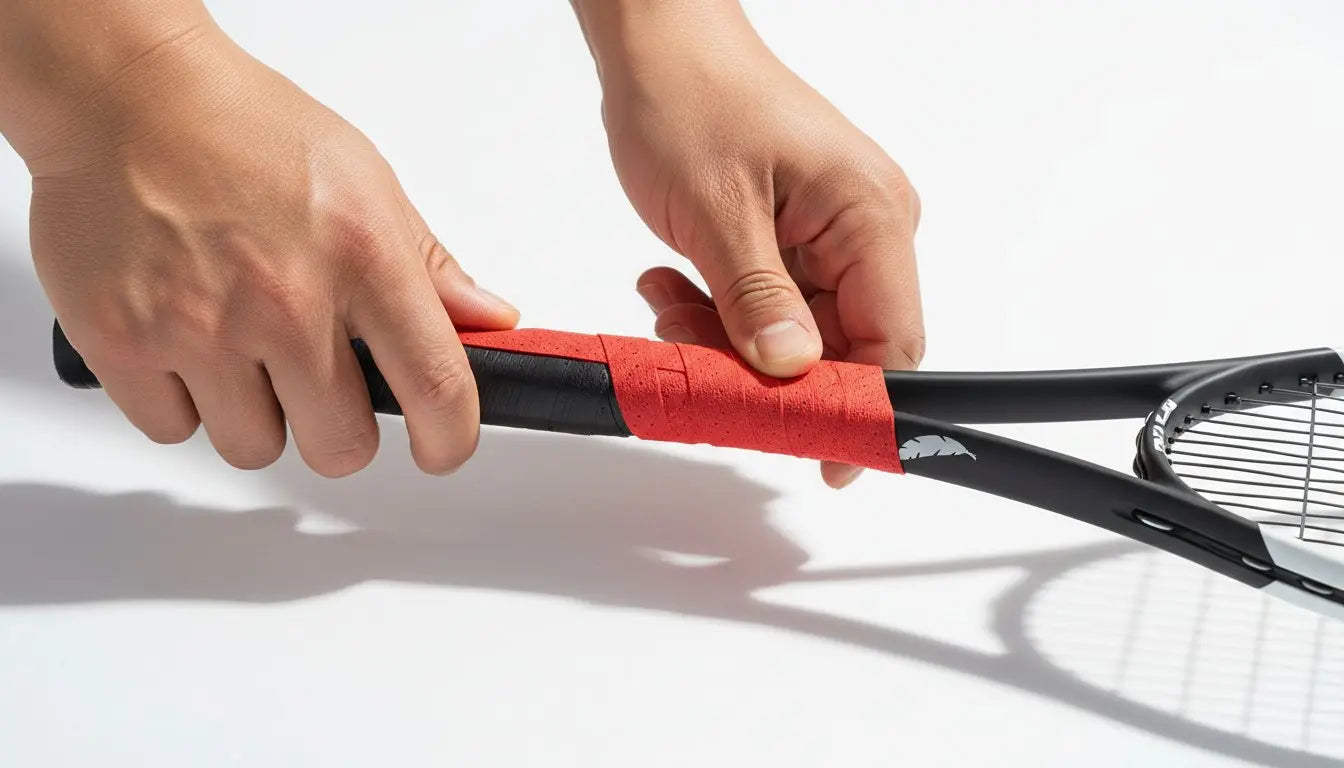
Did you know that overgrips now account for 43.8% of the global grip market? While the industry is on track to reach a $1,200 million valuation by 2035, many players still lose points because their racquet slips at the worst possible moment. You've likely felt the frustration of a racquet twisting on an off-centre hit or slipping during a humid Aussie summer. Understanding the tennis overgrip vs replacement grip debate is the quickest way to fix these issues and regain your confidence.
We'll help you master these differences to improve your comfort, control, and performance on the court. This guide explains when to spend $8.00 on a fresh three-pack and when it's time for a full foundation change. You'll discover how materials like polyurethane, which represented $320 million of the market in 2024, can transform your racquet's feel. We also explore the best tacky overgrips for better control and moisture management to keep your game sharp.
Key Takeaways
- Understand why the replacement grip is your essential foundation for dampening vibrations and protecting your hand from handle edges.
- Master the tennis overgrip vs replacement grip relationship to maintain a secure hold while saving money on long-term maintenance.
- Identify performance cues, like handle twisting during volleys, that signal it's time for a durable base grip for tennis racquets.
- Learn the "sacrificial" overgrip strategy to keep your racquet feeling brand new and tacky during every match.
Tennis Overgrip vs Replacement Grip: Understanding the Two Layers
Every tennis racquet arrives from the factory with a primary layer of padding. This is the replacement grip. It wraps directly around the plastic or wood pallet of the handle, covering the bevels that give the racquet its octagonal shape. Many players then choose to add a thin, secondary wrap on top. This creates the tennis overgrip vs replacement grip dynamic that defines how the racquet feels in your hand. You'll rarely see a club player or professional using a bare handle because it's hard, unforgiving, and lacks the necessary friction to keep the racquet stable during a heavy serve.
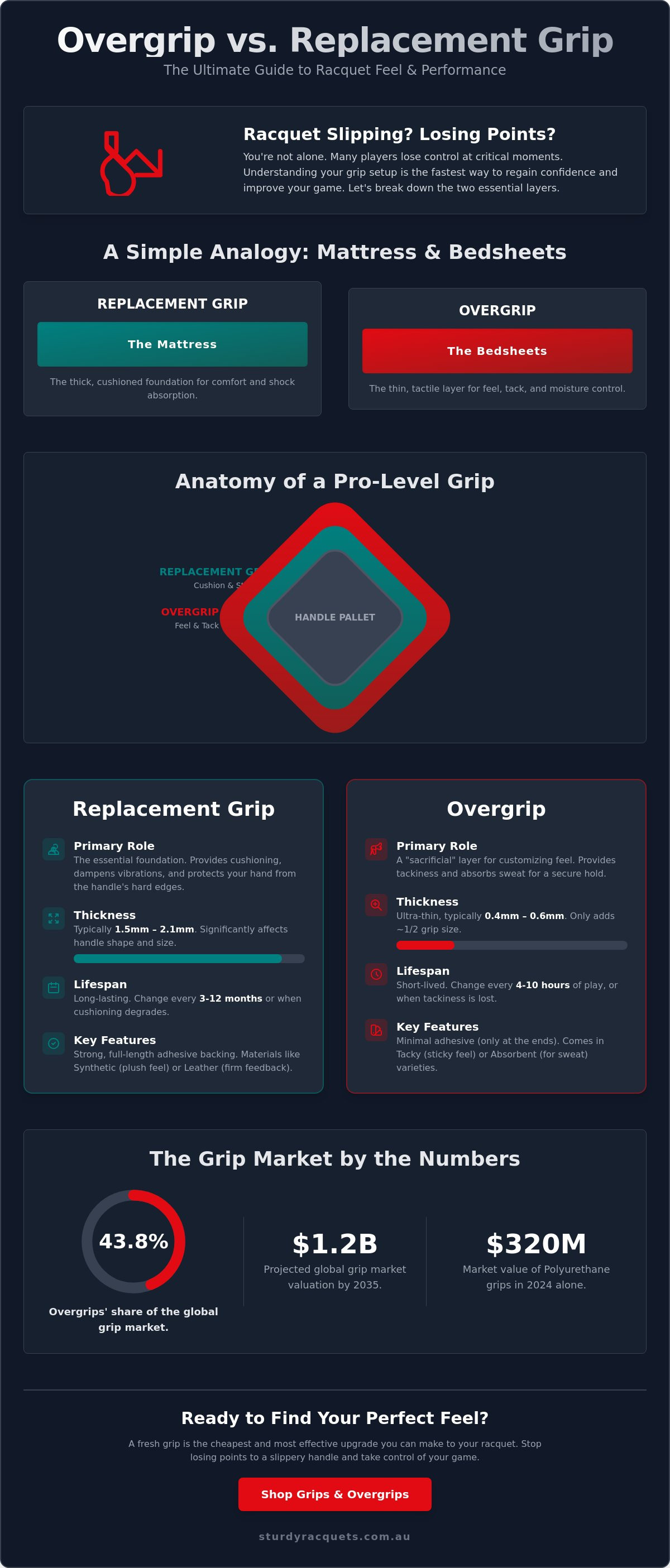
Think of the base grip as the mattress and the overgrip as the bedsheets. One provides the structural support and cushioning, while the other offers the immediate tactile sensation and moisture management. Getting this combination right is the easiest way to customise your equipment without buying a new frame. To see the physical differences and how they affect your hold, watch this helpful comparison:
What is a Replacement Grip?
This layer is your racquet's essential foundation. It's thick, usually measuring between 1.5mm and 2.1mm, to offer maximum shock absorption. It features a strong adhesive backing along the entire length. This ensures the grip doesn't shift or bunch up when you're swinging at full speed. Because it's designed to last for several months, it defines the ergonomic shape of the handle and protects your hand from the sharp edges of the internal pallet. You can find these in our collection of essential tennis racquet maintenance tools.
What is a Tennis Overgrip?
These are ultra-thin wraps, typically measuring between 0.4mm and 0.6mm. They have a minimal impact on the handle circumference, usually only increasing the grip size by about half a size. As a sacrificial layer, they're meant to be swapped out as soon as they lose their "bite" or become saturated with sweat. According to What is an Overgrip?, these wraps come in two main styles: tacky and absorbent. Tacky versions provide a sticky feel for players with dry hands, while absorbent versions use felt-like materials to manage heavy perspiration during hot Aussie summers. Mastering the tennis overgrip vs replacement grip balance ensures you never lose control during a crucial tie-break.
The Replacement Grip: Your Racquet's Essential Foundation
While the overgrip gets most of the attention for its fresh, tacky feel, the replacement grip does the heavy lifting underneath. This layer is the only thing standing between your hand and the raw, hard edges of the graphite or wood handle pallet. Without a high quality base, those octagonal edges would cause immediate blisters and discomfort. Its most critical job is vibration dampening. Every time you strike a ball, shockwaves travel up the frame. A thick, well cushioned replacement grip absorbs these vibrations before they reach your elbow, significantly reducing the risk of fatigue during a long three set match.
The decision between different replacement grip materials depends on whether you value plush comfort or precise feedback. Many modern professional tennis racquets for all levels come pre-strung and pre-gripped with high performance synthetic bases, but advanced players often swap these out to fine tune their equipment's balance. Understanding the tennis overgrip vs replacement grip relationship starts with choosing the right foundation for your specific playing style.
Synthetic Replacement Grips
Synthetic options are the go to choice for the majority of club players. They're engineered with sophisticated foam or gel inserts that provide a "plush" feel. This extra cushioning is ideal if you've struggled with joint pain or simply prefer a softer handle that doesn't bite into your palm. Because they're made from polyurethane and other polymers, they offer consistent thickness and excellent shock absorption right out of the box.
Leather Replacement Grips
Leather is the traditional choice for "old school" enthusiasts and many touring professionals. Unlike synthetic versions, leather doesn't compress as much, allowing you to feel every bevel of the handle with extreme clarity. This "bevel feel" helps you switch between continental and western grips without looking at your hand. It's important to remember that leather is heavier. Installing one can shift the racquet's balance toward the handle, making the head feel lighter. Since raw leather can become slippery when you sweat, it's almost always paired with a high quality overgrip.
Installing a replacement grip is significantly more complex than wrapping a simple overgrip. You have to manage the adhesive backing, maintain perfect tension to avoid lumps, and ensure the overlap is seamless so it doesn't unravel mid game. Because of this, many Melbourne players visit our Brooklyn store to ensure their gear is fitted correctly by an expert. If you're unsure which material suits your game, you can always reach out for expert racquet grip advice from our team.
The Tennis Overgrip: Customising Feel and Performance
Applying a fresh overgrip is the most cost effective performance upgrade you can give your racquet. If you've just picked up a used frame or your current handle feels slick, a new wrap makes the equipment feel brand new for a fraction of the cost of a full service. This is where the tennis overgrip vs replacement grip strategy truly shines. By using the overgrip as a "sacrificial" layer, you protect your more expensive base grip from sweat, salt, and friction. It's much easier on your wallet to change a $4.00 overgrip every week than to replace a $15.00 base grip every month.
Beyond hygiene, overgrips are essential for fine tuning your handle circumference. Most players find that adding a single overgrip increases their grip size by approximately half a step. This small adjustment can prevent the racquet from twisting during heavy volleys without making the handle feel bulky. Expert grip recommendations often suggest this layering technique for players who fall between standard factory sizes. In high humidity regions like Perth or Brisbane, players often swap their overgrips every two matches to maintain a secure hold, as the moisture can quickly compromise the material's integrity.
Tacky vs. Absorbent: Choosing for the Australian Climate
Your choice of wrap should change based on the local weather. Tacky grips are perfect for cooler, drier climates like Melbourne or Adelaide because they offer a sticky sensation that helps you maintain a light but secure hold. Conversely, absorbent or "dry" grips are lifesavers in the humid conditions of Sydney and Queensland. They use felt like materials to wick moisture away from your palm. Tacky grips feel sticky like tape, while absorbent grips feel like a soft towel. Choosing the wrong one in a 35 degree Aussie summer can lead to the racquet flying out of your hand during a serve.
Texture and Thickness Options
Modern manufacturing allows for incredible variety in how a grip feels against your skin. Perforated overgrips feature tiny holes that provide extra ventilation, making them a top choice for players whose hands get hot and sweaty quickly. If you struggle with your hand placement, contoured overgrips include a thin foam ridge on the underside. This creates a raised spiral when wrapped, giving you a much more secure finger lock and helping you find your bevels instinctively. You can explore our full range of high-quality tennis accessories to find the exact texture that matches your palm's needs and your playing style.
Direct Comparison: Which Grip Strategy Suits Your Game?
Choosing between a tennis overgrip vs replacement grip often comes down to your maintenance habits and your budget. While a replacement grip is a long term investment that stays on your racquet for months, the overgrip is a high turnover item. You can install an overgrip in under 60 seconds. A base grip, however, requires precision and patience to align the adhesive correctly without leaving gaps. Most advanced players prefer the hybrid strategy. They use one high quality base layer for structural integrity and a thin overgrip for immediate tactile feedback. Always keep a fresh 3-pack in your durable tennis bag so you're prepared for a sudden loss of tackiness mid match.
Adding multiple layers doesn't just change the size; it changes the physics of your equipment. A standard overgrip weighs between 5 and 8 grams. If you stack three of them, you've added nearly 20 grams to the handle. This shifts the balance point toward the grip, making the racquet feel more head-light. This can be a secret weapon for players who want a racquet that's easier to maneuver during quick volleys at the net. It's a faster way to customise your frame's balance than using lead tape.
Grip Size and Circumference Management
One overgrip adds approximately 1/16th of an inch to your handle circumference. If you have a size 3 handle and need a size 4, using a thick replacement grip plus two overgrips can get you there. You've got to be careful with this "stacking" strategy. Using too many thick layers leads to "rounding off" the bevels. You'll lose the sharp octagonal edges that tell your hand exactly where the racquet face is pointing. This makes it much harder to find your continental grip for a serve or a slice under pressure.
Cost-Benefit Analysis for Club Players
For club players, the numbers are clear. Replacement grips range from $15 to $25 and last 3 to 6 months depending on how often you play. Overgrips cost between $3 and $6 but only last 1 to 4 matches before they lose their performance properties. The industry standard is to swap your overgrip as soon as it shows signs of wear. We recommend that restringing your tennis racquet is the perfect time to evaluate your grip condition. If the base is compressed or the overgrip is bald, swap them out together to keep your equipment in top shape.
Need help finding the right balance for your frame? You can get professional racquet grip advice from our specialist team to ensure your handle feels exactly how it should.
Expert Maintenance: When and How to Change Your Grips
Knowing when to refresh your handle is just as important as choosing the right gear. Most players wait far too long, only realizing there's an issue when the racquet twists in their hand during a crucial volley or serve. Visual cues are your first line of defense. Look for fraying edges, significant discoloration, or "bald" spots where the texture has worn completely smooth. If your white grip has turned a dull grey or brown, it's already past its prime. Beyond performance, hygiene is a major factor. Old grips trap bacteria and salt from your sweat, which can lead to skin irritation or a permanent odor that ruins the feel of your equipment.
The tennis overgrip vs replacement grip maintenance cycle depends entirely on your time on court. While the overgrip is a high turnover item, the base grip also loses its "rebound" over time. A compressed base grip won't absorb shock as effectively, increasing the vibration felt in your arm. If you're unsure about the DIY process, you can always visit Sturdy Racquets in Brooklyn for a professional grip fitting. Our team ensures the adhesive is perfectly aligned and the tension is consistent from top to bottom.
The 2026 Grip Replacement Schedule
To keep your performance consistent, follow this data-driven schedule based on 2026 player trends:
- Casual (1x per week): Change your overgrip every month. Plan for a full replacement grip once a year to maintain handle structure.
- Competitive (3x per week): Swap your overgrip every 1 to 2 weeks. Your replacement grip should be refreshed every 4 months to prevent it from becoming too compressed.
- Elite (5x per week): Professional and high level junior players should change their overgrip every 2 matches. The replacement grip needs a refresh every 2 months to handle the extreme salt and friction levels.
Pro Installation Tips for a Smooth Finish
A poorly wrapped handle can lead to "bunches" that cause blisters. Always start your wrap at the butt cap. Pull the material with consistent, firm tension as you rotate the racquet. You should overlap the layers by exactly 1/8th of an inch. This creates a seamless feel without making the handle lumpy. When you reach the top, use the finishing tape correctly by wrapping it twice around the very end of the grip. This ensures it doesn't peel off during a high pressure tie-break. Just like maintaining your handle, choosing the right tennis shoes requires regular evaluation of wear and tear to prevent injury. Keeping all your gear in top condition is the best way to stay competitive on the court.
Master Your Racquet Control Today
Your grip is the only physical link between your arm and the ball. By mastering the tennis overgrip vs replacement grip dynamic, you've taken a massive step toward eliminating unforced errors caused by slipping or handle twisting. Remember that your replacement grip is the silent hero absorbing shock, while your overgrip is the frontline defense against moisture and wear. Whether you're a casual player hitting once a week or an elite athlete on the court daily, sticking to the 2026 maintenance schedule ensures your equipment never lets you down.
If you're still unsure about the right texture or thickness for your palm, our team is here to help. We offer expert in-store grip fitting at our Brooklyn location to ensure your racquet feels perfect. If you're ordering from home, we provide fast shipping across Australia so you can get back on the court with confidence. Our knowledgeable team of racquet specialists is always ready to provide the advice you need to avoid mistakes and play your best tennis yet.
Ready to refresh your handle? Shop our full range of high-performance tennis grips and accessories or reach out for a custom recommendation today. Let's get your gear sorted so you can focus on winning that next tie-break!
Frequently Asked Questions
Can I use a tennis racquet with just an overgrip?
You shouldn't play with only an overgrip wrapped around the raw handle pallet. Overgrips are roughly 0.5mm thick, which isn't enough to cushion your hand from the hard graphite or wood edges. Without a proper base, you'll likely develop blisters within 30 minutes of play and risk long term joint fatigue. Always ensure a cushioned foundation is in place before adding your top layer.
How many overgrips can I put on a tennis racquet?
Most players stick to one overgrip, but you can use two if you need to increase your handle size by about 1/8th of an inch. Using more than two layers is generally discouraged because it rounds off the handle's octagonal bevels. When those edges disappear, it's much harder to find your grip alignment instinctively during fast paced points. If you need a much larger handle, consider a professional grip build up instead.
Do overgrips make the grip size bigger?
Yes, adding a single overgrip typically increases your handle circumference by approximately 1/16th of an inch. This is roughly half a grip size. It's a fantastic way to customise a racquet that feels slightly too small. However, if you find yourself stacking multiple layers to get a comfortable hold, you might be using the wrong base racquet size for your hand.
Which overgrip is best for very sweaty hands?
For players with very sweaty hands, a dry or absorbent overgrip is the superior choice. These grips feature a felt like texture that wicks moisture away from your skin, much like a towel. While tacky grips can become slippery when wet, absorbent versions actually provide more traction as they soak up perspiration. This is essential for maintaining control during high intensity matches in humid Australian conditions.
How do I know if I need a new replacement grip or just an overgrip?
You need a new replacement grip if the base layer feels compressed, lumpy, or if you can feel the hard pallet edges through the padding. If the handle just feels slick or looks dirty on the surface, a fresh overgrip will usually solve the problem. In the tennis overgrip vs replacement grip maintenance cycle, the base should be swapped every 4 to 6 months for competitive players to maintain adequate shock absorption.
Should I remove the old grip before putting on an overgrip?
You should never remove the thick replacement grip before adding an overgrip; you simply wrap the new layer over the existing base. However, you must always remove the old overgrip before applying a fresh one. Stacking a new overgrip on top of a dirty, worn out one creates a spongy, imprecise feel and can lead to unhygienic bacteria buildup within the layers.
Are tennis grips the same as pickleball grips?
Tennis and pickleball grips use almost identical materials, but the main difference is the length of the wrap. Because pickleball paddles have much shorter handles than tennis racquets, you'll often have a lot of excess material left over if you use a tennis wrap. You can easily trim a tennis overgrip to fit a pickleball paddle, making them a versatile choice for multi sport athletes who play both.
Is there a difference between tacky and dry grips?
There is a significant tactile difference between these two categories. Tacky grips have a sticky coating designed to adhere to your palm, which is perfect for players with dry hands or those playing in cool weather. Dry grips have a velvety, non slip texture that thrives on moisture. Choosing the right one in the tennis overgrip vs replacement grip debate depends entirely on your personal sweat levels and local climate.
Share:
Best Tennis Racquets for Flat Hitters 2026: Budget vs. Performance Guide
Best Vibration Dampeners for Tennis Elbow: 2026 Comfort & Relief Guide