



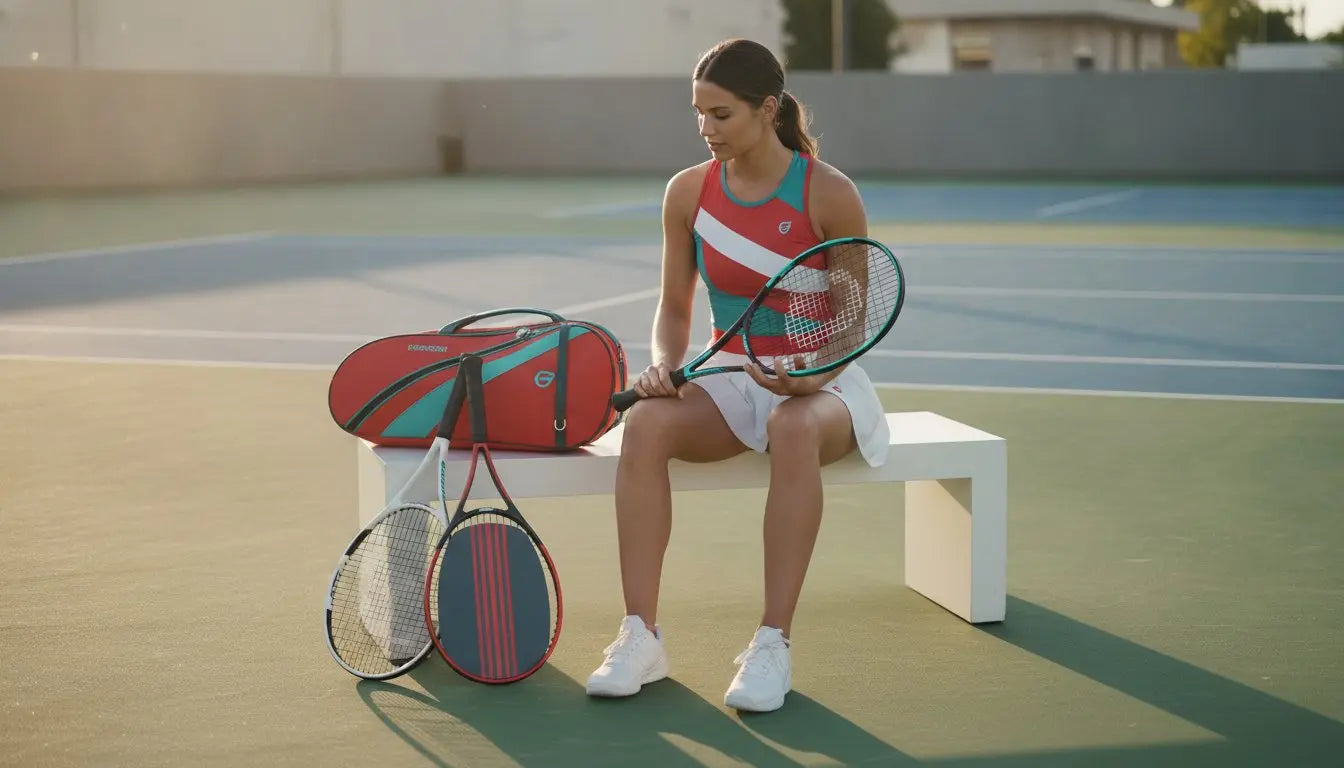
What if the most expensive racquet used by your favorite pro is actually the worst possible choice for your game? It's a common trap; many players end up with a frame that feels like a plank of wood or, worse, causes nagging arm pain after just one set. If you've ever felt overwhelmed by technical jargon or confused between power and control models, you aren't alone. Learning how to choose a tennis racquet is about more than just picking a cool design. It's about matching a frame's DNA to your unique swing style.
We're here to make sure you never waste money on the wrong equipment again. This guide will help you master the technical specifications of modern tennis frames, from understanding why beginners often need a head size of at least 100 square inches to finding the right weight for your swing. You'll learn how to test these specs on-court to find your perfect match. We'll explore the latest 2026 trends, including new stability fibers and aerodynamic shapes. You'll also learn why testing performance tennis racquet demos is the only way to feel the response before you buy. By the end, you'll have the confidence to select a frame that improves your performance and keeps you healthy on the court.
Key Takeaways
- Identify the ideal balance of power and control by matching your frame's specifications to your natural swing speed.
- Decode the impact of head size and weight categories to ensure your new equipment provides the right level of stability.
- Master the "index finger test" to select the correct grip size and learn why professional stringing is vital for your success.
- Discover how to choose a tennis racquet based on your current skill level rather than being swayed by cosmetic designs or professional endorsements.
- Utilize a demo program to test modern tennis frames on-court, ensuring the feel matches your expectations before you commit.
The Foundation of Choice: Balancing Power and Control for Your Game
Selecting a new frame is a journey into the physics of your own swing. Every racquet sits somewhere on a spectrum between raw power and surgical control. If you're wondering how to choose a tennis racquet that actually helps your game, you must first understand this fundamental trade-off. Power-oriented frames are designed to do the heavy lifting for you, using stiff materials and larger head sizes to catapult the ball across the court. Control-oriented frames, on the other hand, are flexible and demanding; they offer precision but require the player to provide the physical strength and swing speed to generate depth.
Modern frames generally fall into three distinct categories based on these characteristics:
- Game Improvement Racquets: These feature oversize heads (105+ square inches) and lightweight frames. They offer maximum "forgiveness," meaning you still get decent results even if you hit the ball slightly off-centre.
- Tweener Racquets: The most popular choice for recreational club players. They offer a blend of power and control with midplus head sizes (98 to 104 square inches) and moderate weights.
- Player's Racquets: These are heavy, thin-beamed frames with small heads (95 to 98 square inches). They are built for advanced competitors who have the technique to hit the sweet spot consistently.
Determining Your Unique Swing Style
Your swing path is the most important factor in this decision. Players with short, compact strokes often struggle to get the ball past the service line without a powerful frame. Conversely, if you have a long, loopy, and fast stroke, a power-heavy racquet will likely cause your shots to fly long. Beginners should almost always prioritise tennis racquets for new players that feature larger sweet spots. This extra hitting area reduces the vibrations that travel up the arm, protecting your elbow and shoulder as you develop your technique. Choosing a frame that matches your natural rhythm ensures you don't have to over-swing, which is a leading cause of tennis elbow.
The Power vs. Control Trade-off
The secret to a racquet's personality often lies in its stiffness, measured by the RDA rating. A stiffer frame bends less upon impact, returning more energy to the ball for increased pace. While this sounds ideal, advanced baseliners often seek high-performance tennis frames with lower stiffness ratings. These flexible frames allow the ball to "dwell" on the strings longer, providing the feel needed for precise placement and heavy topspin. The evolution of tennis racquet technology has allowed manufacturers to create frames that feel stable without being overly rigid. Whether you're a defensive baseliner needing depth or an all-court player looking for touch at the net, your racquet's stiffness and head size will dictate how much effort you need to put into every ball. Understanding how to choose a tennis racquet based on these specs is the first step toward a more consistent game.
Decoding Technical Specs: Head Size, Weight, and Balance Points
Once you understand the power and control balance, you'll need to look at the numbers printed on the frame. Head size is the most visible spec, and it significantly impacts how much room for error you have. Modern frames are categorized into three main sizes. Mid-size frames (under 98 square inches) offer pinpoint precision for experts. Midplus frames (98 to 104 square inches) are the industry standard for versatility. Oversize frames (105 square inches and up) provide a massive sweet spot for those who want effortless depth. When figuring out how to choose a tennis racquet, remember that a larger head size usually translates to more stability on off-centre hits.
Weight is where many players get confused. There's a big difference between static weight (what the racquet weighs when sitting on a scale) and swing weight. Swing weight describes how heavy the racquet feels when you're actually moving it through the air. A racquet might be heavy on the scale but feel light during a match if most of that weight is concentrated in the handle. This is deeply rooted in the science of racquet performance, where torque and mass distribution dictate how much shock reaches your arm. Most standard frames are 27 inches long; however, some players prefer extended frames for extra reach and leverage on serves.
Finding Your Optimal Frame Weight
Your physical strength and swing style should dictate your frame's weight. Racquets typically range from 255g for juniors or beginners to over 340g for tour-level players. We find that intermediate tennis racquet models usually sit in the 285g to 300g range. This weight class offers enough mass to stay stable when you're facing heavy-hitting opponents, but it's still light enough to swing for three sets without fatigue. If you're still unsure which spec matters most for your game, our team of experts can help you compare professional tennis equipment to find your match.
Understanding Racquet Balance and Manoeuvrability
Balance is measured in "points" head-light or head-heavy. Head-light racquets have more weight in the handle, making them incredibly easy to flick at the net for quick volleys. They're the preferred choice for all-court players. Head-heavy frames have more mass in the hoop, which helps beginners maintain depth on groundstrokes without needing a massive swing. Finding the right balance is essential for long-term health; an improperly balanced frame can lead to increased torque on the wrist, contributing to injuries like tennis elbow. Learning how to choose a tennis racquet with the right balance point will make your time on the court much more enjoyable.
- Head-Light (HL): Better for net play and fast swings.
- Head-Heavy (HH): Better for baseline power and stability.
- Even Balance (EB): A neutral feel for all-around performance.
The Final Fit: Grip Size and Stringing Fundamentals
Getting the technical frame specs right is only half the battle. If the racquet doesn't fit your hand or the strings don't match your style, even the most advanced frame will feel like a liability. When you're learning how to choose a tennis racquet, the grip size is your first point of physical contact. In Australia, we use standard sizing ranging from Grip 0 through Grip 5. To find your fit, use the "index finger test." Hold the racquet in your hitting hand using an Eastern forehand grip, where your palm is on the same bevel as the string face. You should be able to fit the index finger of your other hand comfortably in the space between your ring finger and your palm. If the gap is too small, the racquet will twist in your hand. If it's too large, you'll struggle to snap your wrist on serves.
The way your racquet is strung determines how it actually performs. An open 16x19 pattern provides more "bite" for topspin players, while a dense 18x20 pattern offers better durability and control. This is where tennis racquet physics comes into play; the spacing of the strings affects the trampoline effect and how much vibration reaches your arm. We consider high-quality tennis strings to be 50% of the racquet's performance. Investing in professional tennis racquet stringing allows you to fine-tune your equipment to your specific playing style.
How to Measure Your Correct Grip Size
If you don't have a racquet nearby to test, you can use a ruler. Measure from the middle crease of your palm to the tip of your ring finger. It's almost always better to choose a slightly smaller size because you can easily customize the feel with tennis overgrips and accessories. Sanding down a handle that is too large is nearly impossible. Using the wrong size isn't just uncomfortable; it's a major risk factor for wrist and elbow strain. A grip that's too small causes you to squeeze too hard, while one that's too large limits your natural range of motion.
String Patterns and Tension Strategies
In the harsh Australian climate, your strings will lose tension faster on hot days. If you play primarily on hard courts, you might want a slightly higher tension to maintain control. Conversely, synthetic grass courts often play slower, meaning you might drop your tension to gain extra power. Open patterns are fantastic for generating spin, but they do break strings more frequently. Understanding how to choose a tennis racquet involves balancing these maintenance needs with your on-court goals. Always consider the surface you play on most frequently before deciding on your final string setup.
Avoiding Common Mistakes: Why Specs Aren't Everything
Mastering technical specifications is a great start, but it's easy to get distracted by flashy marketing. One of the biggest hurdles in learning how to choose a tennis racquet is the "pro endorsement trap." We often see club players struggling with heavy, stiff frames just because their favorite world-class athlete uses them. Choosing a frame based on aesthetics or a cool color scheme is another common pitfall. A racquet might look stunning in your bag, but if the frame geometry doesn't suit your swing, your game will suffer. You're buying a tool for performance, not a fashion accessory.
Your equipment needs to work as a complete system. Your racquet choice should align with your movement patterns and the specialised tennis footwear you wear. If you're an agile player who covers the whole court, you need a frame that enhances that speed rather than weighing you down. Buying from unverified retailers is another risk. These sellers often lack after-sales support and can't provide the expert guidance needed to help you avoid a costly mistake. If you want to ensure your next purchase is backed by genuine knowledge, explore our full range of premium tennis equipment today.
The Pro Player Endorsement Trap
It's a poorly kept secret in the industry that many professionals use "paint jobs." This means their racquet looks like the latest model on the shelf, but it's actually an older, highly customized frame tailored specifically to their elite-level needs. These frames are often far too heavy and demanding for the average player. Instead of following marketing hype, focus on your own skill level. A versatile tennis racquet for all levels is almost always a more effective choice for club competitors. It provides the forgiveness you need to keep the ball in play during tight matches while still offering room to grow your skills.
Why You Must Feel the Frame in Action
Specs on a website can't tell you how a racquet actually vibrates when you strike the ball. This "feedback" is entirely subjective. Some players love a crisp, stiff feel, while others prefer a plush, dampened response. You also need to assess "plow-through," which is the racquet's ability to resist twisting when you hit a heavy ball. These sensations can only be discovered during a hitting session. When you're figuring out how to choose a tennis racquet, being confident in the way the frame responds to your touch is a massive psychological advantage. This confidence allows you to swing freely, knowing the racquet will do exactly what you expect.
Finding Your Perfect Match with a Tennis Racquet Demo Program
You can read every spec sheet and watch every review; however, nothing replaces the feeling of a racquet in your hand during a real match. The "Try Before You Buy" philosophy is the gold standard for players in 2026. It moves the decision from a theoretical exercise to a practical one. By taking multiple frames onto the court, you can see how the balance points and swing weights we discussed earlier actually translate into your game. Learning how to choose a tennis racquet becomes much simpler when you can compare a Babolat Pure Aero and a Wilson Pro Staff side-by-side. You'll quickly notice which frame complements your natural swing and which one feels like hard work.
Side-by-side testing is essential because it highlights the subtle differences between manufacturers. One brand might offer a crisper feel on volleys, while another provides the extra "plow-through" you need on your backhand. Our demo process is designed to be seamless, allowing you to pick up several frames and test them under the same conditions. This eliminates the guesswork and ensures that when you finally invest in a new frame, it's a choice backed by on-court evidence rather than just marketing promises.
Standout Models in the Demo Collection
Our current demo fleet features the most sought-after technology of the year. You can compare the massive spin potential of the Babolat Pure Aero against the surgical precision of the Tecnifibre TF-40. If comfort is your primary concern, evaluate the plush feel of the Wilson Ultra Pro versus the rock-solid stability of the Dunlop FX 500. We haven't forgotten the next generation either. We carry a wide range of junior tennis racquet options to help young developing players find a frame that supports their growing technique without risking injury.
How the Demo Program Works
Getting started is straightforward and customer-focused. You can book your preferred models online for a 2-day on-court trial. Testing on your local court provides the most accurate performance data because you're playing in a familiar environment against your usual hitting partners. There's a significant financial benefit too; we apply your demo fee toward your final racquet purchase if you buy within 30 days. This makes the testing process essentially free once you find your perfect match. It's the most reliable way to master how to choose a tennis racquet for your specific needs. Ready to find your next frame? Book your tennis racquet demo session today and play with total confidence.
Step Onto the Court with Total Confidence
Finding the right frame shouldn't feel like a guessing game. You've now mastered the interplay between power and control; you also know why grip size is critical for your long-term health. Mastering how to choose a tennis racquet is ultimately about combining those technical specifications with real-world testing. This approach ensures your equipment doesn't just look good in your bag; it performs when you're facing a break point in the heat of a match.
Our team is here to support every step of your journey. With more than 100 demo racquets available, you can validate your choice on-court before making a commitment. Once you've found your match, our professional in-store stringing services ensure your frame is tuned to your exact preferences. You'll always find expert guidance from passionate racquet sports specialists who are as invested in your game as you are.
Explore our tennis racquet demo collection and try before you buy to take your game to the next level. We can't wait to see you find your perfect match and start hitting with more precision and power than ever before.
Frequently Asked Questions
How do I know if a tennis racquet is too heavy for me?
You can tell a racquet is too heavy if you're consistently hitting the ball late or feeling unusual fatigue in your wrist and forearm. If your swing feels sluggish during the third set, the frame's mass is likely exceeding your physical limit. Most recreational players find their sweet spot between 285g and 295g. Moving to a lighter frame helps maintain your swing speed and prevents long-term joint strain.
What is the best tennis racquet for someone with tennis elbow?
The best choice is a flexible frame with a stiffness rating below 63 RDA. Flexible racquets absorb more impact energy instead of transferring the shock directly to your tendons. You should also look for a larger head size of at least 100 square inches and pair it with soft multifilament strings. This combination provides a dampened feel that is much kinder to your arm during long hitting sessions.
Should I buy a racquet based on my favourite professional player?
No, you shouldn't because professional frames are often far too heavy and demanding for club players. While the "paint job" looks identical to what's on the shelf, the actual specs are customized with lead tape and specific balances. A pro-level frame weighing over 330g will likely hinder your development. You'll see much better results using a "tweener" racquet that offers more forgiveness and easier power.
How often should I restring my new tennis racquet?
A good rule is to restring your racquet as many times per year as you play per week. If you hit the court twice a week, you need fresh strings at least twice a year. Strings lose their elasticity and "snap-back" ability long before they actually break. Playing with dead strings forces you to swing harder for the same depth, which is a common cause of injury.
What is the difference between a 16x19 and an 18x20 string pattern?
A 16x19 pattern is designed for spin, while an 18x20 pattern is built for maximum control. The open 16x19 grid allows the strings to move more, "gripping" the ball to create heavy topspin. The denser 18x20 pattern provides a more stable hitting surface for players who hit flatter shots. Understanding these patterns is a vital part of how to choose a tennis racquet that matches your technique.
Is it better to have a head-heavy or head-light racquet?
It depends on whether you prefer baseline stability or quickness at the net. Head-light racquets have more weight in the handle, making them easy to flick for volleys and fast serves. Head-heavy racquets have more mass in the hoop, which helps provide effortless depth on groundstrokes. Many modern frames now use an even balance to give all-court players a versatile blend of both characteristics.
How much should I expect to spend on a high-quality tennis racquet in 2026?
Performance tennis racquets in 2026 generally cost between $270 and $360 depending on the technology included. For example, new models from major brands like Yonex or Babolat often sit at the higher end of this range due to advanced carbon composites. When learning how to choose a tennis racquet, remember to budget for professional stringing. Investing in a premium frame ensures better durability and a more consistent response over time.
Can children use adult-sized tennis racquets if they are tall?
Children should only move to a 27-inch adult racquet if they have the physical strength to handle the weight without losing form. Being tall doesn't mean their wrist and elbow joints are ready for the torque of a heavy frame. Most juniors are better off with a lightweight "lite" version of an adult racquet. This allows them to maintain proper technique while they continue to grow and develop their swing.
Share:
Pickleball Paddle Grip Size Importance: The Ultimate 2026 Performance Guide
Elongated vs Standard Pickleball Paddle: The Ultimate 2026 Comparison Guide