



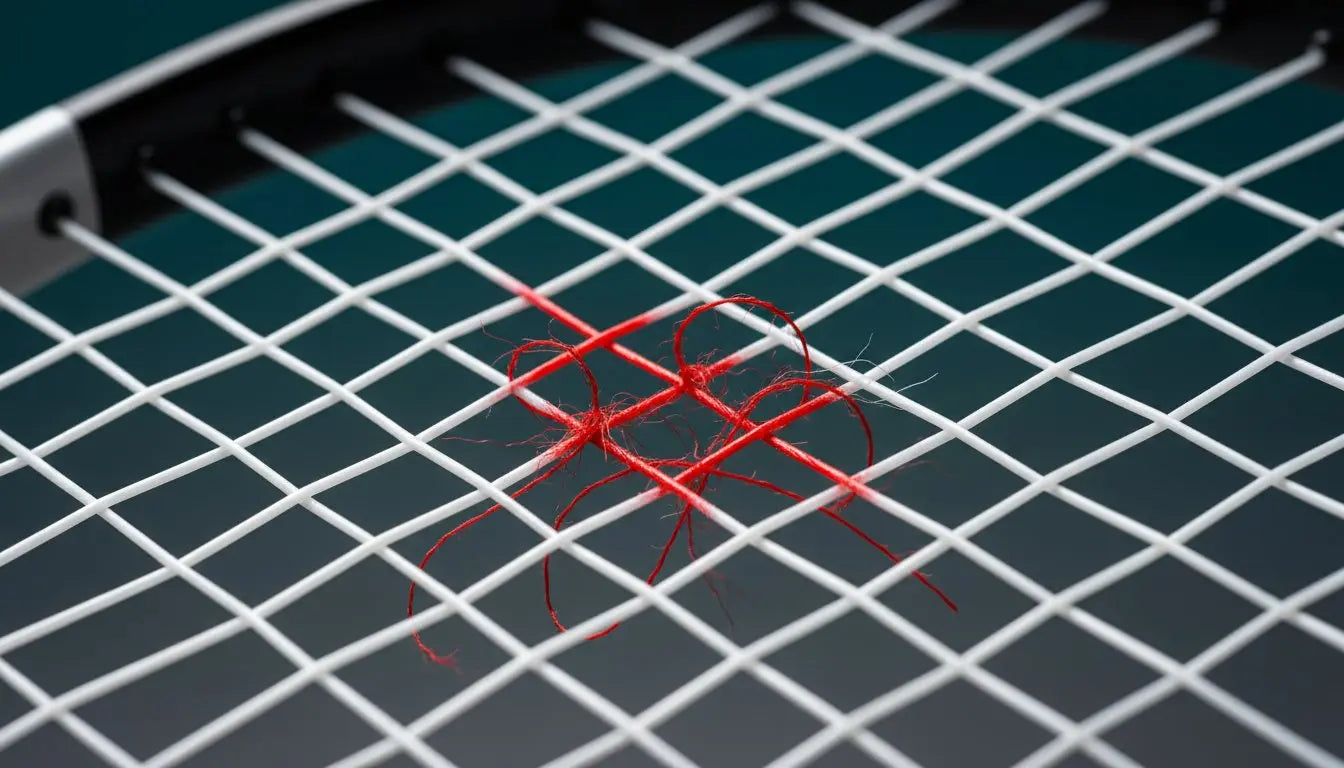
Does it feel like your racquet has a mind of its own lately? One minute your forehand is perfect, the next it?s sailing long for no reason. If that satisfying 'pop' has been replaced by a dull thud, and you're working twice as hard for spin, the culprit might not be your technique. Many players across Australia overlook this simple fix, but the playing with old tennis strings risks go far beyond a few lost points-they can impact your confidence and even lead to nagging injuries like tennis elbow.
We get it; restringing can feel like an unnecessary expense and a bit of a hassle. But what if it's the single best investment you can make for your performance and your health? In this guide, our team of passionate experts will break down the top five ways dead strings hurt your game and your body. You'll learn the clear, unmissable signs that it's time for a restring, giving you the confidence to step onto the court knowing your gear is working with you, not against you.
Key Takeaways
- Understand the science behind "dead" strings and why they lose the power and feel you rely on.
- Discover how worn-out strings directly sabotage your control and power, leading to more unforced errors on court.
- Learn why protecting your arm is the most critical reason to avoid the playing with old tennis strings risks; they transfer far more shock on impact.
- Use our simple checklist to spot the clear warning signs that your racquet is due for a restring.
- Adopt a proactive restringing schedule to keep your gear in top condition and your game sharp all year round.
The Invisible Decline: The Science Behind 'Dead' Tennis Strings
Ever hit a forehand that felt perfect, only to watch it sail long for no reason? Or maybe you've noticed you have to swing much harder just to get the ball deep into your opponent's court. If so, you've likely experienced 'dead' strings. It?s that dull, lifeless feeling where the ball just doesn't pop off the racquet like it used to. This isn't just in your head; it's a real, measurable decay in your equipment's performance.
To see how this impacts your game and your arm, check out this fantastic explanation from the team at Tennis Spin:
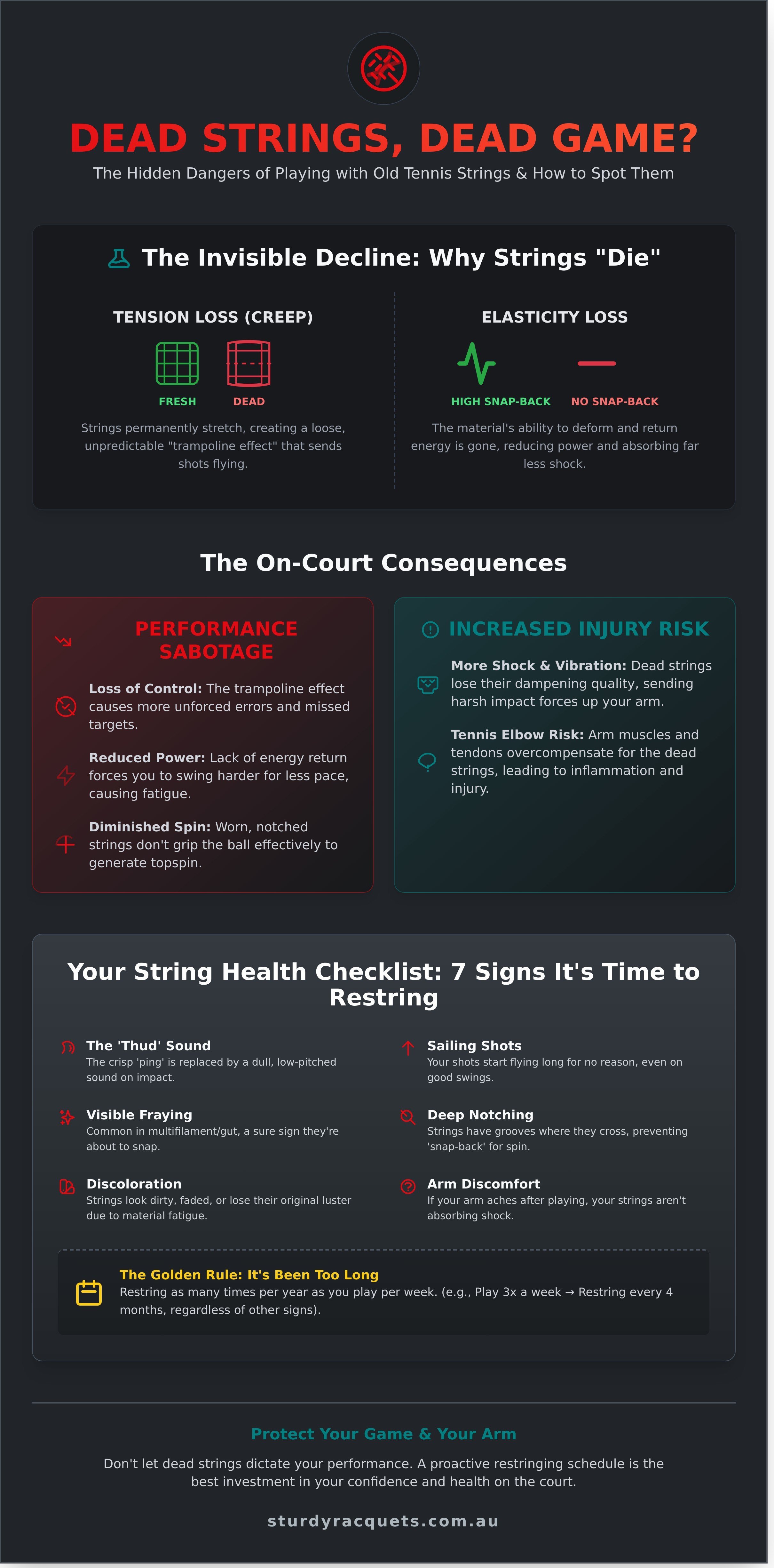
The main culprit behind dead strings is a process called creep-an irreversible loss of tension. From the moment your racquet comes off the stringing machine, the strings are under constant stress and begin to stretch permanently. This gradual elongation is the primary reason your racquet's performance changes over time, even when it's just sitting in your bag.
String creep is the gradual, permanent stretching of your strings under constant tension, robbing your racquet of its designed control and predictability.
Tension Loss vs. Elasticity: The Two-Fold Problem
Think of a brand-new rubber band: it's tight and snaps back instantly. Now, picture one that's been stretched out for weeks. It's longer, looser, and has lost its 'snap'. This is exactly what happens to your strings, creating two distinct issues:
- Tension Loss: As strings lose tension, the stringbed becomes softer and acts more like a trampoline. This increases the launch angle of the ball, often causing you to hit long. You lose the crisp control you once had.
- Elasticity Loss: This is about the material's ability to deform and snap back. When elasticity is gone, the stringbed doesn't pocket the ball as effectively. This reduces power, dampens feel, and forces your arm to absorb more shock. This lack of cushioning is one of the biggest playing with old tennis strings risks.
How String Material Affects Its Lifespan
Not all strings die the same way, and understanding this can help you choose the right setup for your game. The way a string degrades is directly tied to its material composition. For a deeper look into the science behind tennis strings, you'll see how different polymers and natural fibres respond uniquely to impact and tension.
- Polyester: A favourite among advanced players for its control and spin. However, it loses tension and elasticity very quickly. A poly string often feels 'dead' long before it ever breaks.
- Multifilament/Synthetic Gut: These strings are much better at holding tension and are far more comfortable than polyester. Their tell-tale sign of ageing is fraying, which happens just before they snap.
- Natural Gut: The gold standard for holding tension and providing exceptional feel and power. Its main weakness is its susceptibility to moisture and the harsh Australian climate, which can shorten its fantastic lifespan.
Risk #1: How Old Strings Sabotage Your Performance on Court
Ever had one of those days on court where you feel like you?re hitting the ball well, but it just won?t land in? You take a full, confident swing, and the ball sails long for no apparent reason. This is one of the most common frustrations in tennis, and it?s a classic sign that your strings are past their prime. Fresh strings act like a responsive, controlled surface. Old strings, having lost significant tension, behave more like a loose, unpredictable trampoline.
This loss of resilience creates a vague, disconnected feeling at impact. Instead of the satisfying feeling of the ball "pocketing" in the strings, you get a dull thud. This disconnect is where the real trouble begins, directly impacting your control, power, and overall confidence.
Loss of Control and Consistency
The biggest on-court problem caused by old strings is a dramatic loss of control. A fresh string bed provides a predictable launch angle, allowing you to swing freely and trust where the ball is going. When strings go dead, that predictability vanishes. The "trampoline effect" sends the ball flying off your racquet at an inconsistent angle, leading to a frustrating number of unforced errors. To compensate, you might start aiming further inside the lines and taking tentative pokes at the ball. This defensive mindset kills your confidence and prevents you from playing your best, aggressive tennis. Ultimately, one of the biggest playing with old tennis strings risks is that you start doubting your own technique instead of your gear.
Diminished Spin and Power
Modern tennis relies heavily on spin to control the ball and power to win points. Old strings cripple your ability to do both. Spin is generated when strings grip the ball and "snap back" into position. Dead strings lose this elasticity; they feel mushy and simply don't have the energy to snap back effectively. Your topspin shots won't dip down into the court, and your slices will float instead of bite.
To make up for this, you're forced to swing much harder to generate the same pace and rotation you used to. This is a recipe for disaster. Over-hitting throws off your timing, technique, and leads to even more errors. Worse, it forces your body to do all the work the strings should be doing. Forcing yourself to swing harder not only ruins your rhythm but also significantly increases the load on your arm, a finding supported by detailed research on string tension and injury. Instead of letting your racquet be a finely tuned tool, you end up fighting it on every single shot.
Risk #2: The Physical Toll and Increased Injury Risk
Forget about hitting the ball out for a moment. This is the single most important reason to change your strings regularly. While poor performance is frustrating, one of the biggest playing with old tennis strings risks is something far more valuable: your health.
Fresh strings act like a tiny shock absorber, flexing on impact to cushion the ball and return energy. When strings go "dead," they lose this essential elasticity. The result? A harsh, unforgiving string bed that transfers significantly more shock and vibration directly to your hand, wrist, elbow, and shoulder. This isn't about performance anymore; it's about prevention.
The Direct Link to Tennis Elbow and Wrist Pain
Think of hitting a ball with a wooden plank versus a trampoline-that's the difference between dead and fresh strings. The harsh vibrations from old strings fatigue the small muscles and tendons in your forearm with every single shot. To make matters worse, you'll subconsciously grip the racquet tighter to control the unpredictable response, creating a perfect storm of vibration and tension. This combination is a well-known recipe for common tennis injuries like tennis elbow and chronic wrist pain. For players using polyester, understanding the dangers of playing with poly strings that have lost tension is especially critical, as their stiffness can amplify these harmful forces.
Forced Overcompensation and Poor Biomechanics
When your strings lose their power and "pop," your body has to make up the difference. To get the same depth on your shots, you'll start muscling the ball, forcing your arm and shoulder to do work that your strings and technique should be handling. This leads to unnatural strain and can easily lead to rotator cuff issues or other overuse injuries. Even worse, you're actively training your body to use incorrect, inefficient form. You're building bad habits that can be incredibly difficult to unlearn later, long after you?ve finally restrung your racquet.
Ultimately, a regular restring isn't a luxury; it's essential maintenance for your body. It's a smart, simple investment in your long-term health on the court, helping you play the game you love for years to come, pain-free.
This focus on long-term health also extends to post-game recovery. Many athletes incorporate natural wellness products into their routines, and the premium herbal blends from Rastaman Stew offer a great way to relax and recuperate.
This focus on long-term health shouldn't stop with your joints. Proper oral health is just as crucial for an athlete's overall well-being and performance. For those interested in comprehensive care, you can discover Star Dental Care.
Your String Health Checklist: 7 Signs It's Time to Restring
Most players wait until a string breaks to think about a restring. That?s a big mistake! Your strings lose their tension, elasticity, and performance long before they snap. Playing with dead strings not only hurts your game but also increases the playing with old tennis strings risks we've discussed, like tennis elbow.
So, how do you know when it's time? Your racquet will give you clues-you just need to know what to look and listen for. Use this simple checklist to diagnose your string health and keep your arm safe and your shots on target.
On-Court Warning Signs
Often, the first signs your strings are dead come from how the racquet feels and sounds during play. Trust your instincts! If something feels off, it probably is.
- A Dull Sound: Fresh strings make a crisp, satisfying 'pop' on impact. Old, dead strings produce a dull 'thud' or a high-pitched 'ping'. If the sound of your shots has changed, your strings are likely the culprit.
- Loss of Control: Are your normal shots suddenly flying long for no reason? As strings lose tension, they create a 'trampoline effect' that launches the ball with less control, forcing you to adjust your swing.
- You've Lost the 'Feel': Great shots come from feeling connected to the ball. Dead strings feel stiff and unresponsive, almost like hitting with a wooden board. This disconnect makes it tough to hit touch shots like drop shots and volleys.
- You're Swinging Harder for Less: If you feel like you have to muscle the ball to generate your usual pace and depth, your strings are no longer providing the power they once did. This extra effort can quickly lead to arm fatigue and injury.
Visual Inspection Clues
You don't have to be a professional stringer to spot physical signs of wear. Take a close look at your string bed after a match.
- Notching or Grooving: Look where the main and cross strings intersect. If you see deep grooves or notches where the strings have worn into each other, their movement is restricted and it's definitely time for a restring.
- Fraying: This is most common in multifilament and natural gut strings. If you see the outer coating peeling away and the strings looking fuzzy, they have lost their structural integrity and performance.
- No Snap-Back: Use your finger to push a main string out of place. A fresh string will immediately 'snap back' to its original position. If it moves easily and stays crooked, its elasticity is gone.
Don't wait for a string to break mid-match. Being proactive is the key to avoiding the playing with old tennis strings risks. If you're noticing any of these signs but aren't quite sure, don't guess! Bring your racquet in for a free expert assessment! Our knowledgeable team can tell you in a heartbeat if your strings are past their prime.
The Smart Solution: A Proactive Restringing Strategy
We?ve explored the problems, but the good news is that the solution is simple and entirely within your control. Shifting from a reactive mindset (waiting for a string to break) to a proactive one is the single best thing you can do for your equipment and your body. Think of it like changing the oil in your car; regular restringing is essential maintenance that ensures peak performance and prevents costly damage down the line. Now that you understand the playing with old tennis strings risks, it?s time to create a smart schedule.
When to Restring: Rules for Different Players
A fantastic starting point for club players is the classic rule of thumb: restring as many times per year as you play per week. If you play twice a week, aim for two restrings a year. This simple guideline accounts for the natural tension loss that happens even when your racquet is just sitting in your bag. For more specific advice, here are our expert recommendations:
- Casual Players (1-2 times/week): To maintain good playability and comfort, you should restring every 3-4 months. This prevents the strings from going completely dead and helps protect your arm.
- Competitive Players (3+ times/week): With more frequent play, strings lose their responsiveness much faster. Plan to restring every 4-6 weeks to ensure consistent performance when it matters most.
- Polyester String Users: Poly is a special case. It loses tension dramatically faster than it breaks. Regardless of how often you play, you should restring after 15-20 hours of court time to avoid the harsh, board-like feel that leads to arm issues.
The Sturdy Racquets Advantage: Professional Service
Where you get your racquet strung is just as important as when. While a big-box store might offer stringing, a specialist provides the precision and expertise your game deserves. At Sturdy Racquets, our team lives and breathes tennis. We offer consistent, top-notch stringing on calibrated machines, ensuring your racquet feels the same every single time.
More importantly, we provide expert advice to match the right string and tension to your specific game and goals. Whether you need more power, extra spin, or arm-friendly comfort, we?ll guide you to the perfect setup. A professional string job is the best way to protect your investment in your racquet and, most importantly, your health. It?s the ultimate defence against playing with old tennis strings risks.
Don't let your equipment hold you back. Avoid unforced mistakes. Book your professional restring online today!
Don't Let Old Strings Hold You Back
As we've explored, your racquet's strings are the engine of your game. When they go 'dead,' you don't just lose power and control-you open the door to frustrating inconsistency and a higher chance of arm injuries. Ultimately, the playing with old tennis strings risks just aren't worth compromising your performance and health on the court. A proactive restringing strategy isn't an expense; it's a vital investment in your game.
Ready to feel that 'new string day' magic again? The passionate team at Sturdy Racquets is here to help. Our professional, experienced stringing team provides exceptional, friendly advice to match the perfect string to your unique style of play. With a fantastic range of strings from all the top brands, we'll get your racquet feeling crisp, powerful, and ready for action. Don't settle for less than your best.
Book your expert racquet restring in Melbourne today! and step back onto the court with the confidence you deserve.
Frequently Asked Questions About Tennis Strings
How long do new tennis strings actually last?
A fantastic rule of thumb is to restring your racquet as many times per year as you play per week. For example, if you hit the court twice a week, aim for a fresh restring every six months. For serious club or tournament players, this might be much more frequent-sometimes after only 10-15 hours of play! This ensures your strings perform at their peak and helps you avoid the problems that come with playing on a dead set.
Can old tennis strings really cause tennis elbow?
Absolutely. This is one of the biggest playing with old tennis strings risks. As strings age, they lose their elasticity and ability to absorb impact. This means more shock and vibration travels directly from the ball to your racquet and up your arm. Your muscles and tendons have to work harder to compensate for this lack of absorption, which can lead to inflammation and classic symptoms of tennis elbow. Keeping your strings fresh is a top-notch way to protect your arm.
Do tennis strings lose tension even if I'm not playing?
Yes, they certainly do! Think of your strings like a stretched rubber band-they are under constant, high tension from the moment they're installed. Even sitting in your racquet bag, they will gradually stretch and lose tension over time. A racquet strung a year ago, even if never used, will have significantly less tension and playability than a freshly strung one. It?s a natural process that you can't avoid, which is why regular restringing is so important for your game.
Is it worth restringing a cheap or old tennis racquet?
That's a great question! For a very inexpensive racquet, say under A$70, the cost of a professional restring (typically A$40-A$60) might not be the best value. However, for a quality older frame you love, a fresh set of strings can make it feel brand new again! It's an exceptional way to revitalise a trusty racquet and get more life out of your gear. If the frame is in good condition without any cracks, we highly recommend it.
What happens if you string a racquet with too high a tension?
Stringing a racquet with too much tension creates a very stiff, board-like string bed. While this can offer more control for advanced players with powerful strokes, it significantly reduces power and comfort for most. The sweet spot shrinks, and off-centre hits feel harsh, sending more shock to your arm. This is another factor that can increase the risk of injuries like tennis elbow. It's crucial to find a tension that complements your game, not fights it.
Should I cut my strings out as soon as they break?
Yes, we highly recommend it! When one string breaks, the racquet frame is suddenly under immense, uneven pressure from the remaining strings. This can cause the frame to warp or even crack over time. The best practice is to cut the remaining strings out immediately. Start from the centre and work your way out in a cross pattern to release the tension as evenly as possible. This simple step can save your racquet's life and ensure its integrity.
How do I know what string tension is right for me?
A perfect starting point is the recommended tension range printed on your racquet. Within that range, a lower tension (e.g., 50-54 lbs) generally provides more power and comfort, making it great for most club players. A higher tension (e.g., 55-60 lbs) offers more control but is less forgiving and arm-friendly. The best way to find your ideal setup is to chat with a knowledgeable stringer who can give you fantastic advice based on your playing style and racquet.
Share:
How to Know When Your Tennis Strings Are Dead: 7 Key Signs
Same-Day Racquet Stringing in Melbourne: Get Back on Court Today