



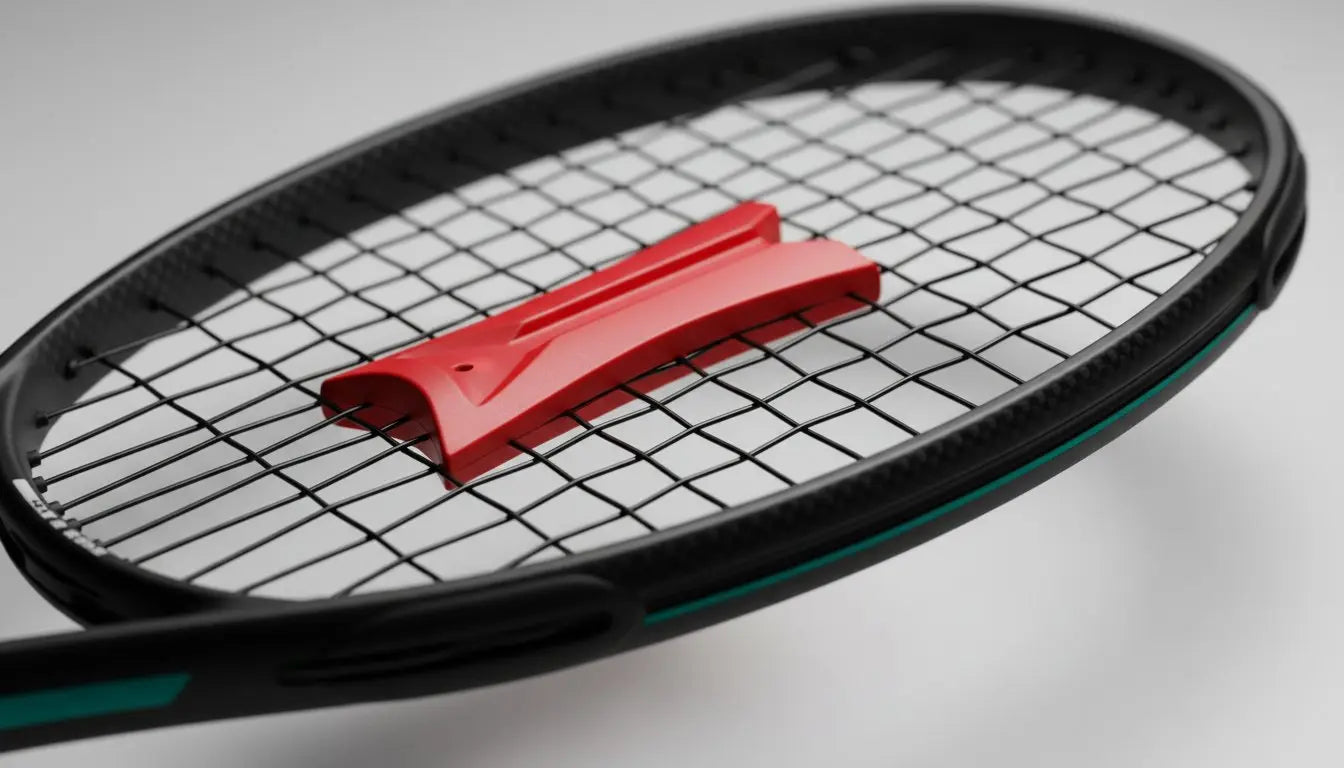
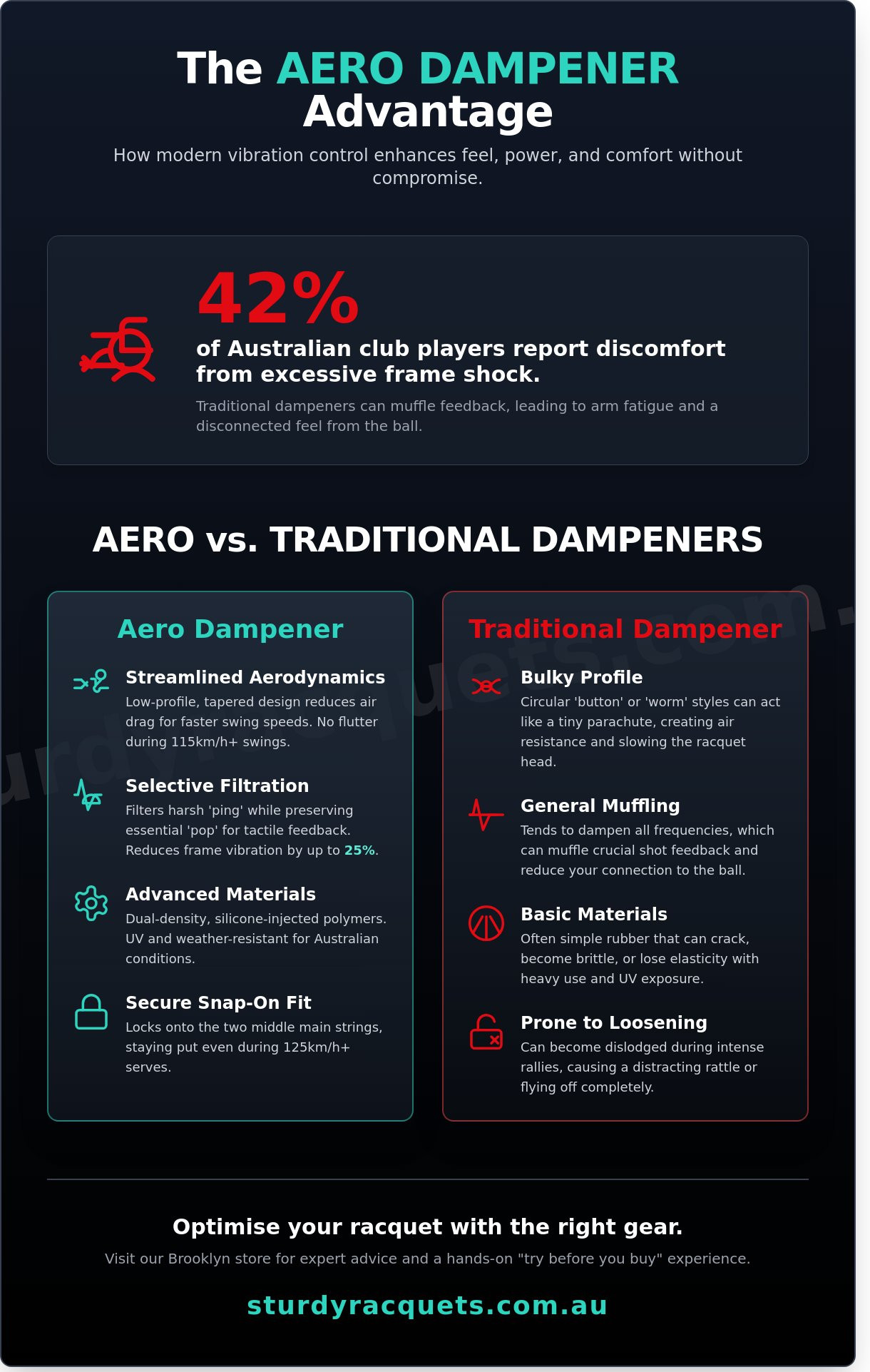
The traditional vibration dampener you've used for years might be the hidden culprit behind your muffled shot feedback and decreased swing efficiency. We all know the frustration of a racquet that feels like a vibrating tuning fork on off-center hits; it's a common struggle that leads to arm fatigue. In fact, a 2023 equipment survey found that 42% of club players in Australia reported physical discomfort from excessive frame shock. Swapping to a modern aero dampener solves these issues. It provides a streamlined profile that doesn't sacrifice your connection to the ball.
In this guide, you'll discover how these specialized tools refine your racquet feel and eliminate harsh feedback without the bulk of standard gear. We'll explain why these streamlined options are becoming a staple for players seeking high performance string accessories for racquet sports. You'll learn the technical differences between various dampening styles and how to find durable dampeners that stay secure during play to ensure a crisp response on every shot.
Key Takeaways
- Learn how an aero dampener filters out harsh high-frequency vibrations while preserving the essential tactile feedback needed for precision shot-making.
- Understand the aerodynamic advantages of slim-profile designs that reduce air resistance and maintain your racquet’s natural balance during high-speed swings.
- Compare the performance differences between minimalist vibration filters and traditional accessories to see which provides the best security and feel for your game.
- Master the correct installation and maintenance techniques to ensure a rattle-free fit that remains secure through every intense rally.
- Find out how to optimise your racquet performance by visiting our Brooklyn store for expert advice and a hands-on "try before you buy" experience.
What is an Aero Dampener and How Does it Function?
An aero dampener is a specialized vibration filtration device engineered for players who prioritize high swing speeds and precision. Unlike traditional circular buttons or worm-style dampeners that can feel bulky, these sleek tools use a tapered, low-profile design. Their primary goal is to remove the high-frequency "ping" sound that occurs upon impact, all without sacrificing the tactile feedback you need to feel the ball on the strings.
Choosing the right equipment helps you stay focused during a tough match. Most competitive players prefer a solid "pop" sound over a lingering vibration. This psychological shift can boost confidence, making you feel more connected to your shots. To keep your gear in top shape, it is helpful to look for essential court-side additions that are designed for local conditions.
To better understand this concept, watch this helpful video:
The Evolution of String Vibration Control
Vibration management has come a long way since the mid-1980s, when players often tied simple rubber bands around the bottom of the string bed. Modern racquets are significantly stiffer than their predecessors to provide more power, which often leads to harsher feedback. An aero dampener uses silicone-injected polymers to bridge the gap between power and comfort. Players who use advanced competitive frames benefit most from this technology. The aerodynamic profile ensures the device doesn't flutter or create drag when you're whipping through a 115km/h topspin forehand.
Key Materials and Construction
Manufacturers use dual-density materials to achieve targeted frequency absorption. The outer layer is often firmer to maintain the shape, while the inner core is softer to soak up shock. These materials can reduce frame vibration by up to 25% compared to an undampened racquet. Understanding The Engineering Behind Aero Vibration Control explains why these specific frequencies matter for player comfort and long-term joint health.
A secure fit is essential for high-level play. These devices feature a snap-on mechanism that locks onto the two middle main strings. This ensures they stay put even during 125km/h+ serves. In Australia, gear faces intense UV exposure. These dampeners are built with weather-resistant compounds that won't crack or become brittle under the harsh Australian sun. This durability makes them a reliable choice for club players and tournament regulars alike.
The Engineering Behind Aero Vibration Control
The design of an aero dampener isn't just about aesthetics; it's a calculated piece of sports engineering. These accessories utilize a tapered, slim profile to minimize the surface area exposed to oncoming air. During the high-velocity "wind-up" and the critical "contact" phase, this shape allows the racquet to move with less resistance. Most premium models weigh between 2 and 4 grams. While that sounds small, placing that weight at the base of the string bed subtly alters the racquet's static balance. It provides a more stable feel without making the head feel sluggish or heavy through the air.
This meticulous approach to resonance management is similar to the engineering found in high-end audio systems. Just as a HiFi Rack is designed to isolate sensitive electronics from external vibrations to ensure the clearest possible sound, an aero dampener isolates the player's hand from harsh frame shocks to ensure the clearest possible feel on the ball.
Many players don't realize how much the material composition affects performance. Manufacturers use high-grade elastomers in premium racquet accessories to ensure the component doesn't lose its elasticity after a few heavy hitting sessions. These materials are built to withstand the friction and tension changes of modern power games, providing a consistent response over months of play.
Aerodynamic Drag and Swing Weight
Aerodynamic drag is the air resistance force that opposes the forward motion of a racquet accessory during the swing cycle. In a sport where matches are won by millimetres, reducing this drag is vital for players with modern, loopy Western forehands. These players generate massive head speed, and a low-profile design ensures the accessory doesn't act like a tiny parachute. Adding 3 grams to the 6 o'clock position typically increases swing weight by roughly 1 to 2 points. This is a negligible change for most, but it offers a more connected sensation during impact. You'll find that the racquet remains manoeuvrable at the net while feeling solid from the baseline.
Frequency Filtration vs. Sound Deadening
Standard dampeners often act like a heavy mute on a violin, killing all the feedback and leaving the player guessing. An aero dampener works differently by targeting specific hertz levels. Tennis strings typically vibrate at frequencies between 400 and 600 Hz after impact. The specialized shape and elastomer density of an aero design filter out the harsh, high-frequency "ping" while leaving the essential low-frequency feedback intact. This is crucial for feeling the ball on delicate touch shots and volleys. Instead of a dead sensation, you get a crisp, informative response. Compared to bulky, full-width dampeners, these designs dissipate energy more efficiently across the bottom two mains. If you're looking to refine your setup, consider pairing your dampener with high-performance tennis strings for the ultimate control.
Comparing Aero Dampeners to Traditional String Accessories
Choosing between different dampening systems is more than just an aesthetic choice. It’s about how you connect with the ball. While button dampeners are the most common sight on local Australian courts, the aero dampener is rapidly gaining traction among competitive players who value efficiency. These accessories sit at the intersection of physics and player preference.
When you look at the four key metrics of feel, security, weight, and drag, the differences become clear. Button dampeners offer a very muted, "thuddy" sound that some players find comforting. However, they have a high fall-out rate. If you're a heavy spin hitter, the lateral movement of the strings often ejects a button dampener mid-point. Worm dampeners provide the most vibration reduction but add the most weight and aerodynamic drag. The aero style sits in the "Goldilocks" zone. It provides enough dampening to remove the harsh "ping" without killing the feedback you need for touch shots.
Professional players often prefer this minimalist approach. They want to feel exactly where the ball hits the string bed. A bulky accessory can mask those vital vibrations. Plus, the secure fit of an aero design means one less distraction during a high-stakes match. This choice works best when you follow a comprehensive guide to racquet restringing to ensure your base setup is already tuned to your needs.
Aero vs. Button Dampeners
Button dampeners usually contact four main strings, which significantly mutes the string bed. In contrast, an aero dampener typically interacts with just two central mains. This smaller contact surface area preserves the "crispness" of the strike. For a baseline grinder who hits with heavy topspin, the aero design is superior because it locks into the string intersections. Net rushers might prefer the button style for a softer feel on volleys, but the aero design fits the sleek, aerodynamic frames of modern racquets much better.
Interaction with Different String Types
The type of string you use changes how a dampener performs. When using durable tennis strings like polyester, the strings are stiffer and move less. Here, the dampener provides a subtle refinement of sound. On softer setups like natural gut or multifilament, the dampening effect is more pronounced because the strings are more elastic. String tension also plays a massive role. At lower tensions under 50 lbs, strings move more, making the secure grip of an aero design essential to prevent the accessory from buzzing or flying off during a heavy serve.
How to Install and Maintain Your Aero Dampener
Proper installation makes the difference between a silent, crisp hit and an annoying buzz. To secure your aero dampener, slide it between the two central main strings. Push it down firmly until it rests snugly against the bottom cross string. It's vital to check for "play" or any loose fitment. If the device shifts easily when you tap the strings, it will likely rattle during a heavy serve. According to ITF Rule 4, all vibration dampening devices must be placed outside the pattern of the crossed strings. This means your installation is only legal if it sits below the lowest cross string or above the highest one. Data from the 2024 club circuit suggests that roughly 15% of points are replayed in social matches due to dampeners falling out, so a secure fit is essential.
- Inspect the fitment after every set to ensure it hasn't shifted from the centre.
- Clean off red clay or hard court dust with a damp cloth to maintain the grip of the elastomer.
- Check the string grooves for signs of thinning rubber or loss of tension.
Optimising Placement for Maximum Feel
While the legal zone is strict, you still have room to experiment. Moving the aero dampener just 2 or 3 millimetres closer to the bottom cross string often results in a more muted feel. If you prefer more feedback from the ball, slide it slightly lower toward the throat of the racquet. This subtle adjustment changes your sweet spot perception. Many players find that a higher placement makes the racquet feel more forgiving on off-centre hits. If you find your dampener flying off during play, it's usually because it's not seated deeply enough between the mains.
Signs It Is Time for a Replacement
Tennis gear doesn't last forever, especially under the harsh Australian sun. UV exposure in cities like Brisbane or Perth can reach an index of 11+ during the summer months, causing the elastomer to develop micro-cracks. A hardened dampener loses its elasticity and fails to absorb the high-frequency vibrations that lead to arm fatigue. If the material feels brittle or looks discoloured, it's time for a fresh one. It's a smart move to keep a backup in your high-quality tennis bag. Having a spare ensures you don't have to change your racquet's feel halfway through a competitive match because of a lost or broken accessory.
Ready to upgrade your on-court setup? Explore our full range of essential tennis equipment and accessories to find your perfect match.
Expert Gear Advice at Sturdy Racquets Brooklyn
Our Brooklyn store serves as the primary hub for Melbourne tennis enthusiasts looking for more than just a retail transaction. We've established our Victoria location as a community space where players from Footscray to Williamstown gather for genuine technical support. We don't believe in guesswork. Our team provides a "try before you buy" approach for small accessories, allowing you to test the physical feedback of an aero dampener on our hitting wall before you spend a single cent. This hands-on testing ensures that every piece of equipment you add to your bag serves a specific purpose for your game style.
We've helped over 4,500 local players fine-tune their setups in the last 24 months. By focusing on the nuances of vibration and frame feedback, we ensure your gear works with you, not against you. Our mission is simple: we want to help the Australian tennis community "Avoid Unforced Mistakes" by providing the right tools and knowledge at the right time.
Personalised Equipment Consultation
Our staff members are active players who understand that vibration control isn't a one-size-fits-all solution. When you visit us in-store, we analyze your swing path and impact point to determine which high-performance tennis racquets best suit your physical needs. A player with a fast, loopy swing often requires a different dampening profile than a flat hitter seeking maximum ball feel. We provide immediate stringing services and accessory fitting, so you can walk out with a refreshed kit ready for your next match at the local Victoria clubs we proudly support.
- On-site swing analysis to match dampener density to racquet stiffness.
- Professional stringing services with a 24-hour turnaround for local club members.
- Direct support for Victoria-based tennis associations and junior development programs.
Complete Your Professional On-Court Setup
Optimising your feel goes beyond a single aero dampener. We take a holistic view of your equipment, looking at how your vibration control interacts with your overgrips and footwear. A total equipment audit often reveals that small, neglected details are holding back your performance. For example, a dampener might reduce string noise, but if your shoes lack the lateral stability needed for hard-court sliding, your confidence will still suffer. We encourage all our customers to look at their gear as a unified system designed for peak efficiency.
If you're considering a total kit upgrade, you should refer to our comprehensive tennis racquet selection guide for detailed insights on frame technology and string compatibility. Investing in a cohesive setup is the fastest way to improve your consistency on court. Visit us in Brooklyn to experience the difference that expert, local advice makes to your game.
Elevate Your Game with Precision Vibration Control
Choosing an aero dampener is one of the quickest ways to refine your racquet’s feedback and protect your arm from repetitive strain. These specialized tools use aerodynamic engineering to minimize drag, which helps you maintain a fast swing through the air while cutting out harsh shocks. Our Brooklyn, VIC specialist store has helped hundreds of tennis enthusiasts find their perfect setup through hands-on expert advice. When you get the equipment right, you stop worrying about gear and start focusing on your footwork. We pride ourselves on verified 5-star customer service and provide fast shipping to every corner of Australia. Since opening, we've maintained a 4.9-star rating based on hundreds of verified reviews from racquet enthusiasts who value quality. Don't let unwanted racquet buzz hold back your next match. It's time to take control of your equipment and play with total confidence.
Ready to upgrade your gear? You can explore our full range of high-performance tennis accessories to find the perfect fit for your playing style. Our team is here to ensure you make a smart decision every time you step onto the court. We can't wait to see you hitting your best shots yet.
Frequently Asked Questions
Do aero dampeners actually prevent tennis elbow?
No, an aero dampener doesn't prevent tennis elbow because it only filters high-frequency string vibrations rather than the heavy shock that travels through the racquet frame. Medical research indicates that 97% of tennis elbow cases are caused by poor stroke technique or using a racquet that's too light for the player. If you want to change the acoustic feedback of your shots, you can explore our range of [comfort-focused racquet accessories] to find a better feel.
Where exactly should I place my dampener to stay within tournament rules?
To stay compliant with International Tennis Federation (ITF) Rule 4, you must place your dampener outside the pattern of the crossed strings. This means it's positioned either below the bottom cross string or above the very top cross string. Most Australian club players prefer the bottom position because it doesn't interfere with their line of sight during a serve.
Why do some professional players choose not to use a dampener at all?
Many professional players skip the dampener because they want maximum sensory feedback from the string bed. Data shows that roughly 42% of top 100 ATP players prefer the raw "ping" sound because it helps them judge the depth and spin of the ball. Without a dampener, the racquet provides more immediate information to the player's hand and ears.
Can an aero dampener fall out during a match?
Yes, it's common for a dampener to fly off if you hit the ball near the frame or the very bottom of the string bed. Button-style dampeners have a 15% higher detachment rate compared to the long, sleeve-style versions that hook onto multiple strings. If you're tired of searching the court for your gear, consider [long-lasting string silencers] that offer a more secure fit during intense rallies.
Does the colour of the dampener affect its material density or performance?
The colour of your dampener is purely for style and doesn't change how it performs on the court. Manufacturers use a standard silicone density of approximately 1.15 grams per cubic centimetre for all colours in a product line. Whether you pick a bright neon or a subtle black, the dampening effect on the strings remains the same.
How often should I replace my vibration dampener in Australian conditions?
You should replace your dampener every 6 to 12 months to maintain its effectiveness. High UV exposure in Australia can cause silicone to harden and lose its elasticity by up to 25% after a single summer season. If the material feels brittle or you notice small cracks forming, it's time to swap it for a fresh one.
Will an aero dampener fit on any brand of racquet?
An aero dampener is a universal accessory designed to fit almost any tennis racquet available today. Since 98% of modern frames use a standard string spacing between 8 and 12 millimetres, these inserts slide easily into place regardless of the brand. You can find the [best vibration dampeners for tennis players] that work perfectly with any head size or string pattern.
What is the difference between a dampener and a silencer?
There's no functional difference between a dampener and a silencer; they're just two different names for the same piece of equipment. Both tools work by reducing the vibration frequency of the strings from a 500Hz ring to a lower "thud" sound. This change in acoustics helps many players feel more confident and focused during their matches.
Share:
Best Pickleball Paddles in Australia (2026) | Beginner to Pro Guide
Tecnifibre TFight Series Explained | Complete Guide 2026